
Should I Keep Alcohol in the House When Cutting Back?
A practical spectrum for deciding whether to clear, move, limit, or keep alcohol at home while you are trying to drink less.
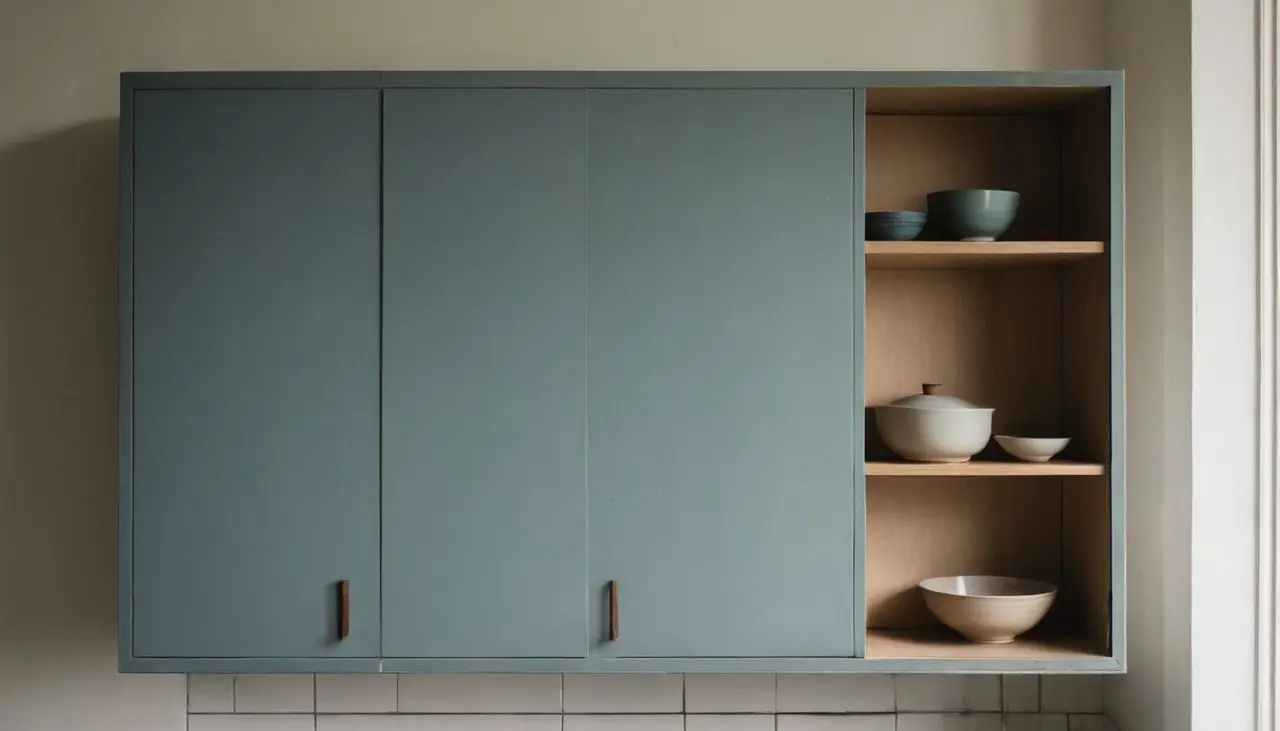
The dishes are done, the kitchen light is off, and on the way to the couch you pass the cabinet where the wine lives. You're not even sure you want a glass. But the bottle's right there, the evening is long, and the question — tonight, or not tonight? — starts up again, same as last night, same as the night before.
If you're trying to drink less, that nightly re-litigation is the exhausting part. It doesn't have to run every evening. You can settle the question once, in daylight, this week — instead of at 8:40 p.m. with the bottle already in reach.
Start with a permission slip: whether alcohol stays in your house is a setup question, not a character test. Some people clear every bottle and feel instant relief. Others keep a full bar, change one routine, and barely think about it. Neither is the strong version. What should decide it is your actual pattern — where and when your drinking happens — and you can work that out like a mechanic instead of a judge. Call it the Shelf Decision: four moves you make once, then review after two weeks.
Why the shelf gets a vote
Habits run on cues. Something in the environment — the quiet kitchen, the end of the dishes — fires a routine (the pour), the routine delivers a payoff (the exhale), and after enough repetitions the whole sequence runs before the deciding part of you has been consulted. Willpower isn't missing in that moment — it's just late.
Home drinking is unusually good at this because home has no friction. No last call, no server, no bill arriving, no drive to think about, nobody watching the pour. And the pour itself is often literally bigger: NIAAA defines a U.S. standard drink as 0.6 fluid ounces — 14 grams — of pure alcohol, and a free-poured glass at your own counter beats that easily without your noticing. Fewer checkpoints, larger servings, a cue you walk past every night. That's the case for taking the shelf seriously — not as the villain, but as a voter.
Follow the pour
First, check whether the house is even the problem. Think back over the past week or two and place each drink: your own kitchen, a restaurant, a friend's porch, a work thing, a hotel bar. If most of your drinking happens away from home, no amount of cabinet engineering will move the number — the settings that actually drive it deserve the attention instead. If most of it happens ten steps from your couch, keep going.
Do it now: write down your last seven drinks and where each was poured. Seven data points beat a general impression.
Pick a lane
If the pours are mostly home pours, choose one of four setups — deliberately, for two weeks, all reversible. Each one teaches you something different.
Clear it. Every bottle out of the house for the trial window. This removes the nightly decision entirely, which is why it suits the person whose 8 p.m. pour has gone fully automatic. What it teaches you: whether easy access was carrying the habit.
Move it. Alcohol stays, but out of sight and out of the path you walk at night — the garage, a high cabinet, the closet you never open. You're adding minutes and steps between the impulse and the glass. What it teaches you: whether a pause is all your plan needs to catch up.
Cap it. Keep one item — one bottle of wine, one six-pack — and track honestly what happens to it. What it teaches you: whether availability itself is the trigger, or whether the pull comes from somewhere the shelf can't reach.
Keep it, change the routine. The bar stays as it is; the ritual changes. A later start time, a different chair, a non-alcoholic drink in your hand before anything else. This tests the sequence instead of the inventory — and if the evening itself turns out to be the cue, rebuilding the evening routine is its own project.
Do it now: pick the lane that makes tonight ten percent easier, not the one that proves the most. This is engineering, not penance.
Negotiate the shared shelf
If you live with someone who drinks, the lanes get narrower, and pretending otherwise sets you up to fail quietly. Skip the ultimatum. Make a storage request instead — small, specific, time-boxed. "Could the beer live in the garage fridge for two weeks?" works better than "I need you to support me," because it tells the other person exactly what to do and when it ends. Their drinking is a longer conversation; cutting back when your partner still drinks covers that one. The shelf agreement can be settled this afternoon.
Do it now: draft the one-sentence ask — object, location, end date.
Read the results, not your character
Two weeks in, count — in standard drinks, remembering how generous a home pour runs. For context while you read the number: the Dietary Guidelines for Americans suggest that adults who choose to drink keep it to two drinks or fewer in a day for men and one or fewer for women — a reference point if you're picking limits, not a rule the house imposes. NIAAA's binge-drinking threshold is worth knowing too: five or more drinks for men, or four or more for women, in about two hours — typically enough to bring blood alcohol concentration to 0.08% or higher, a pattern a home evening can reach without ever feeling like an event.
Then ask three quiet questions. Did the count move? Did the evenings feel less automatic? Where did the exceptions happen — in the house, or out of it? If the lighter setup helped, keep it; it was never a punishment. If nothing changed, that's not failure, that's a finding: the engine is somewhere else — the restaurant menu, the work dinner, the craving itself — and now you know where to look.
Do it now: put a review date on the calendar and hold your verdict until then.
When no shelf arrangement touches it
For some people, the house experiment comes back with a harder answer, and it's better said plainly. If your drinking is heavy and daily, if alcohol at home keeps turning into more than you planned no matter how you arrange it, or if skipping a day brings on shakiness or sweating, this has stopped being a furniture problem. Stopping suddenly after heavy daily drinking can be dangerous, so that plan belongs with a clinician rather than a two-week experiment — and shaking, confusion, hallucinations, or a seizure after stopping is a call-911-or-go-to-the-ER moment, not a wait-and-see one.
The awkwardness of asking is real, and it's documented: NIAAA names stigma as one of the most consistently reported barriers keeping people from alcohol-related care. The question feels embarrassing at exactly the moment it matters most.
The gap that produces is wide. In 2024, about 2.1 million people ages 12 and older with past-year alcohol use disorder received alcohol-use treatment — roughly 7.6% of everyone who had it that year. Mostly that's not the help failing; it's the conversation never starting.
If cutting back keeps sliding no matter how the house is arranged and you don't have anyone to take that to, Clero connects you with a licensed clinician by telehealth who can look at the whole pattern with you — including whether a medication for alcohol use disorder belongs in the plan.
Back past the cabinet
Tomorrow around 8:40 the dishes will be done and you'll walk the same route to the couch. The difference is what the cabinet says when you pass it. Make the Shelf Decision this afternoon and it says whatever you decided — cleared, moved, capped, or open but rearranged — and the evening gets to be about something other than a standoff. You're not trying to prove you can out-stare a bottle. You're deciding how many times a night you're willing to have that argument. Once is a fine answer. Zero is better.
Pick your lane today, while it's still daylight.
This article is general education, not medical advice. If stopping drinking brings shaking, confusion, hallucinations, or a seizure, call 911 or go to an emergency room; if you feel unsafe with yourself, call or text 988; and for confidential treatment referrals, SAMHSA's National Helpline is 1-800-662-HELP (4357).
- Alcohol Education
Drinking at a Wake or Funeral When You're Cutting Back
You can decline the drink and still be there for the goodbye. How to handle the glass at the door, the toast, and the late-night kitchen while cutting back.
- Alcohol Education
Drinking After a Really Hard Workday When You're Cutting Back
The after-work drink gets decided long before you reach the door, so move the decision earlier. A four-step checkpoint for hard days while you're cutting back.
- Alcohol Education
Drinking and Saturday Mornings Feel Different When You Cut Back
A clear Saturday morning can feel strange rather than triumphant: what's missing is the structure, not the drink. Why the empty hours don't need a productivity plan.
- Alcohol Education
Drinking at a Summer Wedding When You're Cutting Back
The way to drink less at a summer wedding is deciding before it starts: your first drink, your switch point, and your exit. How the three posts hold all night.
- Alcohol Education
Drinking on Father's Day When You're Cutting Back
To drink less on Father's Day, pick your number before the cookout — then pour your own, keep a glass in hand, and plan your exit. Five small grips that hold.
- Alcohol Education
Signs You Are Drinking More Than You Meant To
A low-stakes self-check for noticing drinking drift without using a quiz, a label, or diagnosis language.


Be the first to hear when Clero launches.
Join with email only. Clero is still in development, so this is educational content today — not treatment, a prescription request, or medical advice.
First to hear at launchLaunch news only — no spamUnsubscribe anytime