
How to Handle the Fourth of July When You're Cutting Back
A ten-hour Fourth of July pours itself unless you set edges first. Decide your leave time and drink number in the car, then keep a non-alcoholic can in hand.
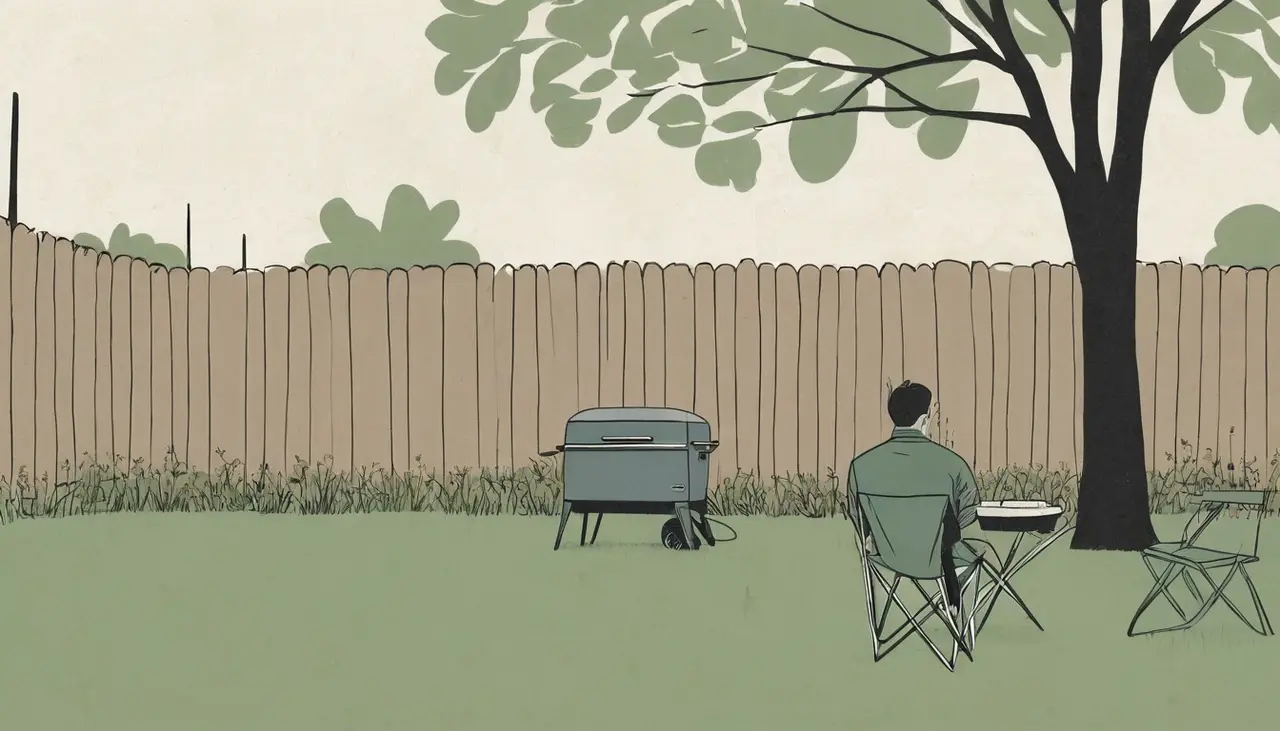
It is four in the afternoon and the cooler has been open since noon. Someone hands you a cold can before you have decided whether you want one. The grill smoke is thick, the game is on, a neighbor you half-know is refilling everyone within reach, and there are still six hours and a fireworks finale between you and your own bed. Nobody in this yard is counting. The day just keeps pouring itself.
Here is the thing worth knowing before you walk in: on a day this long, drinking more than you meant to is almost never a moment of weakness. It is a design flaw. Ten hours of heat, salt, boredom, and open coolers will move a lot of drinks past a person who never once decided to have them. So the fix is not more willpower. It is a map — a rough plan for a long route with a few marked waypoints, so the day stops making the choices for you. Call it the Long-Day Map. It has four waypoints, and you can sketch the whole thing on the drive over.
Why the Fourth beats willpower
A craving is not the enemy on a day like this. Autopilot is. A drink feels like nothing when everyone is outside, sweating, eating salty food, and reaching into the same ice. Your hand goes to the cooler because the last three times it did, a cold thing came out and the afternoon got a little easier. That is a habit loop doing exactly what habit loops do — cue, action, small reward — and it runs whether or not you signed off on it.
The Fourth stacks the deck because it is long and shapeless. A dinner has a start and an end. A block party does not. And this is the part of the pattern that sneaks up: the CDC counts a binge as four or more drinks for women or five or more for men on one occasion — and among U.S. adults who drink to excess, more than 90 percent are drinking that way, in binge episodes, not in a slow, steady daily habit. An afternoon that drifts from the first grilling beer to one-with-the-game to one-with-dinner can land in that range long before the night feels like a "big night." Not because anyone set out to. Because nobody set anything at all.
So the map is not about resisting the cooler for ten hours. It is about pre-deciding a few things while you are still calm, so the yard has less room to decide for you.
Waypoint one: set the edges before you arrive
Draw the boundaries of the day before you are inside it. Two questions, answered on the drive over.
First, how long are you actually staying? Two hours, five, the whole run through fireworks? A plan that works for a short cookout falls apart across a ten-hour block party, so name the number now. Second, what is your limit, if you are drinking at all — and what does that limit look like in real servings, not red cups? A standard drink is 0.6 fluid ounces of pure alcohol, which is one 12-ounce regular beer, but a heavy pour or a big cup can quietly be two. If you want an outside reference point, the 2020–2025 Dietary Guidelines suggest adults who choose to drink keep it to two drinks or less in a day for men and one or less for women. Use that as a yardstick for yourself, not a rule to argue about with anyone at the grill.
Do it now: before you get out of the car, say two numbers out loud — the hour you leave and the number of drinks, if any. Two numbers. That is the whole waypoint.
Waypoint two: own what is in your hand
The single most useful move on a long day is to control the object in your hand, because that object is what your autopilot reaches for.
Pour your own drinks so the amount is yours, not whatever a generous neighbor thought was polite. Better yet, arrive holding something you actually want that is not alcohol — a good seltzer, an iced tea, a cold cola — so your hand is already full when the cooler swings open. An empty hand near an open cooler on a hot day is the setup; a full hand is the fix. Keep water in the rotation too, and refill it as often as anything else, because a lot of what feels like wanting another drink on July 4 is just being hot and thirsty.
Do it now: claim one non-alcoholic drink you like the moment you arrive and keep a hand on it. Refilling that is your default motion, not opening the cooler.
Waypoint three: eat before the first drink
Eat before you drink anything, not after. On the Fourth this is almost too easy to skip, because the food and the cooler show up at the same time and the salty stuff makes the cold drink taste like the obvious next thing.
Getting real food in first does two jobs. It slows how fast alcohol hits, and it takes the edge off the low-grade hunger that a person mistakes for wanting a drink. You do not need a strategy here. You need a full plate before the first can, and to keep something salt-free and cold — the water again — within arm's reach the rest of the day.
Do it now: make a plate before you open anything. First drink comes after the first plate, if it comes at all.
Waypoint four: pick your off-ramp before the day gets loose
Every long route needs an exit, and you want to choose it while you can still think clearly, not at hour eight when the yard has gone soft and loud.
Pick one signal that ends drinking for the day — sunset, the first firework, the moment the plates come out — and pick when you actually leave. Name it out loud to one person if that helps it stick. And settle the ride now: if drinking is any part of your day, arrange the way home before the day starts, not after, when you are least equipped to judge it. This is not about calculating anything close to a limit. It is about never having to.
Do it now: name your two off-ramps — the signal that ends drinking, and the ride home — before either one is urgent.
When one waypoint slips
You will miss one. The plan is a map, not a track you get thrown off of.
Maybe you skip the meal and have two before you notice. Maybe the "one firework" signal comes and goes and you are still holding a can. A missed waypoint is not the day collapsing — it is one turn missed on a long route, and the next waypoint is still right there ahead of you. Refill the water. Make a plate. Move your exit up an hour. The Fourth does not grade you on whether the plan felt effortless; a planned limit can still feel awkward, and a quieter holiday can still be loud. The only useful question at the end is the small one: what pulled the automatic pours, and what kept them from happening?
One line stays outside the map, though. If you drink heavily every day, quitting cold on a whim — deciding on July 3 to white-knuckle a dry Fourth — is not the safe version of cutting back. Stopping suddenly after heavy daily drinking can be genuinely dangerous, and that is a plan to make with a licensed clinician, not on a holiday. If you do not have someone to ask, the SAMHSA National Helpline at 1-800-662-HELP is free, confidential, and open around the clock. And if a stretch without alcohol has ever brought on shaking, sweating, confusion, or a seizure, treat that as an emergency and call 911.
The one thing to carry in
Walk into July 4 with the Long-Day Map instead of a resolution: know when you leave, own what is in your hand, eat before the first drink, and pick your off-ramp early. Four waypoints, decided while you are still calm, so the longest day of the summer stops improvising on your behalf. You do not have to out-willpower a ten-hour block party. You just have to walk in with a route.
If a craving rises anyway while the cooler is open, how to handle alcohol cravings and urges is the fuller toolkit; for the broader summer version, see how to socialize without drinking at summer events.
This is general education, not medical advice or a verdict on your drinking; if a holiday feels impossible to get through without drinking more than you meant to, that is worth raising with a licensed clinician who knows your history.
- Alcohol Education
How to Handle Summer BBQs and Cookouts When You're Cutting Back
A cookout has no clock, so bring your own: pick your first drink, your spot, your line, and your exit before you go. Decide once, not forty times.
- Alcohol Education
Cutting Back When You Only Drink With Other People
Never drinking alone settles nothing — the table still picks your number. The Table Read closes the gap: read the room's script, then rewrite your line.
- Alcohol Education
How to Handle a Family Vacation When Everyone Drinks
The Morning-First Plan: decide the morning you want, protect the first group meal, and keep one non-negotiable exit from the nightly drift. No family vote needed.
- Alcohol Education
Drinking at a Wake or Funeral When You're Cutting Back
You can decline the drink and still be there for the goodbye. How to handle the glass at the door, the toast, and the late-night kitchen while cutting back.
- Alcohol Education
When a Friend Quietly Stops Drinking Too While You're Cutting Back
You don't have to say anything when a friend quietly stops drinking too — their reason is theirs. What one neutral sentence offers, and how their example helps.
- Alcohol Education
How to Handle the Sunday Scaries Without Drinking
The Sunday-night drink dims the dread, then hands it back with worse sleep and a rougher Monday. Find your trip hour and turn the evening down without the pour.


Be the first to hear when Clero launches.
Join with email only. Clero is still in development, so this is educational content today — not treatment, a prescription request, or medical advice.
First to hear at launchLaunch news only — no spamUnsubscribe anytime