
How to Handle the Sunday Scaries Without Drinking
The Sunday-night drink dims the dread, then hands it back with worse sleep and a rougher Monday. Find your trip hour and turn the evening down without the pour.
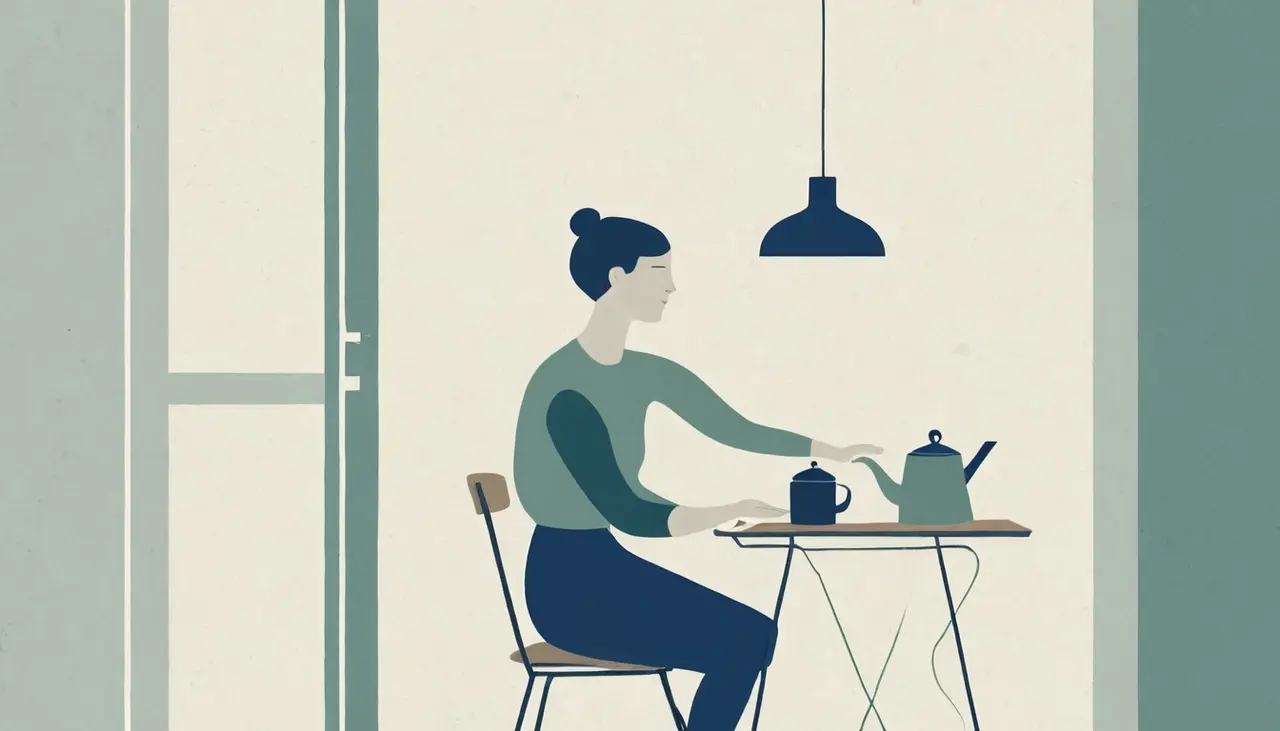
It is 4:47 on a Sunday afternoon and the light has already started to go flat. The weekend is behind you and Monday is close enough to feel, like a draft under a door. You are not even thirsty, but your hand knows the way to the bottle before you have decided anything. That first pour is not really about wanting a drink. It is about turning the day down — closing the weekend before it closes on you.
Here is the useful part: that pour is a switch, and what you actually want is a dimmer.
The Sunday drink tends to do three jobs at once. It blunts the dread about the week ahead. It marks the weekend as officially over. And it stretches the last few hours so Monday feels further away. That is a lot of work for one glass, and none of those jobs actually need alcohol to get done — they just need a signal. The pull you feel around dusk is not a willpower failure. It is a habit that learned, over many Sundays, that 5pm means pour. Habits like that are learned, which means they can be relearned.
What follows is a small kit for that. Call it the Dimmer — four moves that turn the evening down gradually instead of flipping it off with a drink. You are not trying to have a perfect Sunday. You are trying to make the first pour a little less automatic, and to hand the evening a different way to end.
Why the drink feels like the off switch
A craving on Sunday usually arrives on a cue, not out of nowhere. The clock hits a certain hour, the house goes quiet, the game comes on, the laundry needs folding — and the drink is stapled to that moment by repetition. Clinicians who work on drinking patterns describe exactly this loop: the NIAAA's account of cognitive-behavioral approaches centers on spotting the "triggers" or cues that lead to heavy drinking and building a different response to them. The cue fires; the old response is a pour; the whole point of the kit is to slip a new response in before the old one runs.
There is one more reason the switch backfires, and it is worth knowing on a Sunday specifically. Drinking to settle Sunday-night nerves tends to cost you later that same night. Alcohol leans hard on the brain's calm-down system while you drink; as it clears a few hours later, that system rebounds and swings the other way, which researchers link to the restlessness, wakefulness, and low-grade anxiety that can follow. So the drink that was supposed to soften Monday often makes Sunday-night sleep worse and Monday morning harder. The dread you were trying to turn down comes back with interest.
Find the trip hour
"Sunday" is too big to plan around. A plan for the whole day collapses by noon. A plan for one hour has a chance.
Watch for the hour the first pour usually shows up. Is it 4pm, when the weekend starts to feel over? 5pm, when dinner drifts into grazing? 7pm, when the house goes quiet? 9pm, when you should be heading to bed but keep stretching the night? That is your trip hour — the moment the switch gets flipped.
Do it now: think back over the last few Sundays and name the hour out loud. Not "the evening." A specific 60-minute window you can put a plan inside.
Set an earlier bell
The drink is doing a job — it rings the bell that says the weekend is closing. Take that job away from it by ringing the bell yourself, earlier, with something else.
Fifteen minutes of Monday prep before the dread gets loud can do it: lay out clothes, clear the sink, glance at the calendar so the inbox stops living rent-free in your head. An early dinner works too, because it gives the evening an edge instead of letting it blur into open-ended pouring. So does putting one deliberate thing — a walk, a shower, a show queued and ready, a call to someone — inside the trip hour so it is not empty. The specific activity matters less than the timing. The bell has to ring before the pour does.
Do it now: pick one closing signal and get it ready before your trip hour arrives, not during it. Ready beats willpower every time.
Move the room
Cravings are physical and situational, so the cheapest move is often to change the situation. If the bottle lives in the kitchen and your trip hour is a kitchen hour, be somewhere else at that hour. Fold laundry in the bedroom instead. Take the walk. Sit on the porch. You are not white-knuckling past the wine; you are just not standing next to it while the cue fires.
Make the non-alcoholic choice the easy one, too — a drink you actually like, cold and already in the fridge before 5pm, so the path of least resistance stops pointing at the bottle.
Do it now: decide where you will be during the trip hour, and put one thing you would rather drink within arm's reach of that spot.
Reset Monday on Sunday
The last move is the one people skip. Part of what makes the drink attractive is that it pushes Monday away for a few hours. But Monday morning is really part of the Sunday plan. A gentler Sunday night — earlier dinner, a real closing signal, no 2am rebound wakefulness — is what makes Monday land 10 percent less hard. Treat "how Monday feels" as a Sunday-evening decision, because most of it is.
Do it now: name one thing that would make tomorrow morning easier, and do that one thing tonight instead of pouring over it.
Why counting the pour still helps
If Sunday is the only heavy night, it is easy to wave it off as nothing. Putting a number on it makes the pattern visible. NIAAA counts a U.S. standard drink as 0.6 fluid ounces, or 14 grams, of pure alcohol — and a generous home pour can quietly be two of those, so a "couple of glasses" night is often heavier than it feels. By the same source, a binge pattern is roughly 5 or more drinks for men, or 4 or more for women, in about two hours, enough to bring blood alcohol to around 0.08%. You can drink lightly six days a week and still have one Sunday worth changing.
None of that is a line where harm switches on. These are just shared ways to describe a pattern, not a safe-versus-dangerous threshold — how much a given amount affects any one person shifts with body size, sex, tolerance, medications, whether there is food in your stomach, and how fast the pour goes down. As a rough public-health frame for people who do drink, the CDC describes moderate drinking as 2 drinks or less in a day for men and 1 drink or less in a day for women, and notes that some people — including anyone recovering from a drinking problem — are better off not drinking at all. Numbers like these are useful mostly for seeing the Sunday pattern clearly, not for scoring yourself against it.
When one hard Sunday isn't the verdict
Some Sundays the kit will not work. The dread will be loud, the pour will happen anyway, and Monday will arrive rough. That is not proof the whole thing is pointless. A habit built over years of Sundays does not unlearn itself in one evening, and treating a single slip as a failed experiment is the fastest way to quit the experiment.
The realistic win is smaller and better: more Sundays where 5pm no longer automatically means pour, because the bell rang somewhere else first. After a few of those, the ritual expectation genuinely loosens. The scaries may not vanish — the week ahead can still be stressful — but you get more room to move inside the trigger window, which is the whole game.
If weekends in general are the larger issue, weekend drinking when it stops feeling fun and I only drink on weekends - is that a problem? sit closer to that. If the pull is really about stress or the empty evening, how to drink less when stressed and evening alcohol cravings are the closer companions.
Where the kit stops
Some Sunday problems are bigger than a dimmer switch. If you drink every day, if a stretch without alcohol leaves you shaky or physically unwell, or if the anxiety itself feels unmanageable rather than just Sunday-shaped, that is a conversation to have with a clinician, and stopping suddenly after heavy daily drinking is not something to do on your own. People often wait far too long to raise it — NIAAA names stigma as one of the most consistently reported barriers to seeking help for drinking. Asking early is the uncommon move, not the weak one.
So this week, keep it small. Name your trip hour, ring one earlier bell inside it, and let that be the whole assignment. The point was never a flawless Sunday. It was giving the evening a way to close that does not depend on the bottle. For the moments the urge comes back mid-week, how to handle alcohol cravings and urges is the fuller toolkit.
This is general education, not medical or mental-health advice. If you drink daily or feel physically unwell when you stop, talk with a clinician before cutting back suddenly; if withdrawal brings shaking, confusion, or a seizure, treat it as an emergency and call 911. For free, confidential 24/7 support and referrals you can reach the SAMHSA National Helpline at 1-800-662-HELP (4357), and if you ever feel unsafe with yourself, call or text 988.
- Social events & holidays
How to Handle FOMO When You're Cutting Back on Drinking
FOMO is rarely the whole night — it is the people, the place, the drink, or the feeling. Name which corner is hot, give it one small move, and set the phone down.
- Social events & holidays
How to Handle Summer BBQs and Cookouts When You're Cutting Back
A cookout has no clock, so bring your own: pick your first drink, your spot, your line, and your exit before you go. Decide once, not forty times.
- Social events & holidays
Drinking at a Wake or Funeral When You're Cutting Back
You can decline the drink and still be there for the goodbye. How to handle the glass at the door, the toast, and the late-night kitchen while cutting back.
- Social events & holidays
How to Handle Halloween When You're Cutting Back on Drinking
Halloween gets easier when you decide the cup, the shot answer, and the exit before the night starts moving.
- Social events & holidays
Drinking at a Summer Wedding When You're Cutting Back
The way to drink less at a summer wedding is deciding before it starts: your first drink, your switch point, and your exit. How the three posts hold all night.
- Social events & holidays
How to Handle Work Dinners When You're Cutting Back on Drinking
Work dinners drink at the table's pace unless you set yours first. Pick your first-order line and your number before you sit down — no speech required.


Be the first to hear when Clero launches.
Join with email only. Clero is still in development, so this is educational content today — not treatment, a prescription request, or medical advice.
First to hear at launchLaunch news only — no spamUnsubscribe anytime