
How to Handle a Baseball Game or Stadium Event While Cutting Back
At a ballgame, set your number before the first pitch and count the 24-ounce souvenir cup as two drinks, not one. A plan that runs on the game's own rhythm.
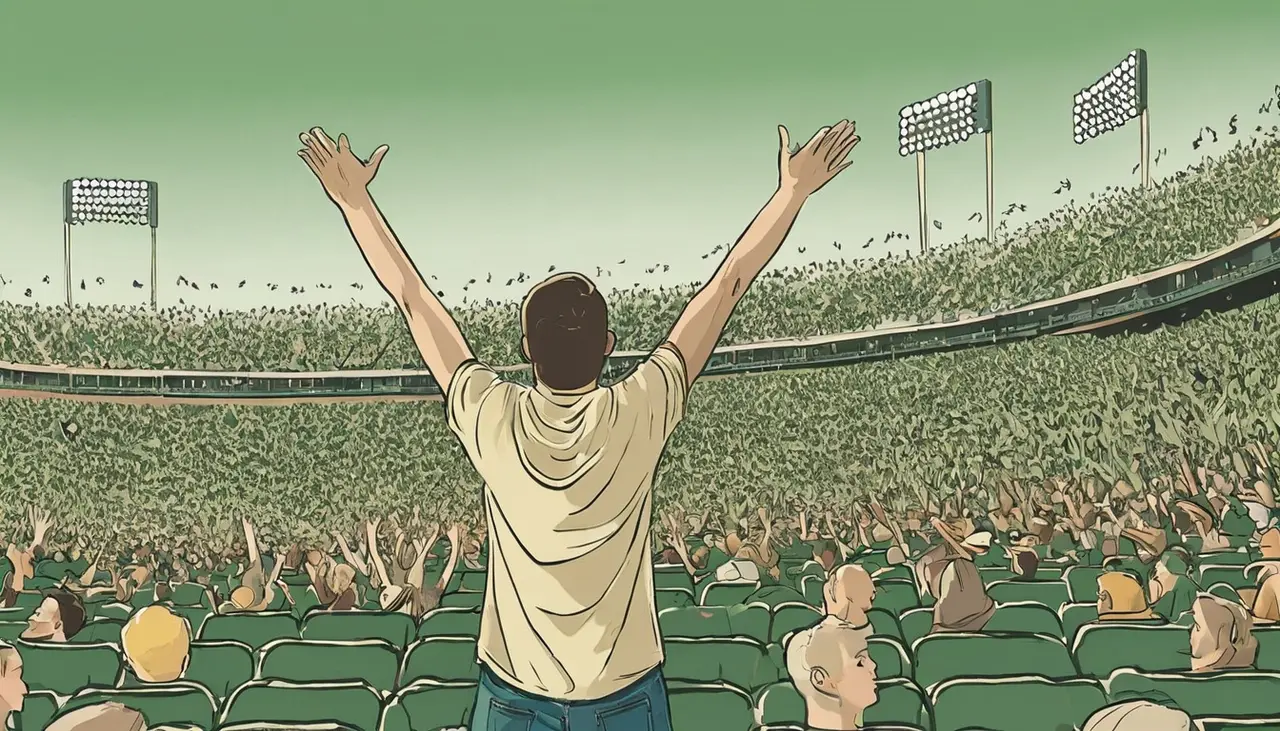
The vendor is three rows down and coming your way, tray balanced on one shoulder, calling out the beer like it's the score. Your friends have already lifted two fingers. The cup in front of you is somehow empty again, and it's only the third inning. Nobody decided any of this. It just happened, the way a stadium day tends to happen — one built-in round at a time, until the drinking is the day and the game was the thing playing in the background.
Here is the good news buried in that scene: a ballgame is one of the easiest places to make a plan hold, precisely because it comes pre-divided into innings. You already know roughly how the day is shaped. That structure — the thing that quietly stacks up rounds on you — is also the thing you can use to stay ahead of it.
None of this is about willpower, and it is not a referendum on you. Stadiums are built to sell drinks: close concourses, salty food, long games, a group that treats every home run and seventh-inning stretch as an excuse for another round. Reacting to all of that in the moment, cup in hand, is a losing setup. So instead you build one small thing in advance and carry it in with you. Call it the Nine-Inning Plan — you decide the shape of the day before the first pitch, then let the game's own rhythm run the plan instead of running you.
Why the cup sneaks up on you
A craving or an extra round at a game almost never announces itself. It rides in on a cue: the vendor's voice, a friend heading for the concourse, a tie score in the eighth. Your hand reaches before your head weighs in. That is normal habit wiring, not weakness — and it is exactly why a decision made in the seat, in the moment, is the hardest one to make well.
Pour size does its own quiet work. The CDC counts a standard drink as 0.6 fluid ounces, or 14 grams, of pure alcohol — about 12 ounces of a 5% beer. A stadium souvenir cup often holds 24 ounces. So one trip to the vendor can be two drinks arriving disguised as one, and the count you're keeping in your head runs low without you cheating on purpose.
The plan below is not a rule about how much anyone should drink. How much alcohol affects a given person shifts with body size, sex, food, tolerance, medications, and how fast the day is moving — there is no single number that is safe for everyone or fine for everyone. The point of a plan is just this: whatever you decide for yourself, you get to decide it once, clear-headed, before the vendor is standing over you.
Set the plan before the first pitch
Pick your shape for the day before gates open: zero, a specific count, or a first-drink-then-switch point. Vague plans lose to vendors. "I'll see how I feel" is not a plan; it's a coin flip you make while the coin is already in the air.
Do it now: before you leave for the game, say the number out loud or text it to yourself. "Two, then water." "None today." A decision that already exists doesn't have to be invented in the third inning.
Read the count, not the cup
Treat the souvenir pour as what it is, not what it looks like. If the cup is 24 ounces of 5% beer, that is two toward your number, not one. Counting cups instead of drinks is how a "three-beer day" quietly becomes six.
Do it now: when a big pour lands in your hand, decide on the spot whether it counts as one or two against your plan — before the first sip, while the math is still easy.
Use the concourse as a reset
Every walk away from your seat is a clean break in the loop. The line, the stretch of the legs, the noise — it interrupts the reach-for-the-cup reflex. You can go with the group and come back with water, a soda, coffee, food, or nothing at all, and no one clocks it.
Do it now: next time someone stands up for a beer run, go too. Getting up is the move. What you carry back is your choice, made on your feet instead of in the seat.
Eat before the late-game stretch
Stadium food, for once, is on your side. Something in your stomach before the seventh inning slows the whole day down and gives your hands and your mouth something to do that isn't a drink. The salty-food-drives-thirst trap only works if you meet it with beer.
Do it now: put food in the early innings, not as a hangover hedge at the end. The point is to break the drink-to-drink rhythm before it sets.
Name it to one person
Say the short version to one friend: "I'm pacing today." That single sentence turns off the reflex offer — the automatic "grab you one?" every time the vendor passes. You don't owe anyone the long story. One person knowing is usually enough to shift the whole group's default.
Do it now: pick your person on the walk in and tell them before the first round, while it costs nothing.
Decide the ride and the after-party early
Two decisions like to ambush you at the final out: how you're getting home, and whether the post-game bar is happening. Sort both before the first drink, when you're still the version of yourself who's good at deciding. Line up transit, a walk, a designated driver, or the venue's official ride option in advance. And treat the post-game bar as its own separate event with its own yes or no — the game ending is not automatically an invitation to keep going.
Do it now: settle the ride home before your first drink, and decide the bar question before the invitation exists. A plan made at the ninth inning is barely a plan.
For context on the numbers, the 2020–2025 Dietary Guidelines for Americans suggest adults of legal drinking age who choose to drink keep it to 2 drinks or fewer in a day for men and 1 or fewer for women. That's a reference point, not a stadium-day allowance to spend.
When an inning goes sideways
One rough game is not a verdict. If the count gets away from you in extra innings — a close game, a big group, a day that just ran hot — that is a single evening, not proof the plan is useless or that you are. The Nine-Inning Plan is a way to tilt the odds, not a promise you'll go perfect every time. You keep the parts that held, adjust the one that didn't, and bring it to the next game a little sharper.
What the plan does reliably show you is what you were actually there for. A lighter stadium day tells you whether it was the sport, the crowd, the food, the friends, or the atmosphere pulling you all along — and which single moment, tailgate or vendor pass or late-game tension, tugs hardest. That's worth knowing. It's the thing you build the next plan around.
If stadium days keep blowing past whatever plan you set, if cutting back feels physically unsafe, or if you drink daily and want to stop, that's a conversation to have with a licensed clinician before the next game rather than a willpower problem to keep re-litigating in your seat. Stopping suddenly after heavy daily drinking can be genuinely dangerous — if a stretch without alcohol has ever brought on shaking, sweating, confusion, or a seizure, treat it as a medical emergency and call 911.
For the moment a vendor pass turns into a real urge, how to handle alcohol cravings and urges is the full toolkit. If the pressure is mostly friends refilling your cup, see how to handle friends who keep offering you drinks. And for the broader summer version of all this, how to socialize without drinking at summer events.
So: pick your number on the way in, count drinks instead of cups, use the concourse as your reset, and decide the ride and the after-party before the first pitch. Carry those four things through the gate and the game stays the event. The cup stays a prop.
This is general education, not medical advice or a plan for anyone's specific situation. If you want to talk something through confidentially, the SAMHSA National Helpline at 1-800-662-HELP is free and available 24/7.
- Family & relationships
What to Do When Your Spouse Drinks and Drives
If your spouse is driving impaired, call 911 from safety. Learn what to report, what to avoid, and how to plan your own sober ride.
- Social events & holidays
How to Handle FOMO When You're Cutting Back on Drinking
FOMO is rarely the whole night — it is the people, the place, the drink, or the feeling. Name which corner is hot, give it one small move, and set the phone down.
- Social events & holidays
How to Handle Thanksgiving When You're Cutting Back on Drinking
Thanksgiving is an all-day drinking cue: plan the timeline, family lines, and first sober holiday pressure before the table fills.
- Social events & holidays
How To Not Drink at a Party
A low-drama party plan for not drinking, built around the first round, the first question, and the first exit point.
- Social events & holidays
How to Handle Summer BBQs and Cookouts When You're Cutting Back
A cookout has no clock, so bring your own: pick your first drink, your spot, your line, and your exit before you go. Decide once, not forty times.
- Social events & holidays
How to Handle a Camping Trip When You're Cutting Back
A practical camping-trip framework for cutting back when the cooler, campfire, and remote weekend all make drinking feel built into the plan.


Be the first to hear when Clero launches.
Join with email only. Clero is still in development, so this is educational content today — not treatment, a prescription request, or medical advice.
First to hear at launchLaunch news only — no spamUnsubscribe anytime