
How to Handle a Concert or Music Festival When You're Cutting Back
At a concert or festival, the drinking happens in the gaps: set changes and bar lines, not the music. Plan the set breaks and the day stays yours.
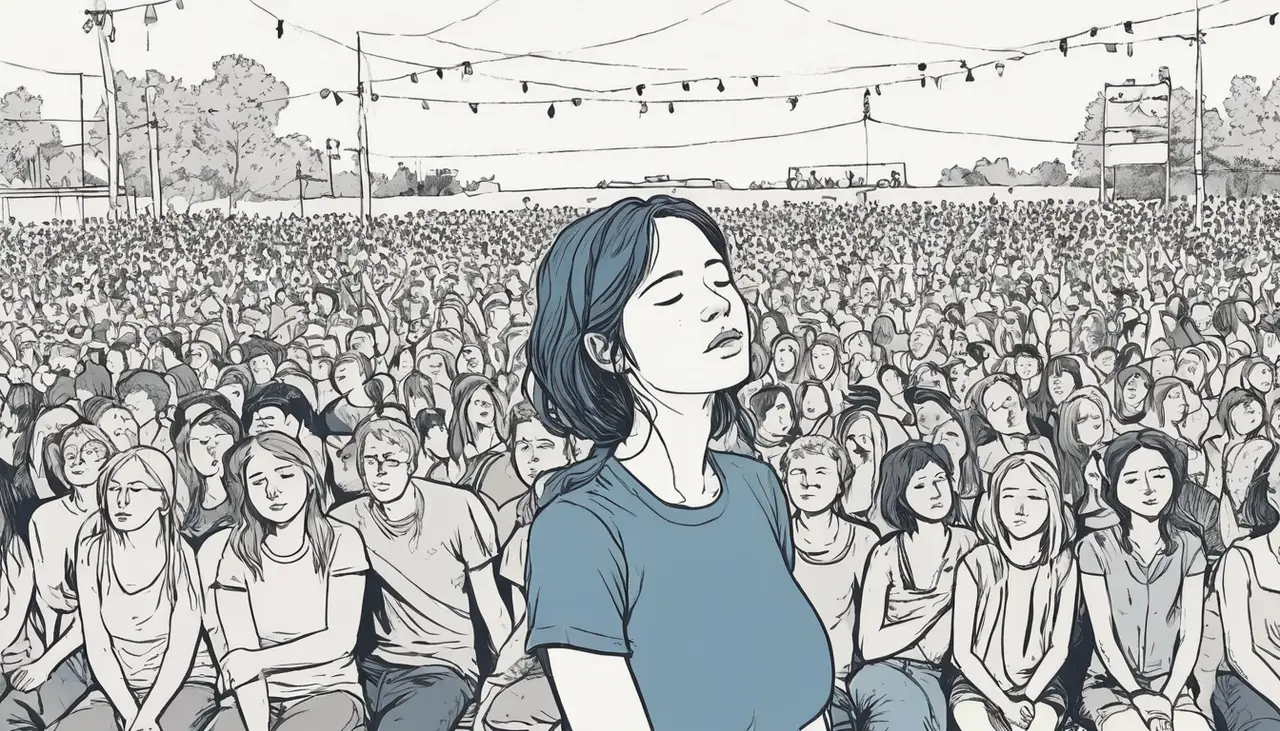
The band walks off after the second song of the encore, the house lights stay down, and everyone around you starts drifting the same direction — toward the bar. It is loud, you are a little bored in the gap, your hands are empty, and the line is right there. You are not even thirsty. You just do not have anything else to do with the next four minutes.
That gap is the whole problem. Not the music, not your willpower, not the friend who keeps buying rounds. The reason a show turns one drink into five is almost never the show — it is the dozen little dead stretches stitched through it, and what your hands reach for when the sound stops.
So here is the plan for the day: treat the show like a set list. A great set is built out of the songs and the spaces between them, and the between-song spaces are where you decide who runs the night — you or the bar line. Call it working the set breaks. You are not going to white-knuckle a concert. You are going to plan the gaps.
None of this is a willpower problem, by the way. A festival is engineered to sell you drinks: the long day, the sun, the wait before doors, the bar planted at the center of the room, the set change that leaves a few thousand people with nothing to do. Reaching for a cup in that vacuum is the room working exactly as designed — not a failure of nerve. Once you see the design, you can plan around it.
Why the gap is the trap
A craving at a show is usually a hands-and-time problem dressed up as a deep pull toward alcohol. There is a stretch of nothing — the set change, the food line, the wait for the headliner — and a drink is the nearest thing that fills it. The cup gives you something to hold, something to do, a reason to move.
That is also why the count gets slippery. One before the opener, one during the first set, one while friends hunt for food, one before the main act, one on the way out — six drinks that never felt like six because the day was long enough to hide them. The event is spread out, so the drinking spreads out with it, and no single moment feels like a decision.
If alcohol is in your day, the useful move is to count actual drinks, not cups or rounds. NIAAA defines a U.S. standard drink as 0.6 fluid ounces — about 14 grams — of pure alcohol, and a festival pour is often more than one. The same agency describes binge drinking as the pattern that pushes blood alcohol to about 0.08%, which tends to mean 5 or more drinks for men or 4 or more for women packed into roughly two hours. Those are shared yardsticks for describing a pattern, not a line where harm politely switches on; how a given day lands on you depends on your size, what you have eaten, the heat, how fast the gaps come, and how your own body handles alcohol. The point of the numbers is only this: a long day makes real drinks easy to lose track of, and a count you set in advance is harder to lose than one you tally in a dark, loud room.
Working the set breaks
The framework is four moves, and every one of them lives in a gap. Pick the ones that fit your show and run them.
Set your number before the lights go down
Decide the day before what the show is: zero, a specific count, or a pacing rule like one drink an hour with water in between. The number is not a verdict on your character. It is just a decision made somewhere quiet, so you are not negotiating with yourself in a room too loud to think. Do it now: text yourself the number, or say it out loud in the car. A plan you can see beats one you have to remember.
Fill your hands first
Walk in and make your first stop water, coffee, a soda, or food — not the bar. An empty hand at a show reaches for the nearest cup on reflex, so give it a different cup before the reflex fires. Check the venue rules ahead of time; many places let you bring an empty refillable bottle, though it varies by place. Do it now: before you leave, look up whether your venue allows a bottle, and if not, make "find water" your first move inside the gates.
Give the gap a job
This is the one that carries the day. Every set break, food line, and wander stretch needs a plan that is not "bar line." Walk the grounds. Find a quieter stage. Sit down. Refill your water. Text someone the setlist. The gap is going to happen either way — the only question is whether you filled it on purpose or let the room fill it for you. Do it now: pick your first set-break move before the opener even starts, so the first gap already has an answer.
Say the plain version out loud
Tell one person you came with: "I'm pacing today." That one sentence does more than any speech, because it stops the group from handing you a drink on autopilot. Most people honestly do not care what is in your cup — they care that you showed up. Do it now: say it to whoever you trust most in the group before the music starts, while it is still easy to say.
And eat earlier than feels necessary. A long day in the sun makes alcohol feel lighter than it is, which is exactly how the count gets away from you.
For public-health context on a long event, the 2020–2025 Dietary Guidelines for Americans suggest adults who choose to drink keep it to 2 drinks or fewer in a day for men and 1 or fewer for women. That is background for setting your own number, not a debate to have with your friends at the rail.
When a set break still gets away from you
Some nights you will work the gaps perfectly and still end up two drinks past your plan. One loose show is not a failed one — it is data. It tells you where the pressure actually sat: the wait before doors, the friend who buys in rounds, the specific set change when the boredom peaked. Notice it, and next time that gap already has a plan.
If the hardest part turns out to be the first ten minutes inside, first-time going to a bar after you've been cutting back works the same muscle. If it is friends pressing drinks on you, how to handle friends who keep offering you drinks is the sharper tool. And if a between-set gap tips into a real, physical urge rather than plain boredom, how to handle alcohol cravings and urges is the full kit for riding it out.
One thing worth deciding while you are still sober enough to decide it: how you are getting home. Arrange the ride, the transit plan, or the walk before the first drink, not during the last set. It is the one call you never want to make in the gap.
Carry one thing out
You do not need a perfect night. You need a plan for the spaces. The music was always going to be the easy part — the songs take care of themselves. It is the dead four minutes between them that decide how the night goes, and now those four minutes have a job.
Before your next show, write down three things: your number, your first set-break move, and your ride home. That is the whole framework. The band handles the rest.
If show days keep turning into heavier drinking than you meant, or if a stretch without alcohol has ever brought on shaking, sweating, or confusion, that is a medical conversation, not a willpower one — talk with a licensed clinician, and treat those physical symptoms as an emergency worth a call to 911 or a trip to an emergency room.
This is general education, not medical advice. If cutting back ever feels physically unsafe, or you just want to talk it through, a clinician can help — or call the SAMHSA National Helpline at 1-800-662-HELP (4357) for free, confidential, 24/7 referral.
- Quitting & sobriety
How do I stop drinking?
Stopping drinking starts with safety, not willpower. If you drink heavily every day or have had withdrawal symptoms, ask a clinician what level of care is safest before you stop suddenly. If you are medically stable, the next step is to choose support that matches your goal, privacy needs, and risk level: therapy, peer support, medication education, primary care, telehealth, outpatient treatment, or a higher level of care.
- Social events & holidays
How to Handle FOMO When You're Cutting Back on Drinking
FOMO is rarely the whole night — it is the people, the place, the drink, or the feeling. Name which corner is hot, give it one small move, and set the phone down.
- Social events & holidays
How to Handle Thanksgiving When You're Cutting Back on Drinking
Thanksgiving is an all-day drinking cue: plan the timeline, family lines, and first sober holiday pressure before the table fills.
- Body & physical health
Does Alcohol Cause Memory Loss? Short-Term, Long-Term, and What Can Recover
Alcohol can cause blackouts, next-day fog, and long-term memory changes. The pattern tells you when to cut back, track it, or seek medical care.
- Social events & holidays
How to Handle Summer BBQs and Cookouts When You're Cutting Back
A cookout has no clock, so bring your own: pick your first drink, your spot, your line, and your exit before you go. Decide once, not forty times.
- Social events & holidays
How to Handle a Day Drinking Event When You Want to Cut Back
A day drinking event has no dinner bell and no last call, so set your line before you arrive and keep something in your hand. Three anchor moves, no speech.


Be the first to hear when Clero launches.
Join with email only. Clero is still in development, so this is educational content today — not treatment, a prescription request, or medical advice.
First to hear at launchLaunch news only — no spamUnsubscribe anytime