
First Time Going to a Bar After You've Been Cutting Back
Your first bar visit after cutting back really has three hard moments — the door, the order, and the second round. How to cross each one on purpose.
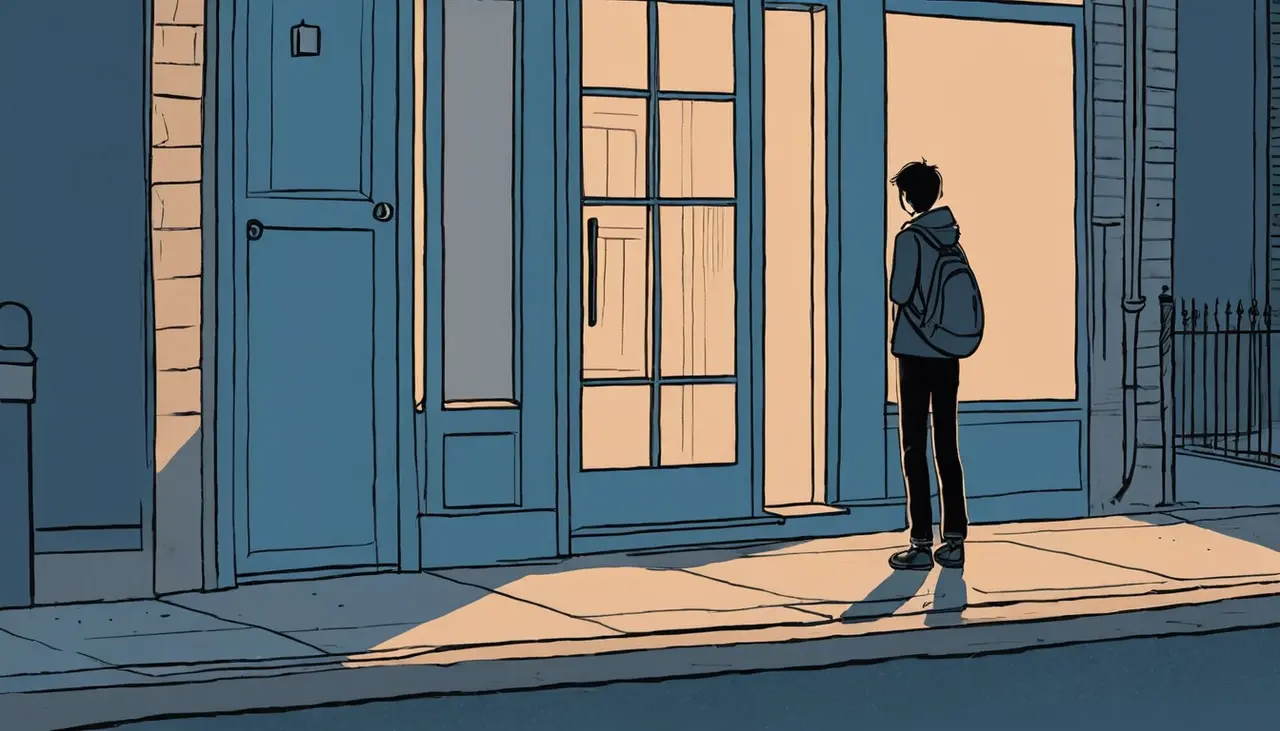
You are three steps from the door and your body already knows the room. The particular dark of it, the sound of ice going into a glass, the way the bartender glances up when the door opens. Before you have decided anything, some older part of you has half-decided for you — reached for the usual, settled onto the usual stool, cued up the usual answer to "what can I get you?"
That pull is not a sign the cutback is failing. It is a sign you spent a long time teaching this exact room a specific script, and the room learned it. The good news is that a script can be walked through slowly instead of run on autopilot — and a bar visit is short enough to walk through one threshold at a time.
Here is the whole thing in one idea. There are really only three moments in a bar that carry the old weight: the door, the order, and the second round. Cross each one on purpose and the night is mostly yours. Call it the Three Thresholds. You are not trying to win the evening. You are just trying to cross three specific lines awake instead of asleep, and you only have to cross each one once.
Why the room has this much pull
A cue is anything your brain has filed next to drinking often enough that the two now travel together. The NIAAA's core resource on the brain in addiction and recovery describes how the sight or thought of alcohol, or the places and cues tied to it, can trigger a craving — an urge to drink that arrives before any conscious decision does. A bar is not one cue. It is a dense stack of them: light, sound, smell, the stool, the friend to your left, the bartender's face. That is why the first ten minutes can feel loud out of all proportion to the actual choice in front of you.
Two things about that pull are worth carrying in. It shows up fast, ahead of thought, which is why it can feel like the decision has already been made. And it moves — a craving tends to crest and then ease if you do not feed it, more like a wave passing through than a switch left on. The Three Thresholds work with both facts: they slow the automatic part down, and they buy time for the wave to pass.
The first threshold: the door
The pull is loudest in the doorway because that is where the most cues hit you at once. So decide what the visit is for before you touch the handle — not "how much will I drink," but "why am I here and for how long."
Pick a concrete shape and say it to yourself in one sentence: see friends for forty-five minutes, watch the game, meet the date, then leave. A purpose is a rail. When the room starts steering, the rail is what you steer back to.
Do it now: before you go in, name the exit. Not a vague "I'll head out sometime" — an actual line, like "after this set" or "when the food's done." You are far more likely to leave on your own terms if you decided the terms outside, where the cues were quieter.
And if walking through that particular door feels like too much tonight, suggest somewhere else — a booth at a diner, a walk, a friend's kitchen. That is not the cutback losing. It is picking a room whose script you have not written yet.
The second threshold: the order
The order is its own moment because the bartender's "what'll it be?" is a cue with a person attached, and people are harder to ignore than furniture. The move is to get there first.
If you are not drinking tonight, order a non-alcoholic drink early — soda, tonic and lime, coffee, whatever. The order question gets much quieter once your hand is already holding something. Half the pressure of the bar is the empty hand and the open question; close both fast.
If the bartender knows your usual and reaches for it, you are allowed to just change it. A plain "actually, a soda water tonight" is enough. Bartenders watch people switch orders constantly; it is a smaller event to them than it is to you.
Do it now: decide your first order before you reach the bar, so you are answering from a plan instead of improvising under a spotlight.
The third threshold: the second round
The second round is where the old evening usually restarts. The first drink — or first non-drink — is one clean decision you made on the way in. The second round is a different animal, because now you are inside the warmth of the room and "just one more" has the whole night's momentum behind it.
So treat the second-round moment as its own checkpoint, not a foregone conclusion. When the table shifts toward another round, that is the line to notice. You can get another soda. You can call it and head for the exit you already named. You can stay without matching the round. What you are avoiding is the one thing that erases the plan: doing it on autopilot because the round is happening and you are there.
Do it now: when the "another?" moment comes, take one breath before you answer. That breath is the whole gap between reacting and choosing.
When a threshold goes sideways
Sometimes you will cross all three cleanly and go home a little proud. Sometimes you will order the old drink, or stay for three rounds, or leave feeling like the room won. That happens, and it is worth being honest that it will.
Here is the reframe that keeps one rough night from turning into a verdict: the visit is data, not a test. A test has a pass and a fail. Data just tells you where the weight actually sits — whether the hard part was the walk in, the order, the friend who kept buying rounds, the bartender knowing your face, or the late hour. Now you know what to change: a shorter visit, a different room, a different group, an earlier exit, or more time before the next bar night.
One night does not undo weeks of cutting back. It tells you which threshold needs a better plan.
Carry out one thing
If you remember nothing else, remember that a bar is three thresholds, not one wall — the door, the order, the second round — and you only have to cross each once, awake. Name your purpose and your exit before you go in, get a drink in your hand early, and treat the second round as its own decision instead of a default.
A quick honesty check on scope, because the thresholds are a plan for a night out, not a plan for a body under strain. If your drinking is daily and heavy, stopping suddenly can be genuinely dangerous — shaking, sweating, confusion, or a seizure during a dry stretch are medical emergencies, not willpower tests; call 911 or go to an emergency room, and a clinician can help you plan any change before you make it. If a night ever tips into feeling unsafe with yourself, the 988 Suicide and Crisis Lifeline is free, confidential, and open around the clock by call or text. And if the bar keeps running past your plan no matter how you set it up, that is worth saying out loud to someone — a licensed clinician, or a peer group like SMART Recovery, whose 4-Point Program is built partly around coping with exactly these urges and cues. Stigma is a big reason people wait until the story sounds dramatic enough to count; NIAAA names it as one of the most consistently reported barriers to getting help. Reaching out early is the uncommon move, not the weak one.
This is general education, not medical advice or a treatment plan; if cutting back ever feels physically unsafe, talk it through with a clinician who knows your history, or call the SAMHSA National Helpline at 1-800-662-HELP for a free, confidential referral.
- Helping someone who drinks
How to Help an Alcoholic Parent When You're the Grown-Up Child
You can't make a parent stop drinking, and you were never supposed to be the one managing it. What actually helps, what to say once, and where the hard limits are.
- Social events & holidays
How to Handle FOMO When You're Cutting Back on Drinking
FOMO is rarely the whole night — it is the people, the place, the drink, or the feeling. Name which corner is hot, give it one small move, and set the phone down.
- Social events & holidays
How to Handle Thanksgiving When You're Cutting Back on Drinking
Thanksgiving is an all-day drinking cue: plan the timeline, family lines, and first sober holiday pressure before the table fills.
- Medication & treatment
How to get naltrexone without going to doctor?
Yes — telehealth lets a licensed prescriber review you online and send naltrexone to your pharmacy, no office visit needed. How it works and what to expect.
- Social events & holidays
How to Handle Summer BBQs and Cookouts When You're Cutting Back
A cookout has no clock, so bring your own: pick your first drink, your spot, your line, and your exit before you go. Decide once, not forty times.
- Understanding your drinking
Found Hidden Bottles of Alcohol? What to Do Next
Hidden alcohol proves there is secrecy, not why it happened. Wait for a sober moment, name what you found, ask one direct question, and keep safety first.


Be the first to hear when Clero launches.
Join with email only. Clero is still in development, so this is educational content today — not treatment, a prescription request, or medical advice.
First to hear at launchLaunch news only — no spamUnsubscribe anytime