
Feeling Bored on Long Summer Evenings When You're Cutting Back
Why long light summer evenings can trigger alcohol cravings, and how to give the evening shape without relying on a drink.
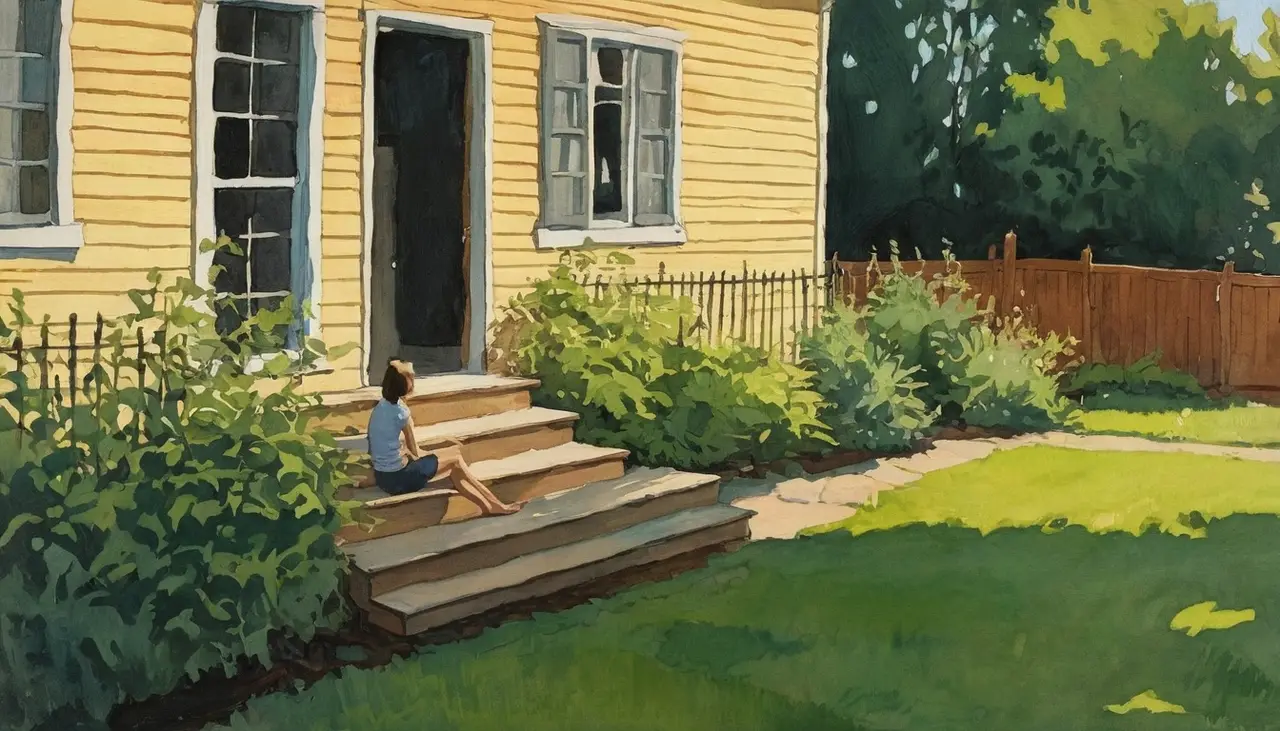
It's a quarter to nine and still bright out. Dinner's cleared, the dishes are done, and the day refuses to end the way it does in January. The porch is warm. The neighborhood is out. And there it is, quiet and reasonable: a cold one would fit this scene exactly. Not because anything's wrong. Just because the light won't quit and the evening is sitting there with three unassigned hours in it.
That pull isn't weakness, and it isn't a summer you have to white-knuckle through. It's a scene that got wired to a drink over a lot of repetitions, and the long light just makes the scene last longer. The good news is that a scene has parts — a place, an hour, a script — and parts can be rearranged. What follows is a small method for handing the long evening some edges before the craving hour arrives.
Call it the Sundown Plan. Think of the open summer evening as a big room with no walls. Right now the drink is the only furniture in it, so that's where your eye goes every time. You're not trying to shrink the room or move indoors and pretend it's winter. You're just building a few walls — a start, a middle, an end — so the evening has shape you didn't have to improvise.
Why the long light points at a glass
A craving is mostly a cue firing off a habit, running underneath conscious thought. In winter the dark closes the day for you; there's a natural wall at 5pm. Summer takes that wall away. The sun's still up, the yard's still usable, the street's still alive, and your brain — which spent years pairing warm-evening-outside with a drink — reads all of that as the cue. Give it the cue enough times and the response fuses to it: light out, evening open, therefore pour, no deliberation required.
That fusing is why it feels automatic at 8:45. It's also why it's workable. SMART Recovery, a secular mutual-help program, builds one of its four core areas entirely around coping with urges — which tells you two things worth holding onto. This is common enough to be its own category of skill. And an urge is something you can learn to sit beside instead of obey: it tends to rise, crest, and fade on its own if you don't feed it, usually within minutes. The Sundown Plan mostly buys you those minutes.
None of this is happening to you in isolation, either. Most of the summer around you is built on the majority pattern: NIAAA's alcohol-use summary reports that about 178.7 million people ages 12 and older — roughly 62% — drank in the past year. Cookouts, patios, the cooler on the porch: a lot of warm-weather leisure assumes a drink is in the frame. Noticing that the cue is partly seasonal and partly cultural takes some of the personal blame out of it.
The Sundown Plan, wall by wall
Four moves. Build them one at a time. None of them ask you to feel motivated or to have a better summer planned.
Find the exact hour
The pull has a launch window, and in summer it's usually later than you'd guess — it's the second wind, not dinner. You made it through the meal, and then at 8:30 it's still light and the evening seems to stretch. Name that seam out loud: "okay, this is the long-light hour." You're not fighting anything yet. You're catching the evening before the old off-ramp, while you still have some steering. Do it now: think back to last night and pin the exact time the thought first showed up.
Change the first twenty minutes
The strongest cue is often the spot you're standing in — the deck, the stoop, the kitchen door, the one chair. So don't surrender the whole night; just change how the trigger window opens. Walk a known route, sit somewhere that isn't the drinking chair, move indoors on purpose for a bit, water the plants. You're not committing to a hobby. You're breaking the this-place-means-pour link long enough for the urge to crest and start sliding back down. Do it now: pick one thing you could do for the first twenty minutes of the long-light hour that doesn't happen in the usual spot.
Give the evening an end
An open, edgeless stretch is the cue, so hand it a closing wall and the cue softens. Pick one thing that marks the evening as over at a set time — a call at nine, a shower, a chapter of a book outside and then indoors, lights-down at a chosen hour. Not a productive-evening fantasy. One small, boring boundary. Boring is the point; boring is what winter used to provide for free. Do it now: choose the single thing that will end tonight's evening, and the time it happens.
Move the first decision past the peak
You don't have to decide never. You just have to decide not yet. Push the first-drink question to a later, clearer point — after the walk, after the call, after the restless part passes — and make the choice there instead of on autopilot at 8:45. While you're at it, keep the alcohol somewhere less reachable during the test window; a little friction buys you the same few minutes the urge needs to crest. Do it now: name tonight's "I'll decide at ___" time and say it to yourself.
If you do drink, count in standard drinks rather than glasses, because a summer pour tends to run large. A U.S. standard drink is 0.6 fluid ounces — about 14 grams — of pure alcohol, which is smaller than most people pour on a hot night. That figure is just a shared way to describe a pattern, not a line where harm switches on. Risk climbs with how much you drink and how long you keep it up, and it lands differently depending on your body, your history, and what else is going on — there's no single amount that's safe for everyone or harmful for everyone. Counting honestly just shows you the real shape of the season so you know which evening to give walls to first.
There's a small language swap that makes all four walls easier to carry: stop calling it a boring evening with nothing to do and start treating it as time that hasn't been assigned yet. Same hour, same porch, same light. One version pulls toward the glass; the other hands you the wheel.
When the Sundown Plan doesn't hold
Some evenings it won't. You'll take the walk, set the end, and still pour at 8:45 — and that's worth saying plainly, because a method that pretends otherwise isn't honest. One planned-then-not evening is not a verdict about you or about whether this works. It's one data point in a long, bright season.
The move on those nights is to get curious instead of down on yourself. Ask what the cue actually was this time. The specific spot — the porch, the deck, the front step? The hour? Being alone with too much open time? A Sunday, where there's enough weekend left to want something and enough Monday ahead to feel restless? Each answer points somewhere different. A place cue wants a change of scenery. A time cue wants a standing wall. And if what's underneath is a flat "nothing sounds worth doing" that's showing up outside these drinking moments too — in work, in people, in things you used to like — that's worth naming to a clinician, because low mood can wear boredom's clothes.
For the neighboring versions of this, see evening alcohol cravings when the cue is the hour more than the season, boredom drinking when you have nothing else fun for the wide-open unstructured stretch, and instead of drinking after work if it's really the end of the workday. For the raw moment the urge lands, how to handle alcohol cravings and urges is the full kit.
Back to the porch
Next warm evening the light will hang on the same way, the porch will look the same, and the old off-ramp will still be right there sounding reasonable. That part doesn't change on a schedule. What changes is that the room has walls now, and you know where they are: find the exact hour, change the first twenty minutes, give the evening an end, move the decision past the peak.
Pick one long-light evening this week and build its walls before it arrives — one thing to open it, one thing to close it, one "I'll decide at ___." Keep it small enough that you'd actually do it. Afterward, jot the cue, the standard-drink count if you drank, and one thing you noticed. That's the whole plan — one evening, a few walls, one note. You don't have to love the quiet for it to count. You just have to give it a shape.
This is general education, not a diagnosis or a plan for your particular situation, and not a promise that long evenings get easier on a set date. If cutting back ever feels physically unsafe, talk with a licensed clinician first — and for free, confidential, 24/7 help any time, the SAMHSA National Helpline is at 1-800-662-HELP (4357). If a stretch without alcohol ever brings on shaking, sweating, or confusion, treat that as dangerous withdrawal and call 911 or go to an emergency room.
- Body & physical health
Does Alcohol Affect Your Taste Buds and Sense of Smell?
Yes — alcohol really can change how things smell and taste, dulling some senses and sharpening others. What's moving, and what recovers if you cut back.
- Social events & holidays
How to Handle a Baseball Game or Stadium Event While Cutting Back
At a ballgame, set your number before the first pitch and count the 24-ounce souvenir cup as two drinks, not one. A plan that runs on the game's own rhythm.
- Social events & holidays
How to Handle a Concert or Music Festival When You're Cutting Back
At a concert or festival, the drinking happens in the gaps: set changes and bar lines, not the music. Plan the set breaks and the day stays yours.
- Social events & holidays
How to Handle Halloween When You're Cutting Back on Drinking
Halloween gets easier when you decide the cup, the shot answer, and the exit before the night starts moving.
- Social events & holidays
How to Handle Pride Events When You're Cutting Back on Drinking
A practical Pride Month pacing guide for brunches, parades, block parties, clubs, and house gatherings when you want the day to include less alcohol.
- Mind & mood
Feeling Jealous of Friends Who Drink Normally
Jealousy of friends who drink normally is rarely about the glass — it's the ease you miss. Why naming the envy out loud loosens its grip on the night.


Be the first to hear when Clero launches.
Join with email only. Clero is still in development, so this is educational content today — not treatment, a prescription request, or medical advice.
First to hear at launchLaunch news only — no spamUnsubscribe anytime