
Drinking Around Your In-Laws When You're Cutting Back
How to think through drinking pressure around a partner's family without defaulting to disclosure, avoidance, or one-size-fits-all family advice.
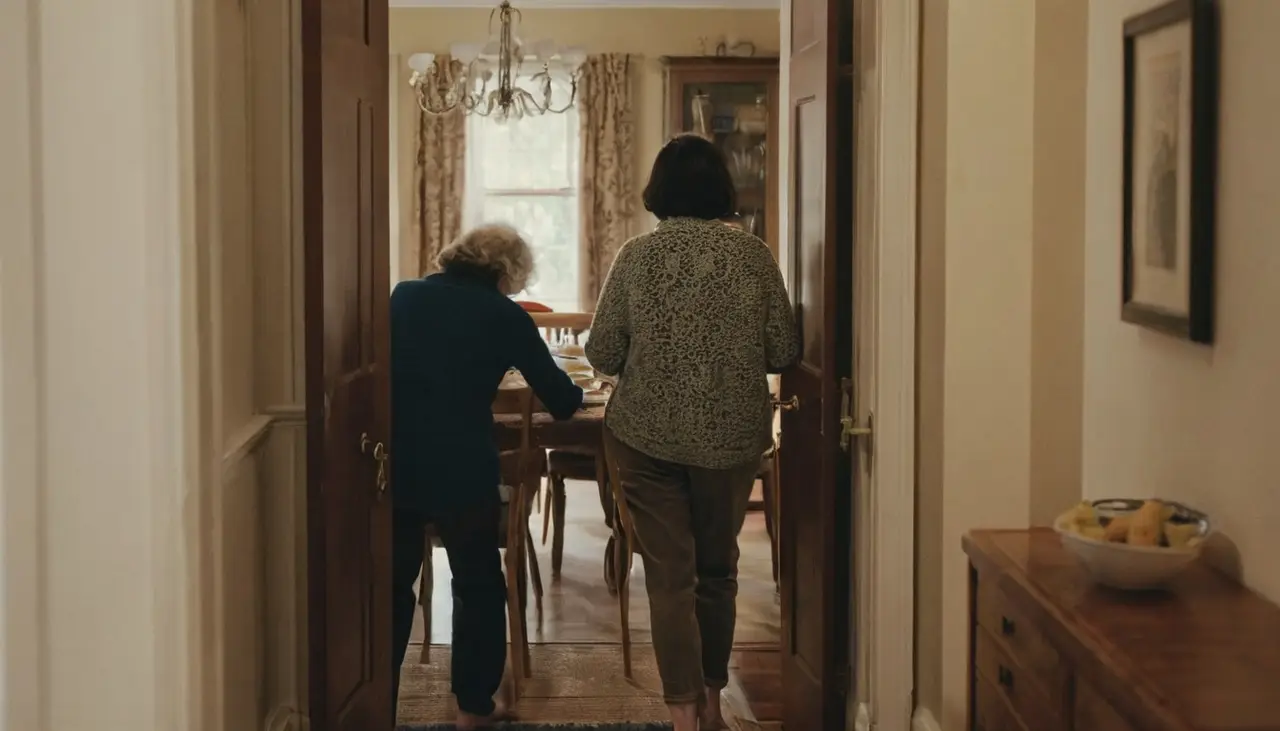
The car is still warm and someone already has a glass out for you. You barely have your coat off. There's a bottle open on the counter, your partner's aunt is beaming, and the pour is happening whether or not you've decided anything. You wanted to go easy tonight. You did not plan to announce it in the doorway.
Here's the thing nobody tells you about a partner's family: the drink in your hand is rarely just a drink. It can be hospitality, a family tradition, a small test of whether you belong, or somebody's way of being kind. You are reading a room whose rules you only half know, with less standing than you'd have in your own kitchen — and that is exactly why a plan helps more here than almost anywhere else.
So this isn't a page about willpower, and it won't tell you to confess anything. It hands you a way to walk into that house with a map already in your head. Call it the Room Map: instead of white-knuckling every pour, you sketch the visit's drinking terrain before you arrive, so the hard moments don't arrive as surprises. Cutting back around in-laws isn't a loyalty test you pass or fail. It's a room you learn to move through.
Why the map beats the willpower
A craving or a social nudge tends to spike hardest when you're caught flat-footed — no line ready, no exit imagined, everyone watching. The pull feels enormous in that half-second because your brain is improvising under pressure. Give it a rehearsed move instead and the same moment shrinks to something ordinary. You're not stronger; you just stop meeting each pour cold.
That's the whole trick of a map. It moves the decisions out of the noisy kitchen and back into the quiet car ride, where you can actually think. The in-laws' house is a distinct environment precisely because your usual autopilot doesn't work there — you can't coast on knowing who pours heavy and who won't notice. So you replace the missing instinct with a plan. Four moves, each one you can pull off in a crowded room without a speech.
Move one: Mark the pour windows
Before you go, run the visit forward in your head and mark where the drinking actually clusters. Most long family days have a shape. There's the arrival pour, the one that lands before you've taken your coat off. There's the meal. There's the loose post-dinner stretch in the kitchen. There's the late porch or couch, and then the drive home when you're tired and replaying everything.
Naming these windows tells you which one is your hard part. For a lot of people it isn't the dinner — it's the arrival, or the fuzzy after-dinner hours where the count gets away from you. A social afternoon can quietly cross a line without any single dramatic moment: NIAAA counts binge drinking as the pattern that brings blood alcohol to about 0.08%, often 5 or more drinks for men or 4 or more for women in roughly two hours. An all-day visit with a refill every hour gets there without ever feeling like a big night.
Do it now: name your one hardest window out loud in the car. Just the one. That's the moment your other three moves are for.
Move two: Pack a few complete sentences
You do not owe anyone the story of why you're cutting back. What you need is a short line for the pour, and the freeing part is that a complete refusal is often just a few words. "I'm pacing tonight." "I'm driving." "Not right now." "I'm good with this one."
None of these opens the door to a conversation you don't want. They're doors that close gently. The mistake people make is treating a declined drink like a debate they have to win — explaining, justifying, negotiating. You don't. A short line, said warmly and repeated without escalation, does more than a paragraph. If someone pushes, you repeat the same line, not a new argument.
Do it now: pick your two go-to lines and say them once so they're already in your mouth. The one you reach for first should feel true even if it's small.
Move three: Draft your partner in before the driveway
Your partner can be the most useful person in that house or the most oblivious, and the difference is usually one conversation you haven't had yet. Decide what you want them to know and do — which is a completely separate question from what their family needs to know. You might want a ride handled so "I'm driving" is real. You might want a signal for "change the subject." You might just want them not to top off your glass on autopilot.
This is not asking your partner to disclose for you or run interference like a bodyguard. It's giving one person in the room a small, specific job so you're not holding a new rule entirely alone while they drink at their normal pace, forgetting you're doing something hard.
Do it now: send one text before you arrive — "hey, if I catch your eye and tap my glass, help me change the subject." Small, concrete, done.
Move four: Move your body, not just your mouth
When the lines aren't landing and the pours keep coming, stop trying to win with words and change what you're doing instead. Keep the full glass in your hand as a prop so no one refills it. Set it down and drift to another room. Take the trash out. Volunteer for the dishes. Step onto the porch. Leave twenty minutes earlier than you planned.
The urge to drink tends to peak and then fade if you can get a little distance and a little time between you and the bottle — you don't have to out-argue it, you just have to outlast it. Physical repositioning buys you both. You are allowed to be the person who wanders off to play with the dog when the third round starts. Nobody is tracking you as closely as the pressure makes you feel.
Do it now: pick your escape hatch before you need it — the dog, the dishes, the porch. Know your exit so you're not inventing one under pressure.
When the map doesn't hold
Some nights you'll use every move and still drink more than you meant to. A pushy host, a hard conversation, an old family dynamic you didn't see coming — one rough evening at the in-laws' is not a verdict on you, and it doesn't mean the plan was worthless. It means that room is genuinely difficult, which you already suspected. Note which window got you, and adjust the map for next time. That's the map doing its actual job, which is to get a little more accurate every visit.
Cutting back can also make old patterns suddenly visible. Maybe you used to drink to be more agreeable in that house, or to match the host's pace so nobody asked questions, or just to get through feeling observed. Noticing that doesn't mean the family is toxic or your partner failed you. It means alcohol was doing a job in that room, and now you're looking for another way to do it. That's uncomfortable and completely normal.
One real limit worth naming plainly: if you're drinking heavily every day, don't use a family visit as the place you suddenly stop. Talk with a clinician first about how to cut back safely. And if a stretch without alcohol has ever brought on shaking, a racing heart, confusion, or a seizure, that's a medical emergency, not a willpower moment — call 911 or get to an emergency room.
What to carry out the door
If you keep only one thing, keep this: you don't have to decide anything in the doorway. The whole point of the Room Map is that the deciding already happened in the car, so the crowded kitchen just becomes a place you move through with a plan instead of a place that happens to you.
Before the next visit, do the three-minute version. Name your hardest window. Load two lines. Text your partner one small job. That's a map, and it fits in your head. For the moments the urge shows up hard in that crowded room, how to handle alcohol cravings and urges is the fuller toolkit; if the pressure is really about the questions, what to do when people keep asking why you're not drinking tonight goes deeper on the lines.
This is general education about one social situation — not medical advice, not couples counseling, and not a rule about what you have to tell anyone. If cutting back brings on symptoms that feel physically unsafe, that's a question for a clinician who knows your history; SAMHSA's free, confidential National Helpline is at 1-800-662-HELP (4357), 24/7.
- Social events & holidays
How to Handle a Baseball Game or Stadium Event While Cutting Back
At a ballgame, set your number before the first pitch and count the 24-ounce souvenir cup as two drinks, not one. A plan that runs on the game's own rhythm.
- Social events & holidays
How to Handle a Concert or Music Festival When You're Cutting Back
At a concert or festival, the drinking happens in the gaps: set changes and bar lines, not the music. Plan the set breaks and the day stays yours.
- Social events & holidays
How to Handle Halloween When You're Cutting Back on Drinking
Halloween gets easier when you decide the cup, the shot answer, and the exit before the night starts moving.
- Social events & holidays
How to Handle Pride Events When You're Cutting Back on Drinking
A practical Pride Month pacing guide for brunches, parades, block parties, clubs, and house gatherings when you want the day to include less alcohol.
- Social events & holidays
How to Handle Thanksgiving When You're Cutting Back on Drinking
Thanksgiving is an all-day drinking cue: plan the timeline, family lines, and first sober holiday pressure before the table fills.
- Social events & holidays
Drinking at a Class Reunion When You're Cutting Back
How to think through high school or college reunion weekends when old drinking memories, multi-night events, and limited disclosure all collide.


Be the first to hear when Clero launches.
Join with email only. Clero is still in development, so this is educational content today — not treatment, a prescription request, or medical advice.
First to hear at launchLaunch news only — no spamUnsubscribe anytime