
Drinking After a Really Hard Workday When You're Cutting Back
The after-work drink gets decided long before you reach the door, so move the decision earlier. A four-step checkpoint for hard days while you're cutting back.
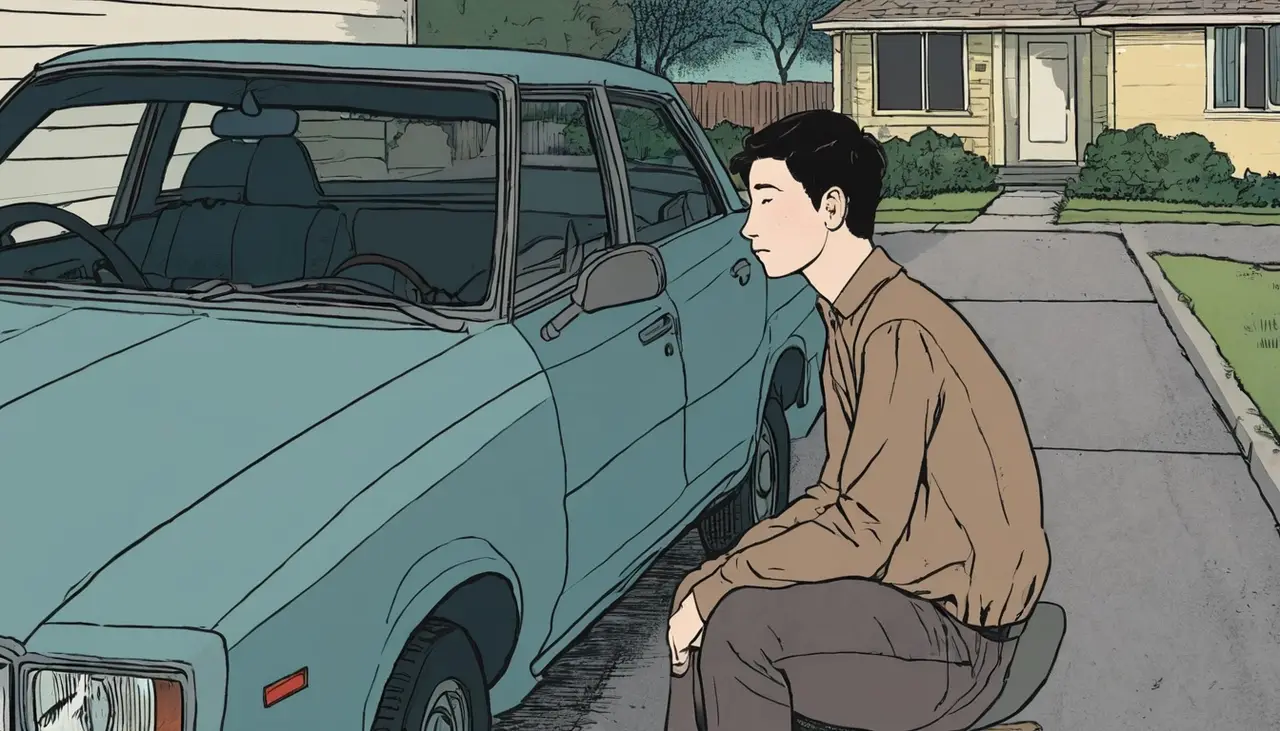
You are three minutes from your door. The meeting that fell apart, the shift that would not end, the message you cannot unread — all of it is still sitting in your chest, and somewhere between the car and the key, a plan has already formed. Not a decision, exactly. More like a reflex with your name on it. Pour something. Make the day stop.
That reflex is real, and it is not a character flaw. On a genuinely brutal day the drink is doing a job — it is the fastest off-switch you know for a nervous system that has been running hot since 9am. What this piece hands you is not willpower and not a lecture. It is a single move, run at one specific spot, that gets the decision out of your hands before your hands are the ones deciding. Call it the Checkpoint.
Why the door is the worst place to decide
Here is the trap. The bad-day drink almost never gets chosen at the door. It gets chosen somewhere back down the road — in the car, on the train, halfway through the sentence you were rehearsing to no one — and by the time you are standing at the counter, you are not deciding anything. You are executing.
Part of why the pull is so strong is that alcohol genuinely does turn the volume down, fast. The CDC notes plainly that some people drink more when they are under stress, lonely, or isolated — the hard day is not a random craving, it is the trigger doing exactly what it has been trained to do. And it delivers. For a couple of hours, the meeting goes quiet.
The catch is the back half of the night. When the alcohol clears, a brain that leaned on it to calm down tends to rebound the other way — restless, wired, and worse at sleeping than if the day had just been allowed to end on its own. So the numb-out that closed tonight is often the same thing that hands you a rougher tomorrow, on a morning that usually needs you back at the exact job that wrecked you. That is not a moral problem. It is a timing problem — and timing is something you can actually move.
The Checkpoint
The whole idea is to pick one spot, every hard day, that comes before the door — and to make the real decision there, while a slightly cooler version of you is still at the wheel. One place. One thirty-second routine. That is the framework. Four steps.
Name the day out loud
Before you touch the car door handle, say the actual thing in one flat sentence. "That was a firing and I feel sick about it." "I got humiliated in front of the whole team." No fixing, no spin — just naming it turns a vague full-body dread into a specific event with edges, and an event with edges is something you can respond to instead of just drown.
Do it now: next hard day, say the sentence before you start the engine. One line, out loud, to the windshield.
Ask what the next hour is really for
The bad-day pour is usually aimed at ten minutes of not-feeling — the meeting, the shame, the fear. So name the ten minutes. What exactly are you trying to not feel: anger, grief, embarrassment, helplessness, plain exhaustion? You are not talking yourself out of the drink here. You are just finding out what the drink was actually being asked to do, because most of those jobs have a cheaper way to get done.
Do it now: finish the sentence "For the next ten minutes I don't want to feel ______." Say what fills the blank.
Buy the gap
Between the checkpoint and the pour, put one small physical thing that has to happen first. Change out of work clothes. Eat something. Walk one loop of the block. Sit in the parked car for five minutes with the radio on. Text one person the sentence from step one. None of these are the drink and none of these are a substitute for it — they are just a wedge of time slid between the trigger and the reflex, long enough for the initial spike to come down a notch.
Do it now: pick your one gap-filler in advance, tonight, so future-you doesn't have to invent it while activated.
Decide the day, not the door
Now — still at the checkpoint, before the counter — make the call for tonight only. Maybe the answer is still yes, and one drink, chosen on purpose, is a completely different animal from three drinks that chose you. Maybe it is no. Either way you decided it here, cooler, on a full picture of what tomorrow needs, instead of on autopilot at the counter. The point was never to always say no. It was to be the one saying it.
Do it now: if you count, count in standard drinks — 0.6 fluid ounces, or 14 grams, of pure alcohol each. A decided number is easier to hold than a vague "just a couple."
When the bad day writes its own exception
There is one line the hard-day drink loves to whisper, and it is worth catching: today was unusually bad, so tonight doesn't count. It is true. Today probably was unusually bad. But if every unusually bad day earns the exception, the cutback quietly starts depending on your job being easy — and a plan that only survives good weeks is not really a plan. If the hard days are arriving most weeks, the wider question is whether drinking is quietly lowering your work baseline.
You do not beat that by white-knuckling. You beat it by seeing that the exception is itself a pattern, and running the checkpoint on exactly the days that feel most exempt from it. The worst days are the whole point of having the move.
When the checkpoint isn't the issue
Some evenings the checkpoint works and you feel the ground come back under you. Some evenings you run it and pour three anyway. That does not mean the tool failed and it does not mean the cutback is pointless — it means that one day was hard, which you already knew. A slip is information, not a verdict: go back and find where it broke. At the car? At dinner? Late in the evening when the first drink lowered the guard on the second? That location tells you where to move the checkpoint next time. Shame tells you nothing.
But notice, too, where a coping move stops being enough. If the drinking is daily and heavy, or if drinking is now steering your health, your driving, or the people who count on you, this is past the reach of a doorway routine, and a licensed clinician who knows your history is the right next call. Stopping heavy daily drinking abruptly can be genuinely dangerous: if a stretch without alcohol has ever brought on shaking, sweating, a racing heart, or confusion, treat that as an emergency and call 911. The free, confidential SAMHSA National Helpline (1-800-662-HELP) can connect you with care any hour, and if a bad night ever tips into feeling unsafe with yourself, call or text 988.
What to carry out the door
You will have another hard day. That part is not in your hands. What is in your hands is the thirty seconds before the door — the one spot where you say the day out loud, name what the next hour is for, buy a little gap, and make the call while you are still the one making it. Pick your checkpoint tonight, before you need it. The reflex is fast, but the checkpoint gets there first.
This is general education about a drinking trigger, not medical advice. If the hard-day drink has quietly become an every-day one, or if cutting back brings on withdrawal symptoms, that is a conversation for a clinician who knows your history — and acute symptoms like shaking, confusion, or a seizure are a reason to call 911 now.
- Cravings & triggers
Drinking After Good News or When You're Celebrating
Celebration drinking catches a cutback off guard because most plans are built for bad days. The Toast Test: four passes before the good news becomes a long night.
- Social events & holidays
How to Handle a Baseball Game or Stadium Event While Cutting Back
At a ballgame, set your number before the first pitch and count the 24-ounce souvenir cup as two drinks, not one. A plan that runs on the game's own rhythm.
- Social events & holidays
How to Handle Halloween When You're Cutting Back on Drinking
Halloween gets easier when you decide the cup, the shot answer, and the exit before the night starts moving.
- Social events & holidays
How to Handle Pride Events When You're Cutting Back on Drinking
A practical Pride Month pacing guide for brunches, parades, block parties, clubs, and house gatherings when you want the day to include less alcohol.
- Social events & holidays
How to Handle Thanksgiving When You're Cutting Back on Drinking
Thanksgiving is an all-day drinking cue: plan the timeline, family lines, and first sober holiday pressure before the table fills.
- Social events & holidays
How to Handle the Fourth of July When You're Cutting Back
A ten-hour Fourth of July pours itself unless you set edges first. Decide your leave time and drink number in the car, then keep a non-alcoholic can in hand.


Be the first to hear when Clero launches.
Join with email only. Clero is still in development, so this is educational content today — not treatment, a prescription request, or medical advice.
First to hear at launchLaunch news only — no spamUnsubscribe anytime