
When Your Cravings Come at the Same Time Every Day
Cravings that arrive on schedule are a trained prediction, not a verdict — and their punctuality is an advantage. A four-move plan to break the daily appointment.
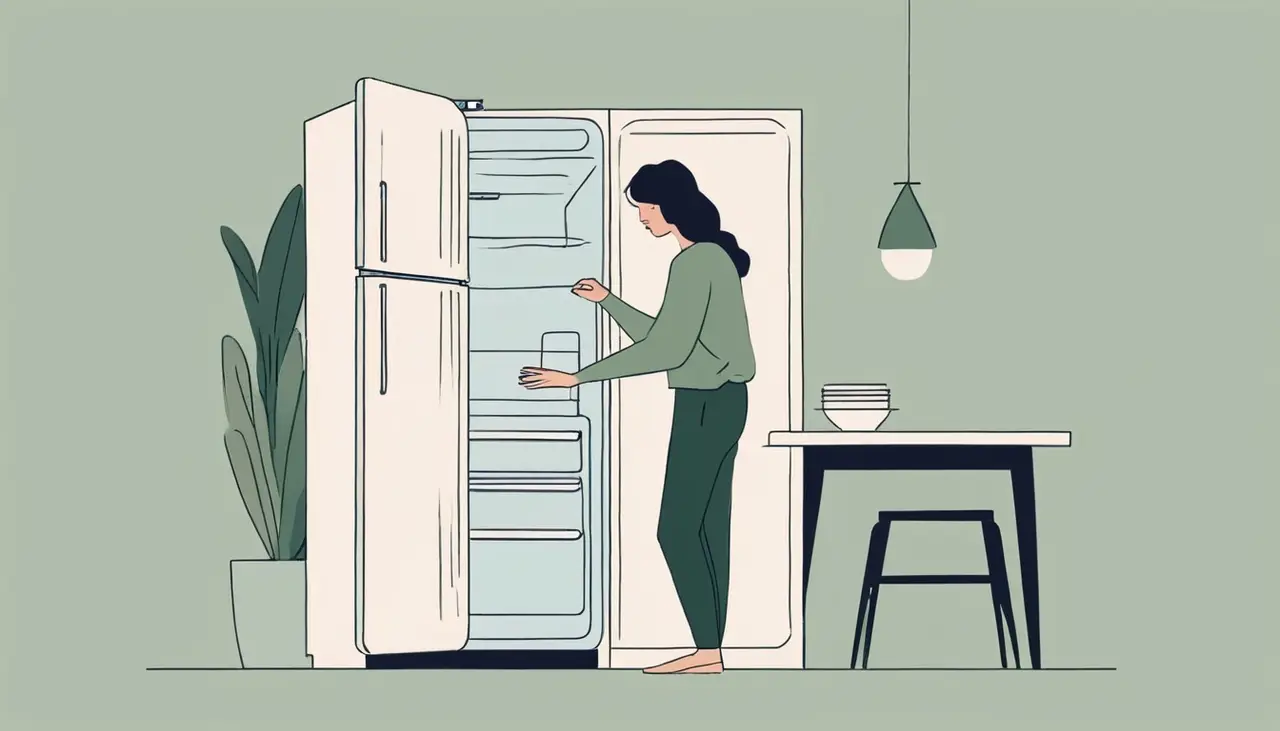
It's 5:40 on a Tuesday. The laptop is closed, the kitchen light is on, dinner is still a vague idea — and there it is. The same pull, at the same hour, as punctual as a commuter train. It came at 5:40 yesterday. It'll come at 5:40 tomorrow. And under the wanting sits a quieter worry: if I can set a watch by this, does that mean something is really wrong with me?
Take a breath. A craving that keeps an appointment is easier to work with than one that ambushes you at random, because you know exactly when and where it will show up. That regularity is a tactical advantage, not a verdict.
The pull is a trained prediction — not a willpower failure, and not, by itself, a diagnosis. When a drink has answered the same moment a few hundred times, your brain learns the schedule and starts setting the table early. What you need is a tool that turns the pattern's punctuality against it. Here's one: the Clock-Cue Map, four moves. Mark the hour, move one cue, give the window a new job, read tomorrow's map.
Why the clock knows before you do
Alcohol nudges the brain's reward circuitry to release dopamine — the chemical that stamps a behavior with "do that again," as Cleveland Clinic's explainer on alcohol and the brain lays out. Repeat the drink at the same hour, in the same chair, after the same laptop-shutting ritual, and eventually the brain stops waiting for the alcohol. The hour itself starts the anticipation. That's why cravings that come at the same time every day arrive before you've consciously thought about a drink: your brain isn't reacting, it's forecasting.
A cutback is often what makes this visible. While the drink answered the cue within minutes, the cue stayed hidden inside the routine. Delay or skip the drink and the cue steps into the open — which feels like things getting worse, but is really the schedule showing itself for the first time.
Two more things follow, and both are good news. A craving behaves like a wave: it builds, crests, and fades, usually within minutes, if nothing feeds it. And a link that was learned can be unlearned — Harvard Health's piece on retraining the brain away from heavy drinking runs on exactly that logic: a reflex built by repetition loosens when the pairing gets broken often enough. So a reframe for the moment itself: the 5:40 pull isn't the drink demanding to be let in. It's the schedule asking whether you're still on.
That's what the four moves are for.
Mark the hour
Write the appointment down as three plain facts: the time, the place, and the thing that happens right before. "5:40, kitchen, laptop closes." A cue named in ordinary words is something you can step around; a mood you're trying to defeat is not.
And "time" is broader than the clock. For a shift worker, the trigger may be the transition home, whatever hour it lands. For others it's a weekly rhythm — Thursday evening, Sunday afternoon — or an object that fires the sequence: the kitchen light, the dishwasher starting, the porch chair, the leash coming off its hook. If you can't name all three facts, write the one you know and leave the rest blank. The map fills in as the week goes on.
Do it now: tonight, when the pull lands, write one line — the time, and whatever happened in the ten minutes before it.
Move one cue
Willpower is at its weakest when the old move is the easiest one in the room. So before tomorrow's window opens, change one physical or social detail sitting on the automatic path. Put the nonalcoholic option at the front of the fridge and the bottle somewhere that requires a decision. Come home by the door that doesn't pass the cabinet. Answer the standing "drinks?" text at 5:00, when it's a choice, instead of at 5:45, when it's a current.
You're not proving strength. You're adding three seconds of friction to a routine that used to run in zero — and three seconds is often enough room for the rest of the map to work.
Do it now: pick the single detail that does the most work in your version of the 5:40 scene, and change it before the next window.
Give the window a new job
A predicted reward hates a vacuum. Leave the window empty and the old plan reapplies for the position — so schedule the replacement to start before the appointment, not at it. If the pull comes at 5:40, the walk, the shower, the loud first ten minutes of dinner prep, or the call to your sister starts at 5:30. The new job doesn't have to be virtuous. It has to occupy the slot.
Some days the wave will still arrive mid-shift. When it does, give it ten minutes before you decide anything — not ten minutes of white-knuckling, ten minutes of doing the job in front of you while the crest passes. Deciding about a drink after the crest is a different decision than deciding during it. If your loudest window is the work-from-home five o'clock specifically, the five p.m. trigger has its own walkthrough; for the in-the-moment mechanics of riding an urge out, see how to handle alcohol cravings and urges.
Do it now: choose one replacement and anchor it to a start time five to ten minutes ahead of your marked hour.
Read tomorrow's map
Review the attempt after the window closes — never during it, and never at midnight while you're tired and prosecuting yourself. The next morning, ask three questions: what opened the door, what helped even a little, and what would make the next attempt depend less on mood? Keep one sentence and throw out the courtroom speech. "The cue was stronger at 9 p.m." is a map note. "I failed again" is a verdict, and verdicts don't steer.
You don't have to log forever. A week or two of one-line notes is usually enough to show which window is genuinely loudest — then you can put your effort into that window instead of treating the whole day as equally hard.
Do it now: decide where tomorrow's one-sentence review will live. A note by the coffee maker works.
What the clock can and can't tell you
Be straight about the limits. Some evening the map will lose: the cue will fire, the replacement will feel pointless, and the drink will happen anyway. One rough night doesn't erase what you've learned — it becomes the next note.
The clock also can't diagnose you, in either direction. A craving that keeps a schedule tells you a habit loop is well trained; it does not, by itself, mean alcohol use disorder. The hour does change the reading in one case: wanting a drink in the morning, before the day has given you a reason, sits closer to the body than to the routine. Two neighboring signals matter more than punctuality. The first is what your body does when you go without: shakiness, sweating, or a racing heart that a drink settles points toward physical dependence, and stopping suddenly from there can be dangerous — bring a clinician into the plan before any hard stop. If going without ever brings confusion, hallucinations, or a seizure, that's an emergency: call 911 or go to an ER. And if a low evening slides toward thoughts of harming yourself, call or text 988. The second signal is the honest size of the window. NIAAA counts a U.S. standard drink as 0.6 fluid ounces — 14 grams — of pure alcohol, and defines binge drinking as the pattern that typically brings blood alcohol concentration to about 0.08 percent, often five or more drinks for men or four or more for women within about two hours. If your daily window routinely ends there, you're working on more than a cue problem.
One more thing the clock can't tell you: that you're broken. NIAAA names stigma as one of the most persistent reasons people avoid getting help, and a schedule your own routine built is about the weakest evidence of brokenness there is. Predictable is not the same as doomed.
If the same window keeps winning after a few honest weeks — cues moved, slot filled, notes read — that isn't proof the tool failed or that you did. It's a sign the pattern deserves a bigger toolkit than a notebook, and a licensed clinician is the reasonable next size. If you don't have one to bring it to, Clero can connect you with a licensed clinician by telehealth to look at the whole pattern with you — including whether a medication like naltrexone is worth discussing for the cravings themselves.
Most people never get that conversation. In 2024, 27.9 million people ages 12 and older in the United States had past-year alcohol use disorder — about 9.7 percent of that age group — and only about 7.6 percent of them received any alcohol treatment that year. That's a gap in access and awareness, not evidence that help doesn't help.
5:40 comes around again tomorrow
Same kitchen, same light, same train pulling in on time. The difference is that now you hold the timetable too. Mark the hour it actually arrives. Move one cue before it does. Give the window a job that starts early. Keep one honest sentence for the morning. That's the whole map — small on purpose, because the moment it serves is small: one specific hour, one week at a time, and you already know when it starts.
This article is general education, not medical advice or a plan for stopping suddenly. For free, confidential treatment referrals, SAMHSA's National Helpline is 1-800-662-HELP; call or text 988 for thoughts of self-harm, and treat shaking, confusion, hallucinations, or a seizure after going without alcohol as a 911 or emergency-room problem.
- Quitting & sobriety
How do I stop drinking?
Stopping drinking starts with safety, not willpower. If you drink heavily every day or have had withdrawal symptoms, ask a clinician what level of care is safest before you stop suddenly. If you are medically stable, the next step is to choose support that matches your goal, privacy needs, and risk level: therapy, peer support, medication education, primary care, telehealth, outpatient treatment, or a higher level of care.
- Social events & holidays
Drinking on Juneteenth When You're Cutting Back
Cutting back at a Juneteenth cookout comes down to four moments: the handed first cup, the long middle, the watched moment, and the exit. Plan those, not the day.
- Understanding your drinking
8 to 12 Beers a Day
A safety-first guide to what an 8-to-12-beer daily pattern means in standard-drink terms, why it warrants clinician input, and why this page will not give a taper plan.
- Social events & holidays
How to Handle a Concert or Music Festival When You're Cutting Back
At a concert or festival, the drinking happens in the gaps: set changes and bar lines, not the music. Plan the set breaks and the day stays yours.
- Social events & holidays
How to Handle Labor Day Weekend When You're Cutting Back
Cutting back on Labor Day starts with a plan for each gathering. Set an arrival and exit time, count actual pours, and have a reply ready for refills.
- Cutting back & moderation
When Your Doctor Told You to Cut Back but Didn't Tell You How to Start
What to ask after a clinician says to cut back on drinking but does not give a clear target, timeline, or first step.


Be the first to hear when Clero launches.
Join with email only. Clero is still in development, so this is educational content today — not treatment, a prescription request, or medical advice.
First to hear at launchLaunch news only — no spamUnsubscribe anytime