
Drinking on Juneteenth When You're Cutting Back
Cutting back at a Juneteenth cookout comes down to four moments: the handed first cup, the long middle, the watched moment, and the exit. Plan those, not the day.
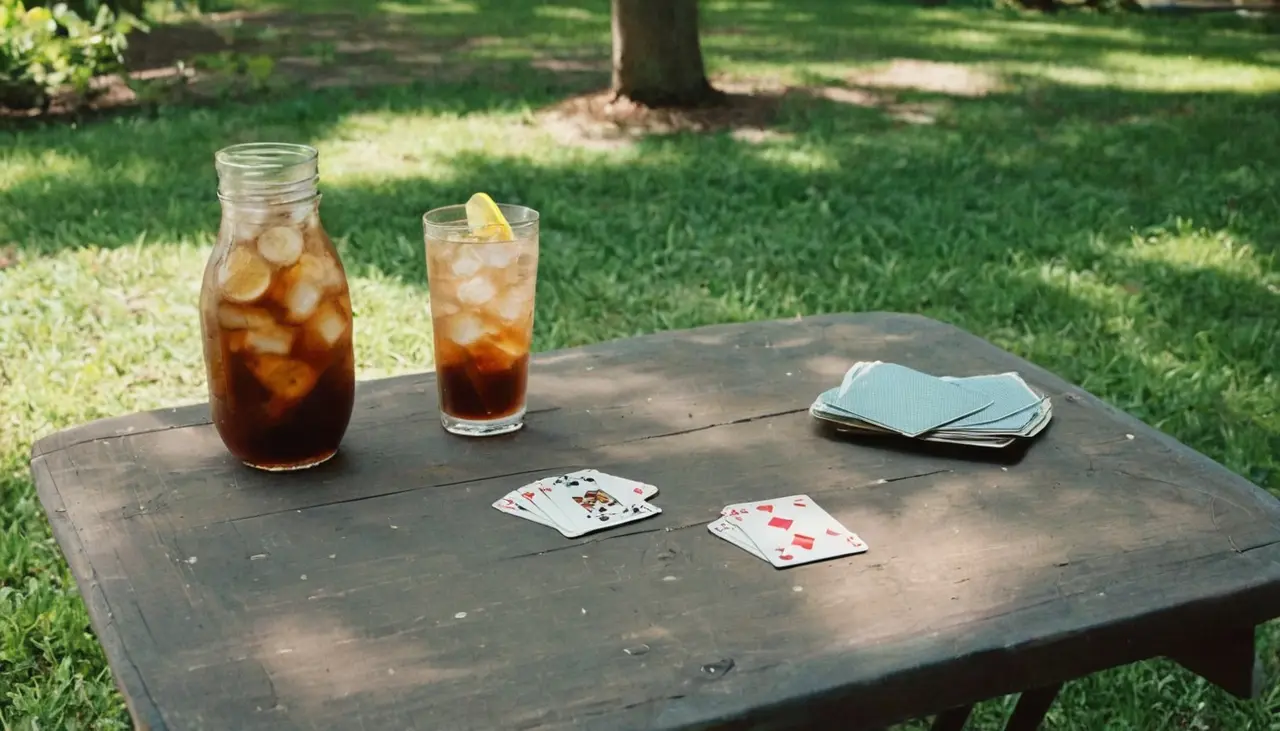
The cooler is open by two. Someone hands you a cup before you've said a word, because that's how the day works and always has. The grill smoke is doing its thing, the speaker's on the good playlist, and the afternoon stretches out ahead of you with no clear end. You're cutting back. And right now, hand already half-reaching, none of your reasons feel loud enough to matter.
Here's the thing about a day like this: you can't hold a whole open-ended afternoon in your head at once. That's what makes it slippery. But a Juneteenth cookout isn't one long undifferentiated stretch — it's a handful of specific moments, and only a few of them are actually hard. Map those, and you're not white-knuckling nine hours. You're holding four corners.
This isn't about willpower, and it isn't about the day
Before the corners, two things worth saying plainly.
First: wanting a drink at a gathering where everyone's drinking is not a character flaw. It's the room. In most adult American gatherings, at least some drinking is the assumed baseline — NIAAA's 2024 figures put past-year drinking at about 174.4 million U.S. adults, roughly 66.5 percent. You're doing the less common thing in a space built around the common one. The pull you feel is that gap, not a weakness in you.
Second: cutting back on Juneteenth doesn't decide what the day means, and drinking on it doesn't either. The history, the food, the people, the reflection — none of that hangs on what's in your cup. So you can set the drinking question down as its own small logistics problem and let the day be the day. That's the whole reframe: you're not deciding whether to honor Juneteenth. You're deciding how you want to move through a long afternoon. The Four Corners are just where that afternoon actually bends.
Why a long day drifts
A craving isn't a steady wall you push against from noon to night. It comes in waves — it spikes at a cue, crests, and settles, usually faster than it feels like it will in the moment. The trouble with an open-ended cookout is that the cues stack up: the first cup pressed on you, the toast, the lull after the meal, the second wind when the music turns up. Each one is a wave. Miss the fact that they're separate, and the day feels like one endless pull. See them as separate, and most of the afternoon is actually easy — it's four or five moments that aren't.
That's why mapping beats gritting. You don't need a plan for the whole day. You need a plan for the corners.
Corner one: Name the arrival
The first cup is the one that gets pressed into your hand before you've decided anything. So decide before you arrive. Not the whole day — just the first hour.
Walk in with your first drink already chosen, out loud in your own head: a seltzer, a sweet tea, a plate in one hand so the other's full. When someone offers, you're not refusing under pressure; you're already holding something. The offer has nowhere to land.
Do it now: before you get out of the car, say the first-hour drink to yourself. One sentence. "Tea first, then I'll see." That's the corner turned.
Corner two: Cover the long middle
The meal's done. The plates are cleared. The music's still going and the evening isn't close. This is the corner where a cutback quietly drifts, because there's nothing structuring the time — just a long warm afternoon and a cooler that keeps getting reopened.
The fix is to give the middle a job. Not a big one. Get up and help with something — refill the ice, take a walk with a cousin, get roped into the cards or the dominoes, hold somebody's baby. A craving crests in minutes; a task carries you past the crest without a fight. You're not resisting the drink. You're just busy when the wave comes through.
Do it now: pick one middle-of-the-day job before you need it — the thing you'll go do when the lull hits. Ice run. Spades. A lap around the block.
Corner three: Answer the watched moment
Juneteenth gatherings often hold more than one generation — elders, little cousins, neighbors, people whose read on you carries weight. That can make a cutback feel watched, even when nobody's said a word. And someone probably will say a word: why aren't you drinking today?
You owe no one the full story. Have one short line ready and let it close the subject. "I'm taking it easy today." "Cutting back this summer." "I'm good for now." Say it warm, don't explain past it, and change the subject to the food or the game. The question only becomes a whole thing if you treat it like one.
Do it now: pick your one-liner and say it once, out loud, so it's ready in your mouth. The right answer is the one you won't have to think up mid-conversation.
Corner four: Guard the exit
A cutback is easiest to hold when the day has an end you can see. It's hardest when the afternoon is open-ended and you're the one deciding, hour by hour, to keep it going. So give the day a shape with a door in it.
Know roughly when you're leaving, and — if you can — how. If you drove, that decision's already made for you, and that's a feature, not a limit: a firm ride home is a firm end to the drinking window. If the day's shapeless, put a soft edge on it anyway. "I'm out by eight." An exit you named in advance is one you don't have to re-argue at seven-thirty with a cup in reach.
Do it now: name a leave-time, even a loose one. A day with a door is a day you can finish on your terms.
When a corner gives way
Some Juneteenth you'll turn three corners clean and lose the fourth. The line held all afternoon and then slipped at the fireworks. That's a normal outcome, not a verdict on you or on the day.
One evening is information, not a sentence. What it tells you is which corner is your hard one — maybe the middle drift, maybe the watched-moment question — and that's the corner to plan harder for next time. The goal was never a perfect day. It was a day you moved through on purpose, and one wobble doesn't undo the three corners you turned.
There's a separate line, though, and it's worth naming clearly. If your drinking is heavy and daily, cutting back suddenly isn't a cookout-planning problem — it can be a medical one. Talk with a clinician before you change a heavy daily pattern, especially if you've had withdrawal before or need a drink in the morning to feel steady. And if reducing alcohol ever brings on shaking, a racing heart, repeated vomiting, confusion, or a seizure, that's an emergency — call 911 or go to an emergency room. For that conversation and for finding help, SAMHSA's National Helpline is free, confidential, and open 24/7 at 1-800-662-HELP.
What to carry out of the day
You don't need to win the whole afternoon. You need four corners: the first-hour choice made in the car, a job for the long middle, one warm line for the watched moment, and an exit you named before you needed it. The rest of the day takes care of itself.
For the wider cookout version of this, see how to handle summer BBQs and cookouts when you're cutting back. And for the moments the pull comes back hard in the long middle, how to handle alcohol cravings and urges is the full kit.
This is general education for someone cutting back — not cultural, faith, or medical advice, and it assumes nothing about your relationship to the holiday. If your drinking is daily and heavy, any change in pattern is a conversation to have with a clinician who knows your history.
- Social events & holidays
How to Handle a Baseball Game or Stadium Event While Cutting Back
At a ballgame, set your number before the first pitch and count the 24-ounce souvenir cup as two drinks, not one. A plan that runs on the game's own rhythm.
- Social events & holidays
How to Handle a Concert or Music Festival When You're Cutting Back
At a concert or festival, the drinking happens in the gaps: set changes and bar lines, not the music. Plan the set breaks and the day stays yours.
- Social events & holidays
How to Handle Halloween When You're Cutting Back on Drinking
Halloween gets easier when you decide the cup, the shot answer, and the exit before the night starts moving.
- Social events & holidays
How to Handle Pride Events When You're Cutting Back on Drinking
A practical Pride Month pacing guide for brunches, parades, block parties, clubs, and house gatherings when you want the day to include less alcohol.
- Social events & holidays
How to Handle Thanksgiving When You're Cutting Back on Drinking
Thanksgiving is an all-day drinking cue: plan the timeline, family lines, and first sober holiday pressure before the table fills.
- Social events & holidays
Drinking on Vacation When You Are Trying to Cut Back
Vacation drinking spreads because the trip removes your routines — so build your own banks: a shape set before you pack, one alcohol-free hour a day, a reset plan.


Be the first to hear when Clero launches.
Join with email only. Clero is still in development, so this is educational content today — not treatment, a prescription request, or medical advice.
First to hear at launchLaunch news only — no spamUnsubscribe anytime