
The Secret Pride of Cutting Back When No One Notices
A guide to private cutback wins, silent progress, internal validation, and the urge to share without forcing disclosure.
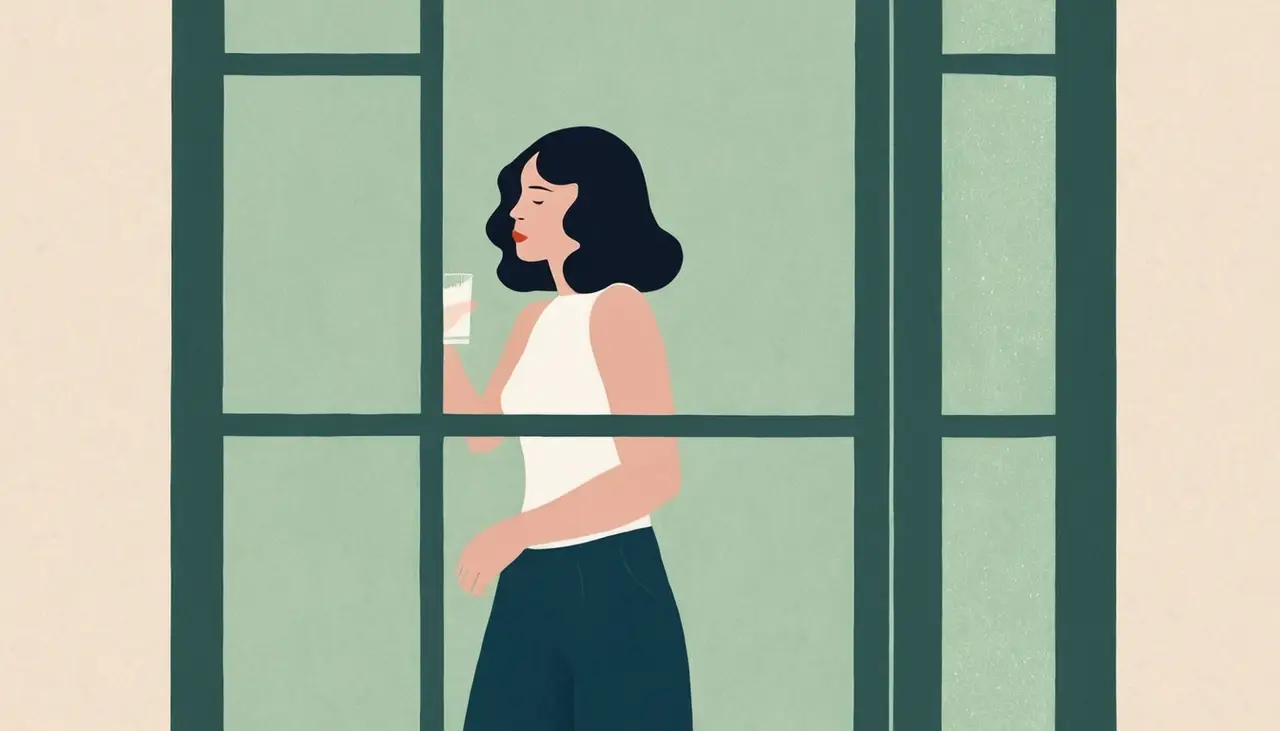
It is the part of the night nobody photographs. The party has moved on without you, someone is refilling glasses in the other room, and you are standing by the window with a soda water going flat in your hand. You said no once, quietly, and the evening simply kept going. No toast. No raised eyebrow. The music is the same. The conversation closed back over the gap like water.
And here is the strange thing you notice on the walk home, or the next morning, or somewhere in between: you feel proud. Not loud, not triumphant. Just a small, warm, private fact you are carrying that no one handed you.
This is the part of cutting back that the early writing skips. The hard nights get all the attention — the cravings, the parties, the question of who to tell. But there is a quieter season that comes later, weeks or months in, when you are simply doing better and no one is keeping score. You wake up clear after a Saturday. You remember the whole night. The week was easier than last week, and you are the only person who knows it.
A public goal comes with a built-in audience. People ask how it is going. They notice, congratulate, check in, hold the line with you. A private one runs on a different current. The witness is you. That is either the whole point or the lonely catch, depending on the hour, and both of those can be true in the same week.
*
Think of it as weather you are tracking from inside the house. No one else feels the temperature drop the way you do. You are the instrument and the reading both.
For some people that is exactly the relief — a thing that belongs to you, unmeasured, unannounced, free of anyone's opinion about it. For others, the silence makes the whole effort feel slightly unreal, like a tree falling where no one can hear it. If no one notices, a voice asks, why am I doing this at all? That question is not a crack in your resolve. It is usually a sign that the reasons have gone quiet and want saying again, out loud, to yourself.
The win wears different clothes on different nights. Sometimes it is the clear morning, proud before anyone else is even awake. Sometimes it is the invisible one — the pour declined, the room unchanged, the success real precisely because it was so ordinary nobody could see it. Sometimes it is the urge to show someone, the part of you that wants a witness for the thing you have been doing alone. And sometimes the pride turns, almost without you watching, into a small entitled thought: I deserve something for this. The trouble is that the old something was often a drink.
That last turn is worth slowing down for. Pride and the reward script live close together. The feeling of having earned a good thing can hand you the bottle as casually as it hands you a deep breath. Seeing the thought as a thought — naming it for what it is — is most of the work. A thought you can see is one you can answer.
*
It helps to remember the room you are standing in.
You are not cutting back inside some quiet abstaining culture. You are doing it at the center of a drinking one. NIAAA reports that about 132.6 million U.S. adults 18 and older — roughly 50.6 percent — drank in the past month, and that about 174.4 million, roughly 66.5 percent, drank in the past year. So when not-drinking-much feels invisible, that is not your imagination shrinking the win. The baseline is genuinely loud. You are the slight, unremarked change in a room where the default is the other way.
Some of the privacy is preference. Some of it is shelter. NIAAA describes stigma as a barrier to seeking help for alcohol-related concerns, and a private win can be a way of stepping around being misunderstood before you have the energy to explain. Keeping it quiet is sometimes the most reasonable thing in the room.
A secret-pride pattern is not evidence of isolation, vanity, or anything wrong with you. But if you drink heavily every day, the honest move is to talk with a clinician before changing your pattern suddenly — the body does not always cut back gently, and that part is worth not improvising.
*
Here is the quiet inversion. The thing that looks like deprivation — no recognition, no applause, no one tracking the streak — is also the thing that makes the win yours in a way praise never could.
Cutting back tends to move the source of approval inward. Instead of waiting for someone to notice, you start reading your own instruments: the clear mornings, the fewer regrets, the steadier mood, the evenings that no longer end in a what-did-I-say. That private benchmark is often more accurate than outside praise, because it is tied to your actual nights and not to someone else's good opinion at a dinner. You remember a version of yourself from a month ago and feel the difference without needing a single person to confirm it.
And pride, looked at closely, is rarely only a feeling. It tends to point at something repeatable — a piece of structure that made the week work. Leaving the party earlier. Eating before, not after. Saying no once instead of explaining it five times. Sleeping. Skipping the late-night second location where the resolve always thins. The pride is the receipt; the structure is the thing worth keeping.
So when the win lands and there is no one to tell, you can still give it a place to set down. A line saved on your phone. A note to yourself you will reread on a worse night. A text to the one person who already knows, if there is one — a clinician, a friend, anyone who can hold it without turning it into an announcement. Recognition you give yourself still counts. It was always the only kind you fully controlled.
If the pull is to mark the win the old way, with a pour, the move is to wait — fifteen minutes, a walk, a real meal, an early night — and let the celebration find a different shape first. Most urges soften inside that window. For the nights the wanting comes back harder than that, how to handle alcohol cravings and urges is the longer toolkit. And if you have not told anyone yet and are still deciding whether to, drinking when you haven't told anyone you're cutting back yet sits one step upstream of all this.
There is a line worth naming plainly, because private pride is not the same as private struggle. If the quiet is paired with fear, heavy loneliness, depression, anxiety, or thoughts of self-harm — or a drinking pattern you cannot change safely — that is the moment to bring in a clinician rather than carry it alone. If it is the thoughts of self-harm that have grown loud, the 988 Suicide & Crisis Lifeline is there the moment you need it — call or text 988. If reducing alcohol brings on shaking, a racing heart, repeated vomiting, agitation, confusion, seeing or hearing things that are not there, or a seizure, that is a 911 call, not a thing to ride out. And if you want a place to start that is free, confidential, and there at any hour, SAMHSA's National Helpline runs 24/7.
*
Back at the window, then. The soda water has gone fully flat. The party has not noticed you, and it will not, and that turns out to be fine. You will walk home in a little while and the night will close over the gap exactly as it did when you said no.
But you will be carrying something out of the room that you did not carry in. A reading only you can take. A quiet you earned. Keep it somewhere you can find it on a colder night.
This is an essay, not medical advice — it can keep you company, but it cannot know your history. If your drinking is heavy or daily, plan any change with a licensed clinician.
- Social events & holidays
How to Handle Pride Events When You're Cutting Back on Drinking
A practical Pride Month pacing guide for brunches, parades, block parties, clubs, and house gatherings when you want the day to include less alcohol.
- Cutting back & moderation
How to Stay Motivated When Cutting Back on Drinking
A grounded guide to motivation dips during a cutback attempt, with small next steps and no willpower-test framing.
- Family & relationships
Cutting Back When You Have a Roommate Who Drinks
You can cut back with a roommate who drinks without making it a household fight. Claim one fridge shelf, protect one hour, and keep your line to a sentence.
- Cutting back & moderation
How to Set Realistic Goals When Cutting Back on Drinking
A realistic cutback goal is one countable line for one week — not "drink less" forever. Count last week, set a modest cap, and plan the hardest night first.
- Mind & mood
The Bargaining Stage of Cutting Back on Drinking
How to recognize the internal negotiation loop that shows up during a cutback and make the next decision less slippery.
- Cravings & triggers
The Summer Weekday Evening Cutback Pull When It's Still Light Out
A practical framework for the long-light summer weekday evening when an after-work drink starts to feel like the whole point of being outside.


Be the first to hear when Clero launches.
Join with email only. Clero is still in development, so this is educational content today — not treatment, a prescription request, or medical advice.
First to hear at launchLaunch news only — no spamUnsubscribe anytime