
The Instagram or Social Media Drinking Comparison Loop
The social media drinking comparison loop stacks a hundred highlight reels against your quiet Tuesday. Five moves, one week, and no need to delete your apps.
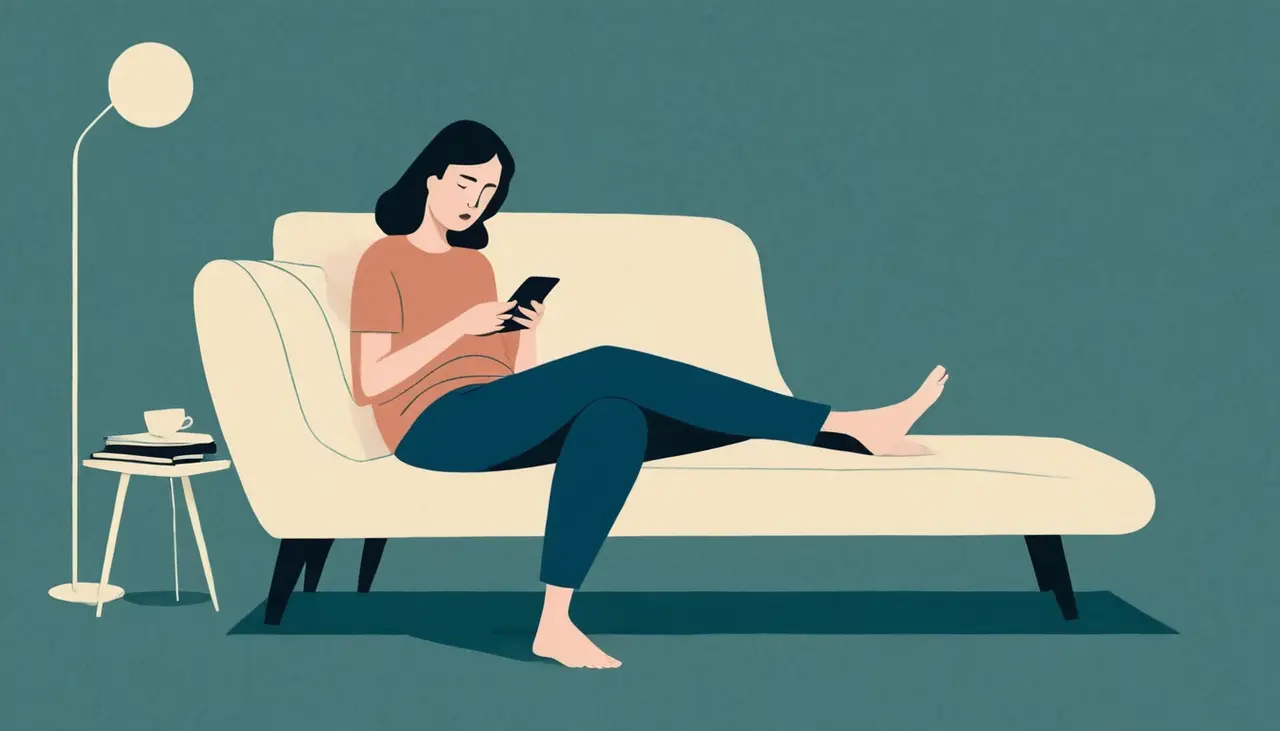
It's 9:40 on a Tuesday night. You're on the couch, thumb moving on its own, and there it is: a rooftop somewhere, six glasses raised toward the camera. Then a wedding toast. Then someone's "first spritz of the season," golden hour, everybody laughing. You lock the phone and the thought is already sitting there waiting — everyone else gets to drink, and they're having more fun than you.
Look closer at what just happened, though. You compared one quiet, unphotographed Tuesday of your actual life against the single best ten seconds from a hundred other people's weeks. You're not behind. You're comparing your Tuesday to their Saturday.
That comparison loop is one of the sneakier triggers people run into when they're cutting back, and it doesn't respond well to willpower, because the cue reloads every time you open the app. It responds to structure. So here's a structure: the Quiet Feed Experiment — five moves, one week, nothing dramatic, nothing permanent, and no requirement to delete your life online.
Why the scroll pulls harder than a billboard
Two loops are stacked on top of each other, which is why this trigger feels stronger than, say, walking past a bar.
The first is ordinary cue learning. A photo of a drink isn't really about the liquid — it's wired to belonging, celebration, vacation energy, the old wind-down ritual. Your brain fires the whole association in under a second, long before the reasonable part of you gets a vote.
The second loop belongs to the app. Feeds are built to show you more of whatever you linger on, so the night you pause on three drinking posts, the algorithm quietly takes notes and serves you a fourth. The feed isn't lying to you, exactly. It's showing you a real slice of the world — and then multiplying it.
Put those together and "everyone is drinking" starts to feel like data. It isn't. It's a highlight reel with a feedback loop attached. The experiment below works on both loops at once.
The Quiet Feed Experiment
Five moves. Run them for one week and treat the whole thing as a test, not a purity contest.
Name the loop you're in
Most feed-triggered cravings fall into one of five patterns, and naming the pattern shrinks it:
- The highlight-reel loop — three drinks in a row and suddenly the whole world seems happier than you.
- The old-memory loop — the app resurfaces a photo from a previous drinking season, and that old identity starts looking simpler than it actually was.
- The algorithm loop — you paused on drinking content once, and now it keeps coming.
- The exclusion loop — you were at the event, but the posted version centers the toast or the after-party you skipped.
- The boredom scroll — you felt fine, then scrolled at 9 p.m. and ended up missing the old wind-down.
None of these means you're weak. They mean the environment is feeding the cue.
Do it now: the next time a post lands wrong, say which loop it is — out loud or in a note. "Old-memory loop, 9:40 p.m." takes about four seconds and turns a mood into information.
Run the numbers against the feed
The feed says everyone is drinking constantly. The national surveys say otherwise, and the gap is worth holding onto.
In 2024, 46.6% of Americans ages 12 and older drank any alcohol at all in the past month — fewer than half, per the national survey NIAAA reports. And the heavy end is a much thinner slice than the scroll implies: CDC's 2024 data on excessive alcohol use put binge drinking at about 17% of U.S. adults and heavy drinking at about 6%. The rooftop photo is real. It's just not the average night in anyone's week — including the week of the person who posted it.
If you want to compare your own pattern to something sturdier than a photo, use the shared yardstick: NIAAA counts a U.S. standard drink as 0.6 fluid ounces — 14 grams — of pure alcohol, and counts binge drinking as the pattern that brings blood alcohol to about 0.08% or higher, often five or more drinks for men or four or more for women in about two hours. Those are definitions for describing a pattern honestly, not lines where harm switches on.
Do it now: keep one number in your pocket for the next scroll. Six percent. That's roughly how many adults drink heavily — not the wall-to-wall party the feed is selling.
Mute one account for one week
Pick the single account that most reliably starts the loop and mute or hide it for seven days. This is feed hygiene, not a friendship breakup — the person never knows, and you can reverse it next week. While you're at it, use "not interested" or "show less" on drinking posts when they appear. That's you talking back to the algorithm loop directly: the feed only knows what you linger on, so give it new information.
Do it now: one account, muted, before you finish reading. It costs nothing and it's the fastest single lever in the whole experiment.
Add ten seconds of friction
Willpower is weakest when the familiar move is already in reach, so make the reflex slightly harder instead of fighting it head-on. Move the most triggering app off your home screen. If your phone allows it, try grayscale for the week — cocktails, string lights, and golden hour lose a surprising amount of persuasion when the shine is gone. If your hardest window is predictable, put a soft cap on the app for that window only: no feed after 9 p.m., say, for seven days.
Do it now: drag the app one screen deeper. Ten seconds of friction is often the difference between a reflex and a choice.
Read what the quiet tells you
At the end of the week, review — but not while you're tired or annoyed with yourself. Two questions. First, when was the pull strongest? A quieter feed usually reveals the real window: Sunday afternoon, 9 p.m., the hour after a hard day. Second, what were you actually missing? Often it isn't the drink. It's belonging, attention, vacation energy, or the sense that your life should look more photogenic than a Tuesday does.
Do it now — well, in seven days: write one plain sentence about what you noticed. "The pull was strongest Sunday at 4" is worth more than any verdict about your character.
When the experiment isn't enough
Honest admission: sometimes you mute everything, the feed goes quiet, and the craving is still there at 9 p.m. anyway. That's not the experiment failing — it's the experiment telling you the trigger runs deeper than the phone. One rough scroll night isn't a verdict either. What deserves more than another self-run test is a pattern that keeps getting stronger: cravings you can't interrupt, or drinking that keeps growing despite the plans you make. It's easy to wave that off because "it was just a post," but the post was never the whole story — it was the doorway to it.
If that's where you are and you don't have a clinician to bring it to, Clero can connect you with a licensed clinician over telehealth to talk through the whole pattern — the feed, the cravings, the drinking underneath — including whether a medication like naltrexone is worth discussing. For the craving itself, in the moment, how to handle alcohol cravings and urges is the fuller toolkit, and if the sting is less about the drink than about other people having it, feeling jealous of friends who drink normally takes that loop on directly.
The delete-everything question
The obvious next question: shouldn't you just delete the apps? You don't have to, and for most people it isn't the point. A full break works for some — it's the fastest way to find out how much of the craving was feed-driven. Staying on with a muted, retrained feed works for others, and it has the advantage of being sustainable past week one. Neither is more virtuous. The test is the same either way: did your evenings get easier? Let that answer decide, not a rule about screens.
Next Tuesday, 9:40 p.m., the rooftop photo will find you again. Name the loop. Remember the 6%. Then keep scrolling or put the phone down — either way, the feed doesn't get to make the evening's plan anymore. If you do exactly one thing tonight, make it the mute.
This is general education, not medical advice or a substitute for care from a clinician who knows you. If cutting back after heavy daily drinking ever brings shaking, confusion, hallucinations, or a seizure, that's a medical emergency — call 911 or go to an emergency room. And if the comparison loop ever tips into thoughts of harming yourself, call or text 988, the Suicide & Crisis Lifeline, any hour.
- Social events & holidays
How to Handle FOMO When You're Cutting Back on Drinking
FOMO is rarely the whole night — it is the people, the place, the drink, or the feeling. Name which corner is hot, give it one small move, and set the phone down.
- Family & relationships
When a Friend Quietly Stops Drinking Too While You're Cutting Back
You don't have to say anything when a friend quietly stops drinking too — their reason is theirs. What one neutral sentence offers, and how their example helps.
- Mind & mood
Alcohol and Vivid Dreams When You Cut Back
Vivid dreams after cutting back are usually REM rebound, not withdrawal. Why the dreams get so loud, how long the phase tends to last, and the signs that need care.
- Mind & mood
Comparing Yourself to Who You Were Before Cutting Back
Missing who you were before cutting back is really comparing a life to a cropped photo. What the highlight leaves out, and how the new you gets its reps.
- Family & relationships
Cutting Back on Drinking While Dating
Cutting back on drinking while dating gets easier when you decide your pour before the date. Pick the venue, your first order, one line, and a second-round rule.
- Cravings & triggers
The Just This Weekend Loop When You're Cutting Back
How to recognize the 'just this weekend, then Monday' cutback loop without shame, willpower lectures, or detox advice.


Be the first to hear when Clero launches.
Join with email only. Clero is still in development, so this is educational content today — not treatment, a prescription request, or medical advice.
First to hear at launchLaunch news only — no spamUnsubscribe anytime