
Drinking at a Class Reunion When You're Cutting Back
How to think through high school or college reunion weekends when old drinking memories, multi-night events, and limited disclosure all collide.
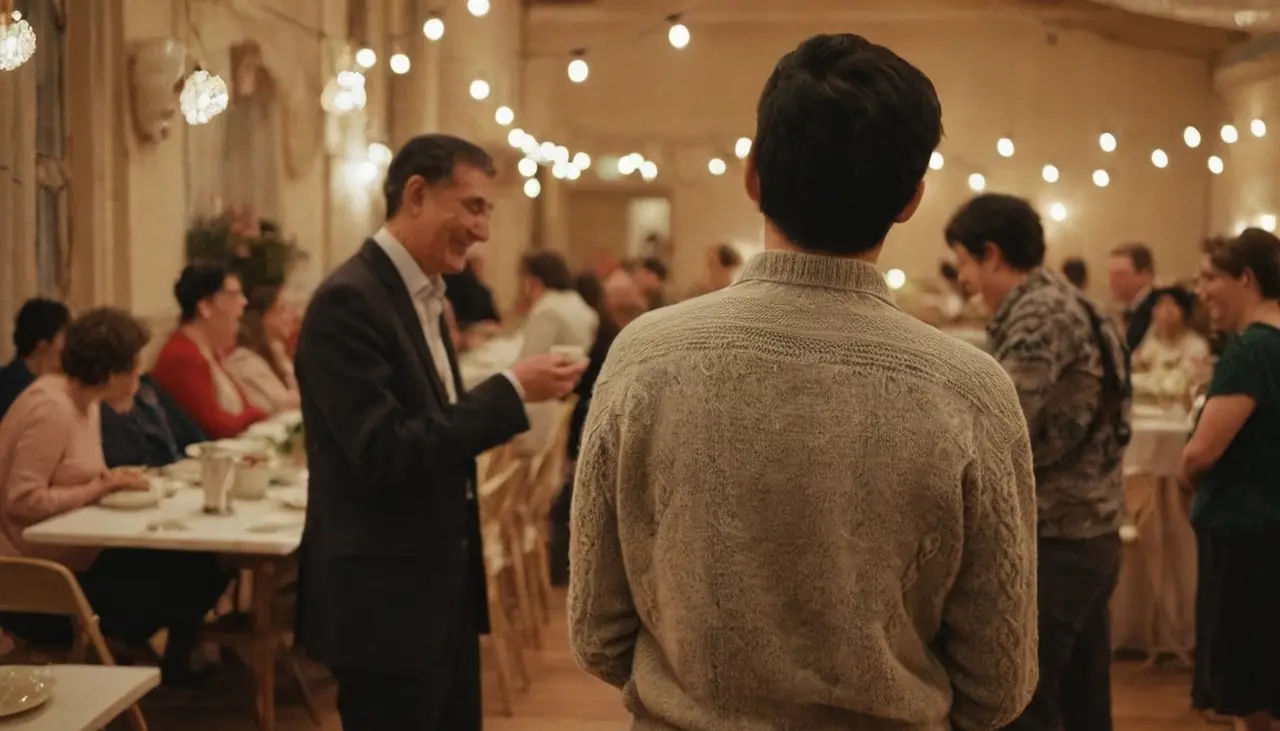
It's the Friday meet-and-greet, and you're maybe four minutes in. Someone you half-remember spots you across the room, lights up, and heads over with two drinks already in hand — one of them clearly meant for you. Before you've said a word, the old story is being told back to you: the party version, the one who always closed out the bar, the "you haven't changed a bit." And the whole weekend hasn't even started yet.
That pull is real, and it isn't about willpower. A reunion doesn't just put alcohol in front of you — it puts an old version of you in front of you, and the room keeps talking to that version until you give it a reason not to. So the useful thing isn't a script for turning down one drink. It's a way to see the whole weekend as terrain you can read ahead of time. Call it the weekend map: you sketch the arc before you arrive, so no single moment gets to decide the rest for you.
Why the whole arc matters more than any one night
Most people plan a reunion the way they'd plan a single night out — brace for the big event, get through it, done. A reunion isn't shaped like that. It's Friday's meet-and-greet, Saturday's daytime thing, Saturday's dinner, the after-party, Sunday brunch. The risk usually isn't one wild night. It's the drift: night one goes fine, night two runs louder because everyone's warmed up, and by brunch the plan has quietly lost its edges.
That drift matters because the heavy end of the scale has a real name and a real size. NIAAA calls it high-intensity drinking — twice or more the binge threshold for your sex, which works out to 10 or more drinks for men or 8 or more for women in roughly two hours. A reunion is one of the few settings where pacing like that can feel almost normal, because every event gets filed under "this only happens once." Map the arc and that framing loses its grip: it isn't one rare night, it's five events with a shared budget of you.
Draw the map before you go
The map has four marks. You can make all four in the ten minutes it takes to look at the weekend's schedule.
Mark the events you actually want
Not every official event, after-party, and brunch is load-bearing. Look at the lineup and star the two or three that are the real reason you're going — the friend you actually want to see, the walk through campus, the one dinner. A reunion doesn't require your attendance at all of it to count as a reunion. Right now, pick the one event you'd keep if you could only keep one. That's your anchor, and it tells you where the rest can flex.
Set your line for each night, not the weekend
A single weekend-long intention ("I'll take it easy") melts on contact with night two. Give each night its own edge instead. Maybe Friday is a soft open, Saturday dinner is where you actually want to be present, and the after-party is a lap, not a stay. Deciding a night's shape while you're sober and looking at a calendar is a different act than deciding it at 11pm with a drink already in your hand. Write the three lines down somewhere you'll see them.
Pick your one honest line for the room
People will ask. Are you pregnant, sick, sober now, driving, training, "not fun anymore"? You do not owe ten years' worth of near-strangers a full account of your cutback. One short line does the whole job: "I'm pacing myself this weekend." "I feel better drinking less." "Early morning tomorrow." Say it once, don't defend it, move on. The goal isn't to make every old classmate understand — it's to have something ready so the question doesn't catch you flat-footed. Decide your line now, out loud, so it's already in your mouth when you need it.
Fix how you leave each event
The exit is the part people forget, and it's the part that saves the night. Where are you staying — the hotel, a friend's couch, somewhere walkable? How do you get from the after-party back? A ride booked in advance, a room upstairs, a "I turn into a pumpkin at midnight" said early — any of these gives the night a natural end instead of an open one. This isn't about driving rules or liability; it's just that a night with a built-in exit is a night that can't quietly extend itself into brunch.
When the map tears — and it will
Say Saturday gets away from you. The after-party was louder than you planned, the old round pulled you back in, and you wake up on Sunday feeling like the whole weekend is already a wash. Here's the part worth keeping: one rough night is one rough night. It is not a verdict on the weekend, and it's definitely not a verdict on you.
The drift only becomes a spiral if you decide Sunday is ruined because Saturday was. It isn't. Brunch is a fresh event with its own line. The map isn't a test you pass or fail — it's a thing you redraw. Missing one mark doesn't erase the other three you hit, and it doesn't cancel the exit you can still choose tonight.
Some perspective helps here too. Heavy weekends aren't a personal quirk you have to be ashamed of — in 2024, about 57.9 million people ages 12 and older, or roughly 20.1%, reported binge drinking in the past month, per NIAAA. A reunion is just one of the formats where that kind of drinking hides comfortably under nostalgia. Seeing it clearly is most of what keeps it from running you.
What the map is really protecting
For scale on the daily side: the CDC describes moderate drinking as 2 drinks or less in a day for men and 1 or less for women — and a multi-event weekend can blow past a whole day's intention in a single toast-heavy dinner. That's not a line where harm switches on; it's just a marker for how quickly a stacked weekend outruns an ordinary day.
But the map isn't really about the numbers. It's about which version of you shows up. Drink less and the first hour may feel awkward, because the room is still talking to the old script. Give it a beat. What tends to come into focus is the better stuff: the one-on-one coffee, the actual conversation at dinner, the friend you drove three hours to see — the parts that a fourth-round after-party would have blurred into nothing.
So before the weekend starts, do the four marks: star the events you want, set a line per night, ready your one honest sentence, and fix your exits. That's the whole map, and it fits on the back of a receipt. The reunion doesn't get access to every version of you — only the one you decide to bring. And for the moments the urge to rejoin the old round shows up mid-event, how to handle alcohol cravings and urges is the fuller toolkit. For related weekends, see going home when old friends still want to drink and drinking on vacation when you're trying to cut back.
This is general education for heading into a reunion weekend while drinking less, not medical advice. If cutting back ever feels physically unsafe — or if stopping suddenly after heavy daily drinking has ever brought on shaking, sweating, or confusion — treat that as a medical emergency and call 911 or get to an emergency room rather than waiting it out. For questions about your own drinking, a licensed clinician who knows your history is the place to start, and SAMHSA's free, confidential helpline is there any time at 1-800-662-HELP (4357).
- Social events & holidays
How to Handle a Baseball Game or Stadium Event While Cutting Back
At a ballgame, set your number before the first pitch and count the 24-ounce souvenir cup as two drinks, not one. A plan that runs on the game's own rhythm.
- Social events & holidays
How to Handle a Concert or Music Festival When You're Cutting Back
At a concert or festival, the drinking happens in the gaps: set changes and bar lines, not the music. Plan the set breaks and the day stays yours.
- Social events & holidays
How to Handle Halloween When You're Cutting Back on Drinking
Halloween gets easier when you decide the cup, the shot answer, and the exit before the night starts moving.
- Social events & holidays
How to Handle Pride Events When You're Cutting Back on Drinking
A practical Pride Month pacing guide for brunches, parades, block parties, clubs, and house gatherings when you want the day to include less alcohol.
- Social events & holidays
How to Handle Thanksgiving When You're Cutting Back on Drinking
Thanksgiving is an all-day drinking cue: plan the timeline, family lines, and first sober holiday pressure before the table fills.
- Social events & holidays
Drinking at a Summer Wedding When You're Cutting Back
The way to drink less at a summer wedding is deciding before it starts: your first drink, your switch point, and your exit. How the three posts hold all night.


Be the first to hear when Clero launches.
Join with email only. Clero is still in development, so this is educational content today — not treatment, a prescription request, or medical advice.
First to hear at launchLaunch news only — no spamUnsubscribe anytime