
How to Host People Without Becoming the Bartender
A host-side guide to setting up drinks, food, pacing, and an exit from refill duty when you are cutting back.
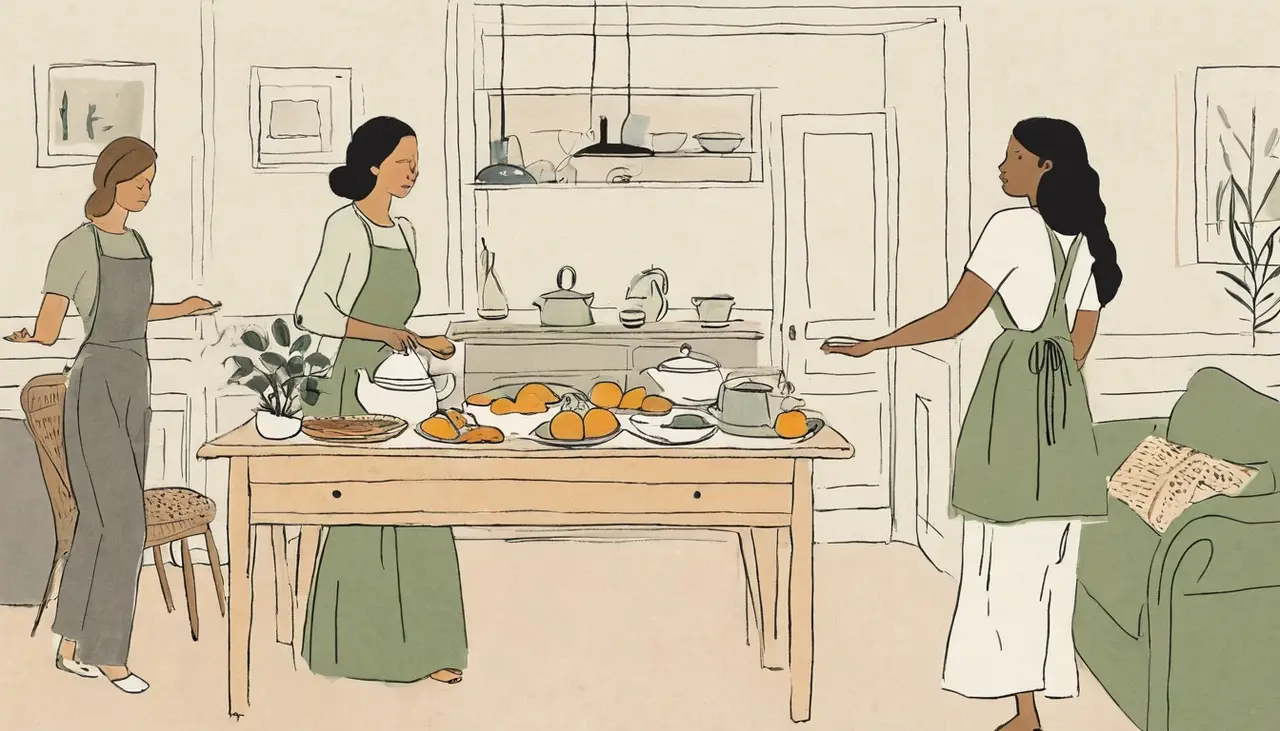
It's your own place, a warm evening, the first two guests just walked in. Someone's coat is over your arm, someone else is asking where the glasses are, and before you've set your keys down you're pouring. Then topping off. Then you're the one who notices every half-empty glass in the room and quietly fixes it. Your own drink refills itself somewhere in there, tucked between everyone else's, and by the third round you've lost count of it — because you were never really counting. You were running the bar.
Here's the part worth knowing before the doorbell rings again: that pull toward the pour isn't generosity gone wrong, and it isn't weak willpower. It's a job description you accepted without reading. Host equals bartender in most rooms, because nobody ever wrote it down any other way. But the job is editable. You can hand the bar off before anyone arrives — and once it's off your hands, the refill autopilot has nothing to run on.
Call it the Handoff. Picture the bar as an apron you keep getting tied into the second guests show up. The Handoff is just taking the apron off early and hanging it somewhere everyone can reach — so the pouring becomes theirs, and your own night stops running on someone else's thirst.
Why hosting pulls harder than attending
When you're a guest, one non-alcoholic drink in your hand can carry you through a whole evening. Nobody's watching your glass. Attending is low-effort by design.
Hosting flips that. The host eats last, sits last, and manages the room — and managing the room means managing the drinks. "Can I get you something?" slides into "let me freshen that," which slides into refilling your own on the same trip to the kitchen. The cue here isn't stress or sadness. It's the role itself. Every glass that dips below half is a small alarm, and you're the one wired to answer it.
That's why willpower is the wrong tool. You can't out-resist a cue that fires forty times a night. You can change the setup so the cue stops landing on you. The pull to keep the drinks flowing rises and fades like any other urge — but the useful thing about hosting is that you can defuse most of it before the first guest arrives, when your plan is easiest to keep.
One honest way to see your own pattern: for the next event, count in standard drinks rather than "a couple." A U.S. standard drink is 0.6 fluid ounces — about 14 grams — of pure alcohol, and a generous host pour can quietly be two of those in one glass. That matters because what drinking costs you rises with the amount and how often it happens, not at one bright line that's the same for everyone. Your body, your history, your sleep, whatever else is going on shifts where the effects land, so there's no single safe-for-everyone number and no single harmful-for-everyone one. The CDC's binge threshold — 4 or more drinks for women, 5 or more for men on one occasion — names a pattern a long, relaxed cookout can drift into without anyone noticing, not a switch where harm turns on. Counting just shows you the shape of your own night so you know what you're steering.
The Handoff, move by move
Four moves. Most happen before anyone arrives, which is the whole advantage. You don't need to feel disciplined mid-party — you need the room set up so discipline isn't the thing being tested.
Build the bar, then step away from it
Set up a self-serve station and physically leave it. A cooler, a drinks table, a "help yourselves" corner — anything that lets guests pour their own. Put the non-alcoholic options right there, same height and same zone, not buried at the back of the fridge, so nobody has to ask you for one. The point isn't the furniture. It's that the pouring now lives somewhere that isn't your hands. Do it now: pick the exact spot before the day of, and clear it so nothing else has to be moved later.
Say "help yourselves" in the first five minutes
The refill role gets assigned early — usually by you, in the first rush of hosting. So reassign it early too. As the first guests come in, walk them to the station and say the words: "Drinks are right here, help yourselves all night." Said once, up front, it resets the whole room's expectation. Said an hour in, after you've already been the pourer, it sounds like you've gotten tired of them. Do it now: decide the one sentence you'll say at the door, and say it before you've poured anyone anything.
Make food the spine of the night
If the first real structure of the evening is the drinks table, the night opens on refills and rounds. If snacks, then dinner, then dessert carry the rhythm instead, drinking becomes one thing among several rather than the only event. Put food out early, and eat some yourself before people arrive if you tend to forget — an empty stomach makes both the pouring and the drinking run faster. Do it now: plan one thing to have out and ready the moment guests walk in.
Give your own glass a default
Decide your own number before the doorbell — a maximum, or zero — and pick what's in your hand the rest of the time. The strongest version is a default non-alcoholic drink you keep refilling yourself, so your hands stay busy and nobody clocks that you're pacing. The CDC frames moderate drinking as up to 1 drink a day for women and 2 for men, and names people who shouldn't drink at all — background for setting your own line, not a target to hit. Do it now: name your number, and name the drink you'll hold when you're not drinking.
There's a small reframe that makes all four easier to carry. You're not the bartender who's slacking; you're the host who set the room up well. Same evening. One version tethers you to everyone's glass; the other frees you up to actually be at your own party.
When the Handoff slips
Some nights it won't hold. A guest hands you their empty glass out of habit, you take it to the kitchen, and you're back on refill duty by nine — pouring theirs, pouring your own, the setup quietly undone. That's worth saying plainly, because a method that pretends every party goes to plan isn't much of a method. One night that got away from you is a data point, not a verdict.
The move is to get curious instead of hard on yourself. Ask what actually pulled you back behind the bar. One guest who kept handing you glasses? The cleanup hour after everyone left, when the quiet house and the leftover open bottles became their own private second event? A co-host who needed you to run drinks because nobody else would? Each answer points somewhere useful. A single guest wants a light "it's all self-serve tonight" and a walk back to the station. The cleanup hour wants its own plan: put the bottles away first, keep water in reach, pick a soft end time so the last hour doesn't drift. And a stretch where you couldn't keep the plan no matter how you set the room — where hosting reliably overrides what you decided, or cutting back feels genuinely hard to manage alone — is worth naming to a clinician. If you drink heavily most days, don't stop cold on your own either; a sudden stop after heavy daily drinking can be dangerous, and that's a conversation to have with a clinician first.
If the real question is what's kept in the house at all, should I keep alcohol in the house when cutting back fits better. If you're hosting around the Fourth, how to handle the Fourth of July when you're cutting back is closer. For ideas to stock the self-serve station, see what to drink instead of alcohol. And when the pull to pour lands mid-party, how to handle alcohol cravings and urges is the full kit.
Back to the doorbell
Next time you host, the first guest will walk in the same way, the coat will land on your arm, and the old reflex to start pouring will be right there, still sounding like plain hospitality. That part doesn't change. What changes is that the bar is already built, already self-serve, already somebody else's to run: you set the station, said the words at the door, made food the spine, gave your own glass a default.
Pick your next event and set the drinks station before anyone arrives — that one move does most of the work. You don't have to turn the party alcohol-free or make it a statement. Most guests are tracking the food, the music, and whether they felt welcome; almost nobody is counting your pours. Hand off the bar and you get to be a guest at your own party, which is probably the version of hosting you wanted in the first place.
This is general education, not a diagnosis or a treatment plan. If cutting back ever feels physically unsafe, or if you drink heavily every day and want to stop, talk with a licensed clinician first — and for free, confidential, 24/7 help any time, the SAMHSA National Helpline is at 1-800-662-HELP (4357). If a stretch without alcohol ever brings on shaking, sweating, or confusion, treat it as a medical emergency and call 911 or go to an emergency room.
- Alcohol Education
How to Handle Summer BBQs and Cookouts When You're Cutting Back
A cookout has no clock, so bring your own: pick your first drink, your spot, your line, and your exit before you go. Decide once, not forty times.
- Alcohol Education
How to Handle a Family Vacation When Everyone Drinks
The Morning-First Plan: decide the morning you want, protect the first group meal, and keep one non-negotiable exit from the nightly drift. No family vote needed.
- Alcohol Education
Drinking at a Wake or Funeral When You're Cutting Back
You can decline the drink and still be there for the goodbye. How to handle the glass at the door, the toast, and the late-night kitchen while cutting back.
- Alcohol Education
When a Friend Quietly Stops Drinking Too While You're Cutting Back
You don't have to say anything when a friend quietly stops drinking too — their reason is theirs. What one neutral sentence offers, and how their example helps.
- Alcohol Education
How to Handle New Year's Eve When You're Cutting Back
New Year's Eve is easier to manage when you plan the first glass, the long middle, midnight, and the ride home before the party.
- Alcohol Education
How To Not Drink at a Party
A low-drama party plan for not drinking, built around the first round, the first question, and the first exit point.


Be the first to hear when Clero launches.
Join with email only. Clero is still in development, so this is educational content today — not treatment, a prescription request, or medical advice.
First to hear at launchLaunch news only — no spamUnsubscribe anytime