
How to Handle Cravings After an Argument
A craving after an argument crests fast and breaks on its own, so move the drink decision ninety minutes out and leave the room with the bottle in it.
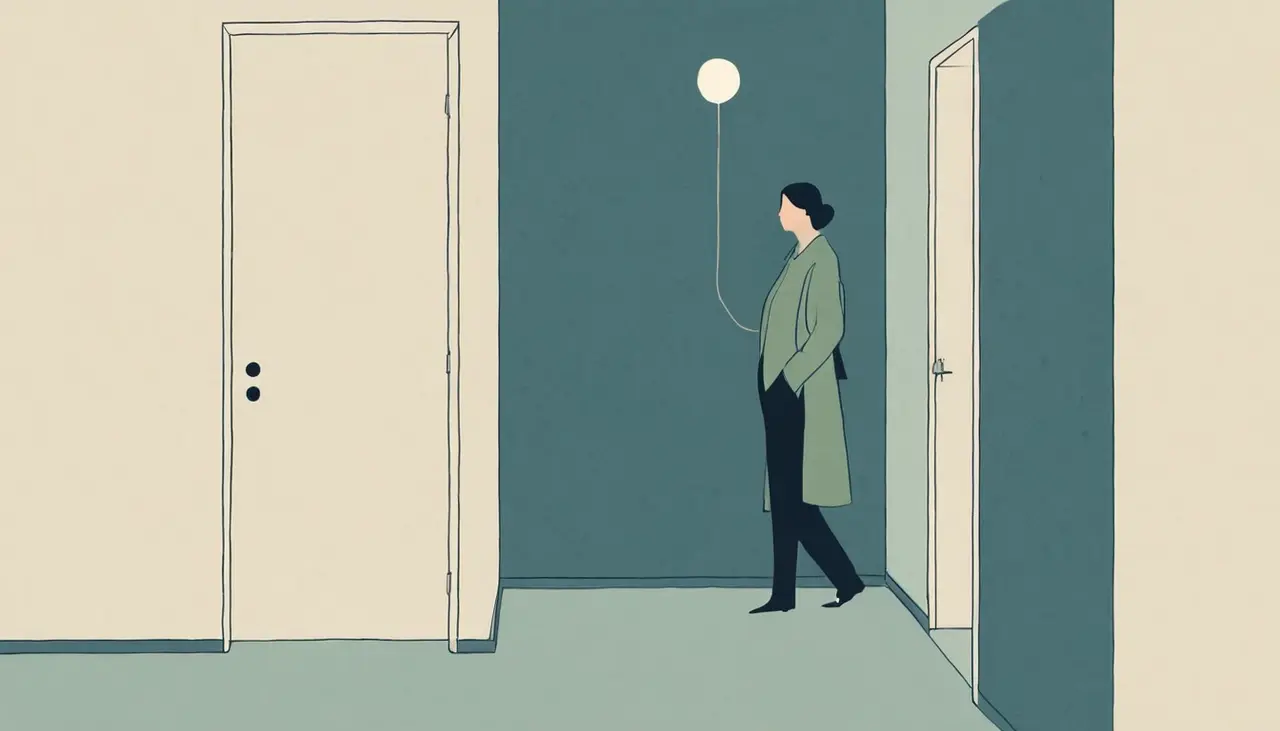
The door has just shut, or the call has just dropped, and the last thing that was said is still ringing in your ears. Your face feels hot. Your hands are doing something restless. And there, already, is the thought — clean and fast and almost kind: a drink would take the edge off this. The fridge is twelve steps away. You know exactly which shelf.
That pull is not a character flaw, and it is not a sign you were never serious about cutting back. A fight leaves your body switched on — heart up, jaw tight, everything primed to do something. Alcohol is the fastest off switch a lot of people have ever found, so of course your body reaches for it first. What you need in this moment is not more willpower. You need a route that gets you past the loudest stretch without a pour — and the useful thing about that stretch is that it has a shape.
Call it the ninety-minute off-ramp. The craving after a fight tends to crest hard and then slide back down, and the crest is usually shortest right after the argument ends. If you can get yourself onto an off-ramp before the peak instead of white-knuckling straight through it, you give the wave time to break on its own. The steps below are the on-ramp, the delay, and the merge back. None of them ask you to feel calm. They just move you.
How a post-fight craving actually behaves
A craving is not a steady pressure that grows until you cave. It rises, peaks, and falls, usually within minutes, the same way a wave lifts and then flattens — which is why a technique called urge surfing exists at all: you ride the swell instead of fighting it. After an argument the swell is steeper because two things stack. The conflict itself keyed up your body, and stress on its own nudges a lot of people toward a drink; the CDC notes plainly that some people drink more when they are under stress, lonely, or isolated. Put a fight on top of a stressful stretch and the pull sharpens.
Here is the part worth carrying out of this paragraph: the peak is temporary and the first drink usually makes the night longer, not shorter. It can keep the argument replaying, turn the next text you send messier, and pull the rest of the evening away from the plan you meant to keep. The off-ramp is about outlasting a wave that was always going to break anyway.
Set the ninety-minute rule before you decide anything
Do not try to settle the whole night while your body is still lit up. Make one small ruling instead: I get to decide about a drink in ninety minutes — not now. You are not banning the drink. You are moving the vote to a time when you will be voting with a clearer head.
Do it now: say the sentence out loud, even quietly. "I'll decide at [look at the clock and add ninety minutes]." Naming the time turns a vague intention into an actual appointment your later self gets to keep or break.
Break contact with the pour spot
Post-fight drinking almost always launches from a known location — the kitchen counter, the garage fridge, the end of the couch, the corner store on the walk, the same chair. The craving is partly body memory, and the body remembers places. So change the place.
Leave the room the alcohol is in. Step outside, move to the far side of the house, take a shower before you go anywhere near the kitchen, sit in a chair that has no drink attached to it. If the automatic route runs through a store on the way home, take the other street. You are not testing your resolve by standing next to the bottle. You are declining to hold the test in the first place.
Do it now: physically walk to a different room than the one you are in, and take a glass of water with you. Cold water in your hand gives your restless hands a job.
Spend the wait, don't stare at it
Ninety idle minutes across from a craving is its own kind of torture, so the wait needs filling — and the filler should be small, physical, and boring. Do the dishes. Take the trash out. Walk the block. Climb the stairs twice. Fold the laundry that has been sitting there. The point is not to become peaceful; it is to give the keyed-up energy somewhere to go that is not a glass.
Text someone neutral while you are at it — a friend, a sibling, anyone who is not the person you just argued with. You are not looking for them to fix the fight. You are borrowing a few minutes of ordinary conversation to get your nervous system off the ceiling.
Do it now: pick one ten-minute physical task and start it before you finish talking yourself out of it. Motion first, motivation later.
If you already poured, the next ninety minutes still count
Sometimes the wave wins the first round and there is already a drink in your hand. The thought that shows up next is the dangerous one: I already blew it, so the night's gone. That single thought is what turns one drink into four. It isn't true. The next decision is still yours, and the off-ramp still works from wherever you are standing.
If you want to keep the night visible instead of letting it blur, plain numbers help. A U.S. standard drink, by NIAAA's count, is 0.6 fluid ounces — about 14 grams — of pure alcohol, and NIAAA describes binge drinking as the pattern that brings blood alcohol to roughly 0.08%, often five or more drinks for men or four or more for women in about two hours. Those are shared yardsticks for describing a night, not a line where harm politely switches on. How much a given amount costs any one person shifts with body size, whether you have eaten, other medicines, sleep, and plain genetics, and the risk climbs with how much and how often you drink, not with crossing one magic number. Use the figures the way you would use a mile marker — to know where you are — and then restart the ninety-minute clock from the drink you are holding now.
Reality check: one rough night is not the verdict
Some evenings the off-ramp will not hold. The fight will be bad enough, or you will be tired enough, that you drink anyway. When that happens, the story you tell yourself in the morning matters more than the pour did. A single hard night is data, not a sentence — it tells you which trigger is strongest and where the ramp gave way, and both of those are things you can adjust before the next argument.
What actually builds the skill is repetition, not a perfect record. Ride the wave out a handful of times and you start to collect proof — your own, not borrowed — that the craving peaks and drops even while the argument still stings. That does not fix the relationship or make the conflict smaller. It just quietly removes drinking from the list of things you have to do to come down.
When the off-ramp isn't the right tool
A coping technique has a limit, and it is worth naming. If the argument you keep having is with a partner who frightens you — if there is intimidation, coercion, or violence in it — then the drinking is downstream of a safety problem, and the safety problem comes first. That is not a willpower conversation. The National Domestic Violence Hotline is reachable 24/7 at 1-800-799-7233, or by texting START to 88788.
And if, in the wreckage of a bad fight, the thoughts turn toward not wanting to be here — reach out that minute, not later. The 988 Suicide and Crisis Lifeline offers free, confidential support by call, text, or chat, around the clock. Wanting the pain to stop is not the same as a plan, but you do not have to sort out the difference alone.
For the steadier work — drinking daily and wanting to cut back, drinking more than planned after conflict again and again, or noticing alcohol reaching into your driving, your work, or your caregiving — that is worth raising with a licensed clinician, who can look at the whole picture with you. Shame is often what keeps the trigger hidden, and NIAAA names stigma as one of the most consistently reported barriers to getting help. If you want a structured way to practice riding out urges between arguments, SMART Recovery is a free, secular mutual-support program built partly around exactly that skill — coping with urges and cravings.
Back at the door
Go back to that first moment — the shut door, the hot face, the fridge twelve steps away. Nothing about the fight has changed. What has changed is that you now have somewhere to go besides the kitchen: a ninety-minute appointment with your clearer self, a different room, a glass of water, one small task, and the knowledge that the wave breaks whether or not you feed it.
Pick your first off-ramp move now, while it is quiet — the room you'll walk to, the person you'll text — so you are not inventing it mid-crest. And if you want the wider set of moves that work in any craving window, not just after a fight, how to handle alcohol cravings and urges is the full kit. Earlier triggers have their own pages too: emotional triggers and alcohol and how to drink less when stressed.
This is general education, not medical, safety, or relationship advice. If cutting back feels physically unsafe or drinking is daily, talk with a clinician before stopping suddenly; for free, confidential support any hour, the SAMHSA National Helpline is 1-800-662-HELP.
- Social events & holidays
How to Handle FOMO When You're Cutting Back on Drinking
FOMO is rarely the whole night — it is the people, the place, the drink, or the feeling. Name which corner is hot, give it one small move, and set the phone down.
- Social events & holidays
How to Handle Summer BBQs and Cookouts When You're Cutting Back
A cookout has no clock, so bring your own: pick your first drink, your spot, your line, and your exit before you go. Decide once, not forty times.
- Cravings & triggers
Emotional Triggers and Alcohol: How to Notice the Pattern Earlier
Emotional triggers make a drink feel automatic because the cue and craving arrive fused — but the urge fades in minutes. How to catch the spark before the pour.
- Cravings & triggers
How to Handle the After-Bedtime Trigger When the Kids Are Asleep
The pull to pour once the kids are asleep is a habit cue, not weakness. Reset the first twenty minutes of the night and the automatic drink loses its runway.
- Cravings & triggers
How to Handle the 5pm Trigger When You Work From Home
The 5pm pour fills the gap your commute used to — work ends with one click and nothing marks it. Build a short airlock instead: leave the room, fake the commute.
- Family & relationships
How to Handle Father's Day When Your Kids Ask Why You're Not Drinking
A Father's Day guide for dads cutting back who may get the kid question in front of family.


Be the first to hear when Clero launches.
Join with email only. Clero is still in development, so this is educational content today — not treatment, a prescription request, or medical advice.
First to hear at launchLaunch news only — no spamUnsubscribe anytime