
Emotional Triggers and Alcohol: How to Notice the Pattern Earlier
Emotional triggers make a drink feel automatic because the cue and craving arrive fused — but the urge fades in minutes. How to catch the spark before the pour.
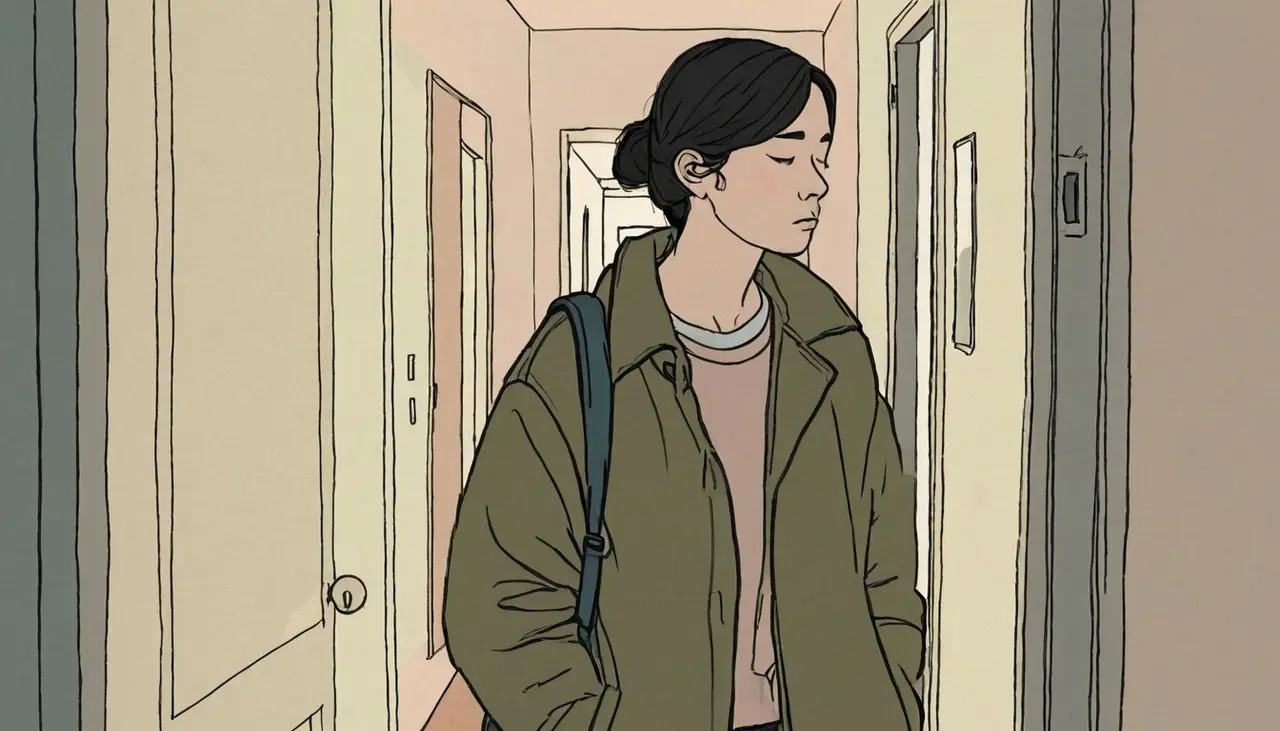
It is 7:42 on an ordinary evening. The kids are down, the dishes are half-done, and something in your chest has gone tight and restless — not quite anger, not quite sadness, just a low hum that says the day is finally over and you have earned something. Your feet are already carrying you toward the kitchen before you have decided anything. By the time you notice, there is a glass in your hand.
That short walk to the kitchen is the part worth slowing down. Not the pour — the pour is the end of the story. The interesting part is the minute or two before it, when the feeling shows up and the drink starts to feel like the obvious answer. If you can learn to catch that stretch, you get a small window where a real choice is still possible.
None of this is a willpower problem. Your brain and your evening have simply rehearsed the same sequence enough times that it now runs on its own, the way you can drive a familiar route without remembering the turns. What follows is a way to make the sequence visible again. Think of the feeling as a lit fuse: it burns for a bit before it reaches the pour, and the whole game is learning to see the spark early. The tool for that is what we will call the Fuse Kit — one way to trace the burn, and four things to do while it is still burning.
Why the fuse catches every time
A trigger is just a cue. It can be a feeling, a time of day, a place, a person, or a habit your hands know by heart. It does not force the drink; it only makes the drink feel like the next logical step, because your brain has filed "this feeling" and "a drink" in the same drawer.
The reason it feels automatic is that a cue and a craving tend to arrive fused together, fast, and then the craving fades — usually within a handful of minutes if nothing feeds it. The problem is that a few minutes is exactly long enough to reach the fridge. So the fuse burns to the end not because the urge is unstoppable, but because nothing interrupts it. This is the same territory that structured therapy works in: the NIAAA's clinician resource describes cognitive behavioral therapy as identifying and managing the thoughts, feelings, and situations — the "triggers" or "cues" — that lead to heavy drinking. You are doing a homegrown version of the same work: find the spark, and you get to decide what happens next.
Trace the burn backward
Before you can catch a fuse in real time, you have to know what yours looks like. So start with one that already burned all the way down.
Pick a single recent evening you drank more than you meant to. Do not reach for the worst one or reconstruct a whole week — just one night, close enough to remember. Then walk it backward, out loud or on paper, through six plain questions:
- What happened in the hour before the first drink?
- Which feeling was loudest?
- Where were you standing?
- Who was there, or who was missing?
- What did the drink promise to do for you?
- What actually happened after it?
Keep the words flat and specific. "I felt cornered after that call" is worth ten times more than "I have no discipline." "I was restless after a good day" tells you more than "I always do this." You are not building a case against yourself; you are drawing a map of one route so you can recognize it next time.
Do it now: trace one evening through the six questions before you read on. The rest of the kit only works once you can see your own fuse.
Name the spark out loud
Once you can spot the feeling arriving, say what it is. Not a verdict — a label. "This is the after-bedtime cue." "This is anger I'm not saying to anyone." "This is boredom, not thirst."
Most triggers cluster into a few shapes, and naming which one is burning takes the mystery out of the urge. Pressure — the squeezed feeling when work, money, or caregiving pile up, and a drink looks like the only available off switch. Resentment — the quiet "no one notices what I do," where a drink becomes a private protest. Loneliness — which can happen in a full house, not only an empty one. Shame — the "I already blew it, so the night's over anyway" that turns one drink into several. And, easy to miss, celebration — the good mood or the "I deserve this" that runs on the same rails as the bad nights.
You do not need the right clinical word. You need the honest one. Saying "this is loneliness" out loud, even to the microwave, breaks the fuse's cover — a cue you have named is a cue you can question. If the shape that keeps burning is plain sadness, why you drink when you are sad goes deeper on that one.
Buy ten minutes
A named urge still has to be waited out, and the good news is that it does not last long. So put a small gap between the feeling and the decision.
Tell yourself you can decide in ten minutes, or after dinner, or after one specific thing. You are not saying no. You are saying not yet — a far easier sentence for a restless brain to accept. In that gap, move: step onto the porch, take a shower, walk to the mailbox, stretch on the floor. Motion shifts the body's state faster than a pep talk shifts the mind's, and it burns up the exact minutes the craving needs to crest and fall.
Do it now: pick your ten-minute move in advance, tonight, before you need it. A decision made calmly at 4 p.m. beats one made at 7:42.
Swap the first object
A lot of the pull lives in the props, not the feeling. The specific glass. The bottle on the counter you catch sight of while cooking. The chair you always sink into.
So change the first object in the chain. Pour something else into the glass you usually reach for — cold, fizzy, in a real glass, treated like it counts. Move the bottle out of your sightline while you make dinner. Sit in a different chair for the first twenty minutes of the evening. None of this is magic; it just denies the habit its usual cue and forces the sequence to run through your attention instead of around it.
When the count is part of the pattern
If the amount is part of what keeps happening, describe it in shared terms rather than vague ones. The NIAAA counts a U.S. standard drink as 0.6 fluid ounces, or 14 grams, of pure alcohol, and it defines binge drinking as the pattern that brings blood alcohol to about 0.08 percent — often 5 or more drinks for men, or 4 or more for women, in roughly two hours.
Treat those as a shared vocabulary for noticing, not a line where harm switches on. There is no single number that is safe for everyone or harmful for everyone; what a given amount costs you turns on your body, your history, your other medications, your sleep, and plenty else. The point of counting is not to pass or fail a test. It is that "four last night, five the night before" is something you can actually work with, and "a lot lately" is not.
When the kit does not work
Some evenings you will trace the fuse, name it, buy the ten minutes — and pour anyway. That is not the tool failing, and it is not you failing. It is one night, and one night is data, not a verdict. Write down what happened while it is fresh: which step you skipped, where the gap closed too fast. The next fuse looks a little more familiar because of it.
But notice the difference between a rough night and a real safety concern. If the same trigger keeps winning no matter what you try, or if the drinking has reached the point where stopping suddenly brings on shaking, sweating, or confusion, this stops being a self-help problem. Stopping heavy daily drinking can be medically dangerous, and it is worth planning with a clinician rather than white-knuckling alone — the SAMHSA National Helpline (1-800-662-HELP) is a free, confidential 24/7 line that can point you to care, and a seizure or genuine confusion during a dry stretch is an emergency-room call, not a wait-and-see. And if an evening ever tips from "I want a drink" toward not wanting to be here at all, the 988 Suicide and Crisis Lifeline is free and confidential, by call or text, around the clock.
For the ordinary evenings, though, you do not have to work this muscle alone. Secular peer groups train it directly: SMART Recovery, for one, is built partly around coping with urges and cravings as a skill you can learn rather than a test of character.
What to carry out of here
Strip everything else away and one idea remains: the drink is the end of the fuse, and the fuse is visible if you look a beat earlier. Trace one burn backward tonight — six questions, one recent evening — and find the earliest point where a ten-minute gap could fit. That single spot, caught once, is the whole thing. You do not have to win every night to start seeing the spark.
This is general education, not therapy or a diagnosis. If one trigger keeps winning no matter what you try, that pattern is worth bringing to a clinician who knows your history.
- Cravings & triggers
How to Handle Cravings After an Argument
A craving after an argument crests fast and breaks on its own, so move the drink decision ninety minutes out and leave the room with the bottle in it.
- Cravings & triggers
How to Handle the After-Bedtime Trigger When the Kids Are Asleep
The pull to pour once the kids are asleep is a habit cue, not weakness. Reset the first twenty minutes of the night and the automatic drink loses its runway.
- Social events & holidays
How to Handle Thanksgiving When You're Cutting Back on Drinking
Thanksgiving is an all-day drinking cue: plan the timeline, family lines, and first sober holiday pressure before the table fills.
- Understanding your drinking
When a Loved One Loses Their Job Because of Drinking
Job loss can feel like the wake-up call, but your role is narrower: check safety, refuse cover stories, and protect your own limits.
- Understanding your drinking
Wanting a Drink in the Morning: What It Can Mean, Without the Panic
No, a morning craving is not the same as dependence — but relief drinking is medical information. What the timing can mean, and why stopping abruptly can be risky.
- Cravings & triggers
Why do I get evening alcohol cravings?
Evening alcohol cravings hit when the day's structure drops and a practiced habit loop takes over. Five small detours that reroute the 6 PM pull before it lands.


Be the first to hear when Clero launches.
Join with email only. Clero is still in development, so this is educational content today — not treatment, a prescription request, or medical advice.
First to hear at launchLaunch news only — no spamUnsubscribe anytime