
Alcohol and Loneliness
A quiet, non-diagnostic Q&A on why alcohol can become louder during lonely hours and what small next steps can look like.
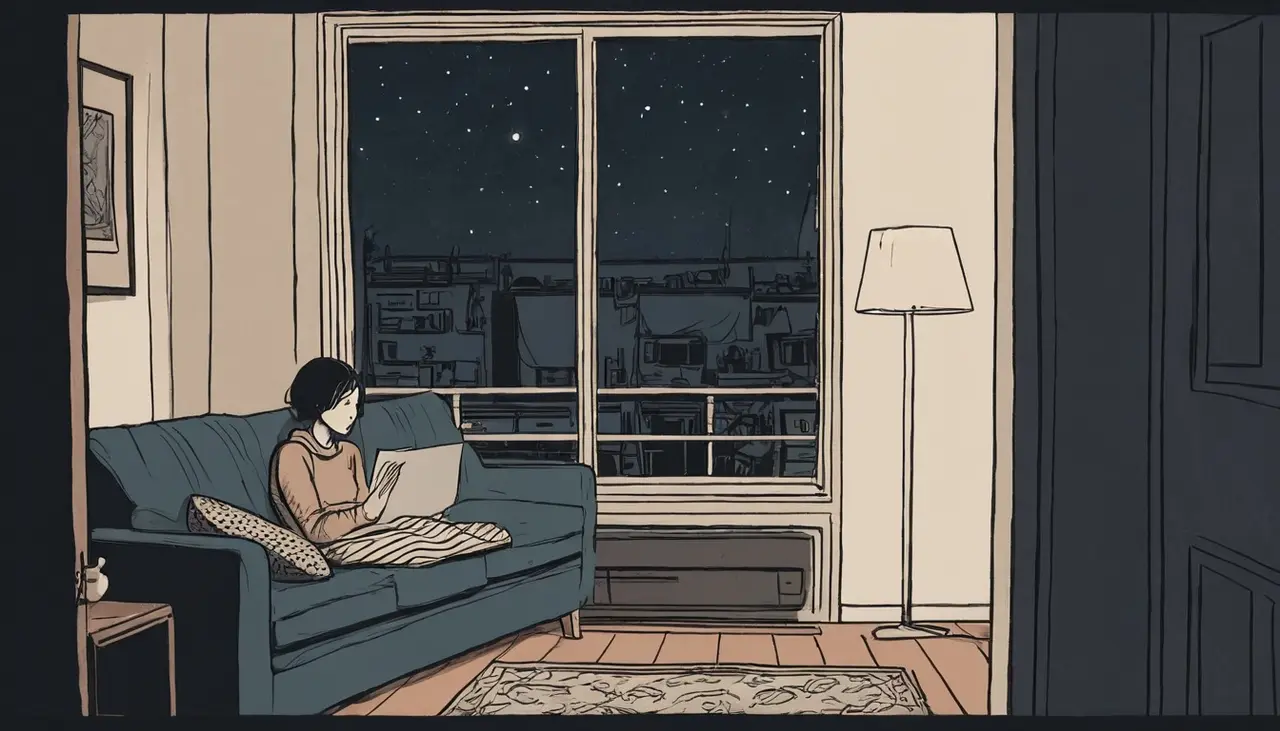
It is the hour after the dishes are done and before nothing in particular. The light in the room has gone amber and a little tired. Somewhere a screen is on, mostly for the noise. You are not unhappy, exactly. You are just aware, in a way you were not aware at two in the afternoon, that the apartment is very quiet, and that there is a bottle in the kitchen, and that the distance between you and it is short.
That distance is what this is really about. Not the drink. The quiet, and what you reach toward to fill it.
A lot of people notice that alcohol gets louder in these hours — the Saturday afternoon with no plans, the weeknight after the family is asleep, the long unbroken stretch of a work-from-home day where no one interrupts you and you interrupt no one. The reasons are personal and they do not all sound alike. For one person, loneliness is the silent apartment. For another, it is a room full of people who have no idea what is actually going on inside them.
Being alone and feeling lonely are not the same thing. You can be by yourself for a weekend and feel fine. You can be at a crowded table and feel like the only person there. Alcohol can show up in both. It does not check which one you are in.
*
What the drink offers in that hour is hard to argue with, which is exactly why it is worth looking at squarely.
It makes a ritual where there wasn't one. It softens the edges of a room that felt too sharp a minute ago. It warms up a show you would otherwise have watched alone and cold. It gives a shapeless evening a beginning and an end. For a few hours it can feel like company — not a friend, but a presence, a thing happening, a small event in a day that had no events. That substitution is most of the answer to why we drink alone, which sorts the solo pour's several different motives from each other.
The drink might be doing more emotional work than it looks like from the outside. The hand reaches for a glass; the part of you that is reaching is reaching for something the glass is standing in for.
*
So think of loneliness less as a flaw in your character and more as a kind of weather — a condition that rolls in at certain hours and rolls back out, that you can learn to read without taking personally.
Some days the weather is worse, and you can almost feel why. A day with no anchors tends to make it heavier: no errand that pulls you outside, no daylight, no meal you planned, no one expecting you anywhere, no clean line between the workday and the evening. A day with even one small fixed point — one errand, one text from a friend, one change of scene — tends to make it lighter. The cue is the same. The barometric pressure around it is not.
A glass poured at home, alone, with no one watching the line, tends to run generous. NIAAA describes a standard drink as 0.6 fluid ounces, or 14 grams, of pure alcohol — but the pour you make in an empty apartment rarely stops there, and the number tells you the size of what is in the glass, not what the hour is asking the glass to carry. That is worth noticing quietly, without turning it into a verdict on yourself. The WHO puts the wider truth plainly: there is no amount established as safe. Not a line to stay just under — only a reason to see your own pattern a little more honestly.
There is one more thing about the weather of loneliness, and it is the part that keeps it dark longest. Shame thickens it. NIAAA names stigma as one of the most consistently reported barriers to seeking help for anything alcohol-related. When you hide the pattern because you are afraid of being judged for it, the loneliness becomes both the storm and the room you lock yourself in to wait it out. The drinking gets lonelier. The loneliness gets more private. They feed each other in the dark.
There is a plainer question tucked inside that loop: does loneliness cause drinking problems, or does drinking cause loneliness? The answer does not run cleanly in one direction. Loneliness can make the first pour feel more useful, and drinking can make the next lonely hour more hidden. Each can make the other easier to repeat.
That is why connection is not decoration here. There is a famous meta-analysis on this — 148 studies, more than 300,000 people — which found that people with stronger social relationships had a 50% higher likelihood of survival than people with weaker ones, an influence its authors compared to established health risks such as smoking. The number is not there to frighten anyone, and it will not cure a lonely hour by itself. What it changes is the weight you give the small stuff: one text answered, one errand run with another person, one standing plan kept — sturdier material than a mood trick. Contact is load-bearing.
*
What seems to help is small, and mostly about putting a little space between the cue and the first pour — long enough to see what the cue was actually asking for. For the nights the pull comes in harder than a little space can hold, how to handle alcohol cravings and urges is the fuller toolkit.
Step outside for a minute of air or daylight. Move your body for a few. Make a hot drink or a plain snack with your hands. Text one person, no announcement, no big confession — just contact. Write one sentence and finish it honestly: the lonely part of this moment is ____. Change rooms. Start something small with a clear endpoint.
None of these cures loneliness, and it would be insulting to pretend otherwise. A webpage cannot fix your social life and should not try. What these do is narrower and more honest: they interrupt the reach long enough for you to notice whether you wanted company, or structure, or comfort, or a transition, or just sleep — and then choose the rest of the night from there instead of from habit. If the harder thing is the weekday handoff from work to home, instead of drinking after work sits closer to that.
*
A lighter week or two will not solve any of this. What it can do is show you the shape of the weather — which hours were easy without the drink and which ones you white-knuckled, whether the pull came after silence or after a fight or after an evening of scrolling, whether one small contact with another human changed anything at all. You are not running an experiment to prove you have willpower. You are reading a map of your own hours so you can choose a better next step on it. If part of what you want is people who do not put alcohol at the center of every plan, a piece on finding friends who feel that way starts there. If the private pattern itself is the thing nagging at you, drinking alone signs to consider is the closer look. And if the lonely stretch has a start date — a relationship that just ended — drinking after a breakup or divorce is written for exactly those first weeks.
And there is a line where reading a map stops being enough. If the loneliness feels heavy and immovable, if it carries thoughts of hurting yourself, if drinking alone is getting more frequent, or if you keep drinking more than you meant to — that is the point to bring it to a licensed clinician or therapist. The same goes, and sooner, if the drinking has been heavy and daily and you are thinking about stopping: for some patterns of drinking, stopping cold can be medically risky, so plan that with a clinician instead of alone. SAMHSA's National Helpline is a free, confidential referral service at 1-800-662-HELP, any hour you need it. And if those thoughts of hurting yourself are here right now, the 988 Suicide & Crisis Lifeline is there the same way — call or text 988, any hour.
*
Go back to that amber hour, the one at the top. The room is still quiet. That part does not change tonight.
But the quiet was never the enemy. It was just the moment the question got loud enough to hear — what is it I actually want from this hour — and for once you let the question hang there a beat before the answer poured itself. Notice the hour before it arrives this week. Sit in it long enough to name what it is asking for. That small pause, repeated, is not nothing. Sometimes it is the whole beginning.
This is general reading — a way of seeing an hour, not a diagnosis of it. What your own drinking needs, if it needs anything, is a question for a licensed clinician who knows your story.
- Understanding your drinking
Why Is It So Hard to Control How Much I Drink?
A non-diagnostic FAQ on why one drink can change the decision environment, what loss of control can feel like, and when to bring the pattern to a clinician.
- Mind & mood
Stopped Drinking and Anxiety Went Away: Can That Happen?
A non-diagnostic Q&A on why anxiety may ease for some people after changing drinking, and when anxiety needs more support.
- Mind & mood
Why Do I Feel Anxious the Day After Drinking?
A non-diagnostic Q&A on next-day anxiety after drinking, why it can happen, what to try in the moment, and when to talk to a clinician.
- Understanding your drinking
What Is a Blackout From Drinking?
A blackout is a memory gap for events during intoxication — not passing out. Why someone can talk, text, and get home with none of the night recorded.
- Body & physical health
Can You Develop Alcohol Intolerance? Why Drinking Feels Different
Yes, someone who drank comfortably for years can start reacting badly. Intolerance hits during or soon after a drink; a hangover arrives hours later. How to tell.
- Body & physical health
Alcohol and Muscle Recovery
Alcohol doesn't erase a workout, but it can slow muscle recovery through hydration, sleep, and protein synthesis — and the effect scales with amount and timing.


Be the first to hear when Clero launches.
Join with email only. Clero is still in development, so this is educational content today — not treatment, a prescription request, or medical advice.
First to hear at launchLaunch news only — no spamUnsubscribe anytime