
Why Do I Feel Anxious the Day After Drinking?
A non-diagnostic Q&A on next-day anxiety after drinking, why it can happen, what to try in the moment, and when to talk to a clinician.
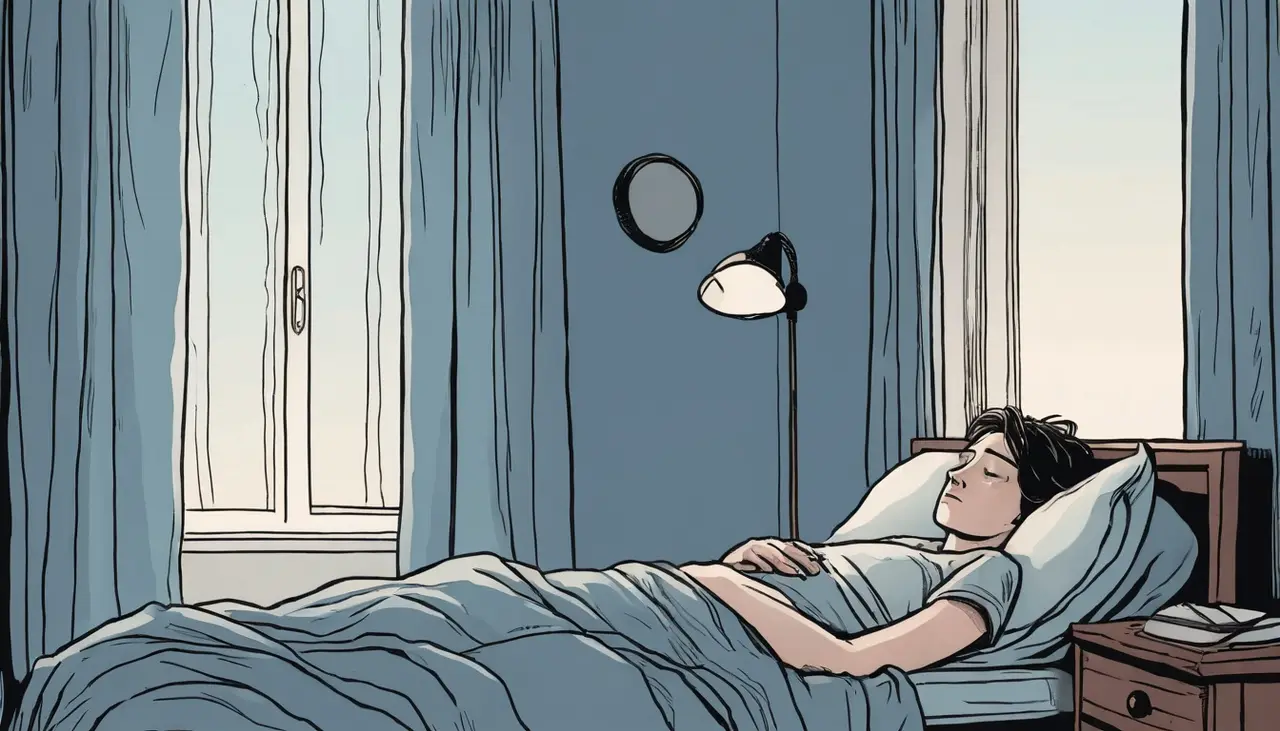
This is for you, if you have woken up the morning after drinking with your heart going and your mind already writing a case against you for something you can barely remember. You weren't expecting a letter about that. Here it is anyway.
I'm writing because most of what gets said about next-day anxiety is either alarming or useless, and you deserve a few true things said plainly instead. People have a nickname for it now: hangxiety. The word is light. The feeling is not. So let me tell you what is actually happening, and what I'd say to you if we were sitting across a table.
Here is the first thing I want you to know: the dread is chemistry, not a verdict. Picture your nervous system as having a brake and a gas pedal. Alcohol leans hard on the brake — that loosened, easier-to-talk feeling a drink or two in. Your brain does not like being held down, so while you drink it pushes back, easing off its own brake and pressing down on its own gas to stay level. Then the alcohol clears overnight, the brake it was pressing lets go, and for a stretch the next morning your brain is still standing on the gas. The whole system runs tilted toward overstimulation. That racing, dread-soaked feeling is what the overcorrection feels like from the inside. It isn't punishing you. You're just awake for it.
And it rarely arrives alone. A night of drinking usually means broken sleep even after long hours in bed, some dehydration, an unsettled stomach, and whatever you were drinking to quiet still sitting there in the morning. Each of those leans the same direction. They stack. So if you've been asking what is wrong with you, I'd gently put the question down. Nothing is wrong with you. A predictable rebound is doing a predictable thing.
The next thing is harder to hear, and I won't soften it: you drank to relax, and that is exactly why you feel worse. The calm was front-loaded into the evening. The bill comes due the next day. Your overstimulated brain reads ordinary morning quiet as something to fear, and with nothing concrete to attach to, it grabs the nearest material — a half-remembered conversation, an unanswered text, a vague sense you embarrassed yourself. I want to be straight with you about this part, because it's where people lose hours. The feeling is real. The story it writes to explain itself usually is not.
It does tend to be worse after heavier nights, which is the one place the amount is worth a plain look. If you want a shared yardstick instead of a guess, the CDC describes a U.S. standard drink as 0.6 fluid ounces, or 14 grams, of pure alcohol — and a large pour of wine, a strong mixed drink, or a tall beer can quietly be more than one. The same agency describes binge drinking as four or more drinks for women, or five or more for men, on a single occasion. Read those as definitions, not a safe line — the rebound tends to grow with how much you drink and how often the heavy nights stack up, but there is no count that spares everyone and none that floors everyone either. The number is only ever part of the story. Whether you slept, whether you ate, whatever you carried into the night, and the particular way your own body meets alcohol all pull the morning one way or the other. I'm not handing you that as a charge sheet. I'm handing it to you so you have words for "that was a heavier night" without spiraling about it.
Now the part I'd want said to me, plainly, if I were the one lying there at 6 a.m.
You are not a bad person who did a bad thing. You are a person whose nervous system is catching its balance out loud, and the shame riding in alongside the dread is part of the rebound, not evidence about your character. And here is the thing the 6 a.m. version of you cannot feel yet: a rebound is, by its nature, temporary. You are measuring this in hours, not in weeks. As the morning wears on and your system finishes settling back to level, the worst of the edge usually eases on its own, whether or not you manage to do anything clever about it. Let me say the plain thing: the morning is lying to you, and you do not have to believe it to get through it.
What I'd tell you to do is small and practical, and that's the point. Steady the body before you try to steady the mind — water, something simple to eat, a shower, a few minutes outside. The calm follows the chemistry; you cannot think your way there faster than your blood will let you. Put the phone down if you've caught yourself mining old messages for proof you're fine, because rereading them pours fuel on a brain already running hot, and the information will keep until you're not the overstimulated version of yourself. And separate what you know from what you fear: what you actually know is checkable — how much you drank, whether you sent anything, whether you missed something real — while "everyone's annoyed with me" and "I ruined it" sound like facts but are the rebound talking. If something genuinely needs repair, it keeps until you're sober and steadier. A short clear word later beats a long panic message now.
If you keep landing here, watch the pattern instead of each separate morning. Note roughly what and how much you drank, when the dread showed up, and what your sleep, food, and stress looked like, then compare your lighter nights with your heavier ones. You're not building a case against yourself. You're checking whether the thing is predictable enough to change, and whether lighter nights spare you the worst of it. For a lot of people, they do.
Here is what I'm not going to tell you. I'm not going to tell you a web page can read your particular morning, because it can't — the rebound is general and you are specific, and the same things that shaped last night shape this morning. Two people, same number of drinks, can wake up worlds apart. What I can tell you is what changes the picture: if the dread is still gripping you days after the drink has cleared, or turns up on mornings you didn't drink at all, that is different information — a rebound eases with the hours, and something that doesn't is pointing at more than last night. If the dread is severe, keeps returning, or comes with physical symptoms that scare you, that is information to take to a licensed clinician rather than to a search bar. And if you've been waiting for a crisis to earn that conversation, then let me spare you the wait: a pattern of rough mornings is reason enough to talk with a licensed clinician about your drinking. If lowering your drinking ever feels physically unsafe, or you can't seem to stop once you start, talk with a clinician before you make a big change, not after.
And one more thing I'll be plain about: if a morning ever tips into feeling unsafe with yourself, or the physical symptoms feel urgent, that is the moment to get a real person involved, not to keep reading. SAMHSA's National Helpline offers free, confidential, 24/7 referral for individuals and families facing substance use. And if it's your own safety you're afraid of, the 988 Suicide & Crisis Lifeline is there any hour — call or text 988. A search result should never be your only support when you feel at risk.
So here is the one thing I'd ask you to carry out of this letter: the dread that woke you was never a judgment on last night. It was a body finding its balance, loudly, and it settles. And if you'd rather not meet it so often, the lever is mostly in the size of the night before — which, unlike the morning, is something you get to decide.
— Editorial
This letter is education about a common rebound — it can't diagnose anxiety or read your particular morning. For your own symptoms, and your own drinking, the right reader is a licensed clinician.
- Hangovers & the day after
Drinking and Constipation the Day After
Alcohol can slow the next-day bathroom pattern for some people; compare the whole night around it, and know when bowel changes need care.
- Hangovers & the day after
Drinking and Heart Palpitations the Day After
Next-day palpitations can follow drinking, but chest pain, fainting, severe breathlessness, or a new irregular rhythm need urgent care.
- Understanding your drinking
Why Do I Black Out When I Drink?
An answer-first Q&A on why alcohol blackouts happen, why they can happen after different amounts for different people, and when a memory gap is a safety warning.
- Cutting back & moderation
How Long Does It Take to Feel Better After Cutting Back on Drinking?
There is no single clock: mental speed tends to pick up within a month, most cognitive function over 6 to 12. Why sleep and anxiety often get worse first.
- Mind & mood
Can Alcohol Cause Panic Attacks? Why They Hit After Drinking
An answer-first explanation of alcohol rebound anxiety, 3 a.m. panic, medical red flags, and how to read the pattern without self-diagnosing.
- Mind & mood
Alcohol and Bipolar Disorder
What NIAAA guidance says about alcohol use disorder and bipolar disorder, why they can overlap, and when mood-safety support matters.


Be the first to hear when Clero launches.
Join with email only. Clero is still in development, so this is educational content today — not treatment, a prescription request, or medical advice.
First to hear at launchLaunch news only — no spamUnsubscribe anytime