
Why Do I Black Out When I Drink?
An answer-first Q&A on why alcohol blackouts happen, why they can happen after different amounts for different people, and when a memory gap is a safety warning.
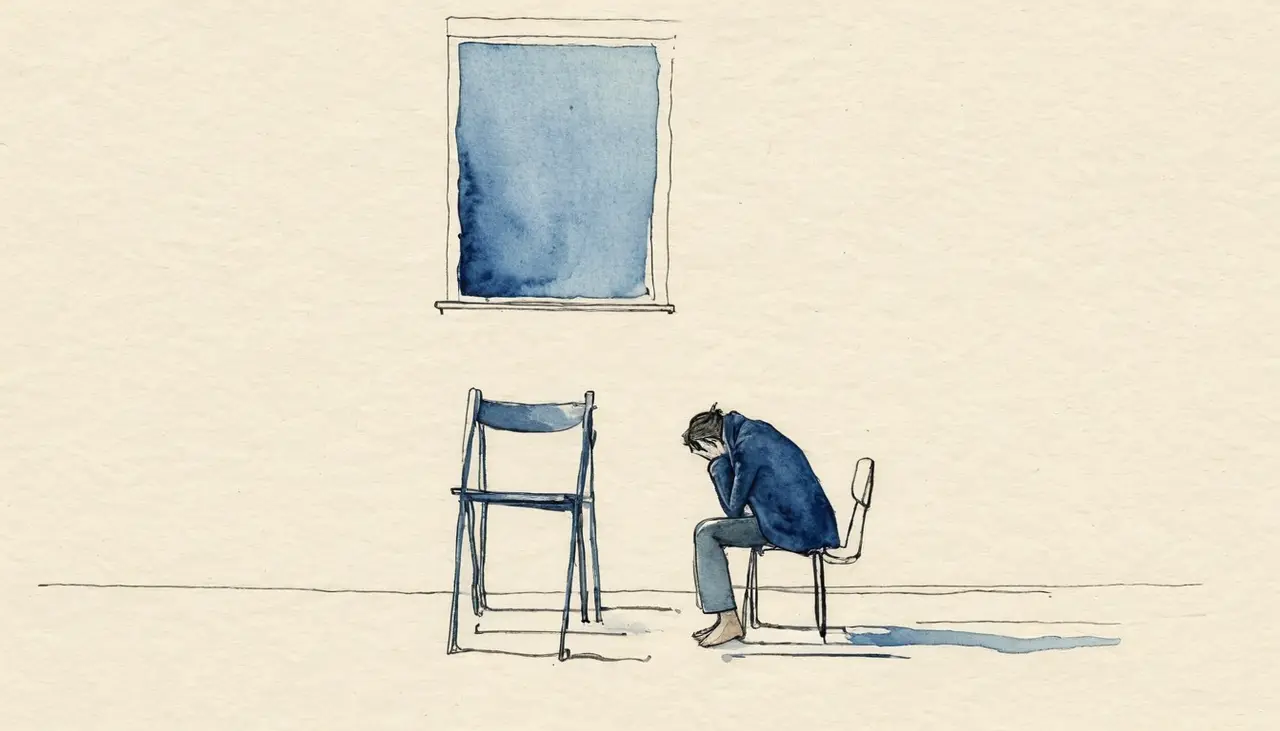
Blacking out after drinking means your brain did not store parts of what happened, even if you were awake and talking at the time.
The short answer is that a fast rise in blood alcohol can interfere with the hippocampus, the part of the brain that helps move short-term experience into longer-term memory. A blackout cannot reconstruct a missing stretch of time for you, tell you whether a crime occurred, or decide whether you are safe right now — those are separate questions this page will help you sort.
Why does alcohol cause memory gaps?
Alcohol blackouts are memory-formation failures, not ordinary forgetfulness. A clinical review describes blackouts as periods of amnesia caused by a rapid rise in blood alcohol concentration disrupting hippocampal memory consolidation. In plain English: the event may be happening, but the brain is not filing it in a way you can reliably retrieve later.
That is why a blackout can feel so unnerving afterward. Other people may say you seemed awake, spoke, sent messages, paid a bill, or got home. A missing stretch does not mean nothing happened; it only means your memory record is incomplete.
Researchers often distinguish two patterns. In a fragmentary blackout, some recall may return with cues. In an en bloc blackout, memory for a span of time is absent in a more complete way. Both are alcohol-related amnesia patterns; neither is a party trick or a harmless sign that the night was fun.
Why do I black out so easily?
There is no fixed drink count that predicts a blackout for every person. The important pattern is not only how much alcohol was consumed, but how fast blood alcohol rose.
Pace matters. Empty stomach, strong pours, high-alcohol drinks, drinking games, shots, and topping off a glass can all make the count harder to see and the rise sharper. So can mixing different social settings in one night, because the first drinks blur the accounting for the next ones. Energy-drink cocktails add a different trap: caffeine can make you feel more awake than your drinking says you should, so the sleepy cue that might have slowed the night arrives late.
The public-health definition helps with language, not prediction. NIAAA defines binge drinking as a pattern that typically brings blood alcohol concentration to 0.08 percent or higher, often 5 or more drinks for males or 4 or more drinks for females in about 2 hours. That definition is useful for naming a heavier episode. It is not a personal blackout threshold.
Does a blackout mean I passed out?
Not necessarily. A blackout is about memory storage. Passing out is about consciousness. They can overlap, but they are not the same thing.
That distinction matters because people often minimize a blackout if they were still "functioning." Functioning is not the same as being safe, fully aware, or able to consent to everything that happened. It is also not the same as being able to drive, supervise, decide, or protect yourself. If someone has a seizure, cannot be woken, is breathing slowly or irregularly, or is severely confused, that is a medical emergency — call 911 or go to an emergency room now. If you are worried you were assaulted or could not consent, you can reach the free, confidential RAINN hotline at 1-800-656-HOPE, and call 911 if you are in immediate danger. A memory gap is not a puzzle to solve alone when your safety is in question.
Why do blackouts keep happening?
Repeated blackouts mean the pattern deserves attention. They do not by themselves mean you have alcohol use disorder, and they do not prove a single cause. They do show that some drinking episodes are reaching a level where memory is failing.
The useful question is narrow: what do the blackout nights have in common? Look at pace, setting, drink strength, whether you ate, who you were with, whether you were trying to keep up, and whether the night crossed into binge-pattern territory. If the common factor is "I lose the count after the first drink," write that down plainly.
You are not trying to build a courtroom transcript. You are trying to see whether the pattern is repeating before it repeats again.
Steps to take after a memory gap
Start with immediate safety. If someone had a seizure, cannot stay awake, is vomiting repeatedly, is breathing slowly or irregularly, has chest pain, or is severely confused, call 911 or go to an emergency room now — do not wait to see if it passes. If you are worried you were assaulted, the RAINN hotline (1-800-656-HOPE) is free and confidential; call 911 first if there is any immediate danger. And if you feel unsafe with yourself or are thinking about self-harm, you can call or text 988 to reach the Suicide and Crisis Lifeline at any hour.
If you are physically safe, keep the next steps practical:
- Check your body first. Look for injury, pain, missing items, or symptoms that need care.
- Do not drive or take on safety-sensitive tasks while impaired or unsure. A memory gap is not a reliable marker that alcohol has cleared.
- Ask only for the facts you need. You do not need to replay humiliating details with people who are not safe or helpful.
- Write down the pattern. Time, amount as best you know it, pace, food, setting, and what was missing.
- Bring repeat blackouts to a clinician. The sentence can be simple: "I am having alcohol-related memory gaps, and I want help understanding the risk." If you do not have a clinician to start with, Clero connects you with licensed clinicians by telehealth who can review the pattern with you.
When a blackout is more than a bad night
A blackout is more than a bad night when it repeats, happens with injuries, shows up around sex or consent concerns, follows driving or caregiving risk, or leaves you afraid of what happened. If a night raised a consent or assault concern, RAINN's confidential support at 1-800-656-HOPE is there whenever you are ready — and 911 if you are in danger now. It is also more than a bad night if you keep setting limits and then wake up without memory anyway.
For public-health scale, NIAAA estimates that 4.2 million U.S. emergency-department visits in 2022 involved alcohol contribution. That number does not predict your personal risk. It explains why clinicians take acute alcohol episodes seriously.
FAQ
Can I black out without seeming drunk?
Yes. A person can appear awake and still fail to form reliable memories. Outside behavior does not prove the brain stored the night.
Is a fragmentary blackout less serious than an en bloc blackout?
It may leave more pieces available with cues, but it is still an alcohol-related memory failure. The pattern is worth taking seriously.
Does blacking out mean I have alcohol use disorder?
This page cannot diagnose you. Repeated blackouts are a strong reason to talk with a clinician or another qualified support because the pattern is putting memory and safety at risk.
The point is not to find the perfect label. The point is to stop treating missing time as normal data loss from a normal night.
This article is general education, not a diagnosis or medical advice; if a blackout comes with a seizure, trouble breathing, severe confusion, or someone who cannot be woken, call 911 or go to an emergency room now.
- Hangovers & the day after
Drinking and Constipation the Day After
Alcohol can slow the next-day bathroom pattern for some people; compare the whole night around it, and know when bowel changes need care.
- Body & physical health
What Is Alcohol Poisoning? The Signs to Know and When to Call 911
A fast, safety-first guide to alcohol poisoning, the warning signs that matter, and why calling 911 comes before at-home fixes.
- Cutting back & moderation
Can a Heavy Drinker Cut Back?
A safety-first answer on heavy drinking and cutting back, with clinician-first routing and no at-home taper instructions.
- Hangovers & the day after
How To Sober Up Fast: What Actually Changes the Answer
A blunt, safety-first answer on why there is no reliable fast sobriety hack, what food and showers cannot do, and when the moment needs help.
- Understanding your drinking
What Is a Blackout From Drinking?
A blackout is a memory gap for events during intoxication — not passing out. Why someone can talk, text, and get home with none of the night recorded.
- Cravings & triggers
Why do I crave alcohol?
Alcohol cravings are your brain's learned shortcut — cues, stress, and habit loops firing together, not weak willpower. What drives the pull and what helps.


Be the first to hear when Clero launches.
Join with email only. Clero is still in development, so this is educational content today — not treatment, a prescription request, or medical advice.
First to hear at launchLaunch news only — no spamUnsubscribe anytime