
Why Do I Hide My Drinking?
Hiding your drinking doesn't make you a bad person — it usually means private rules have stopped working. How to name the pattern without labels or confession.
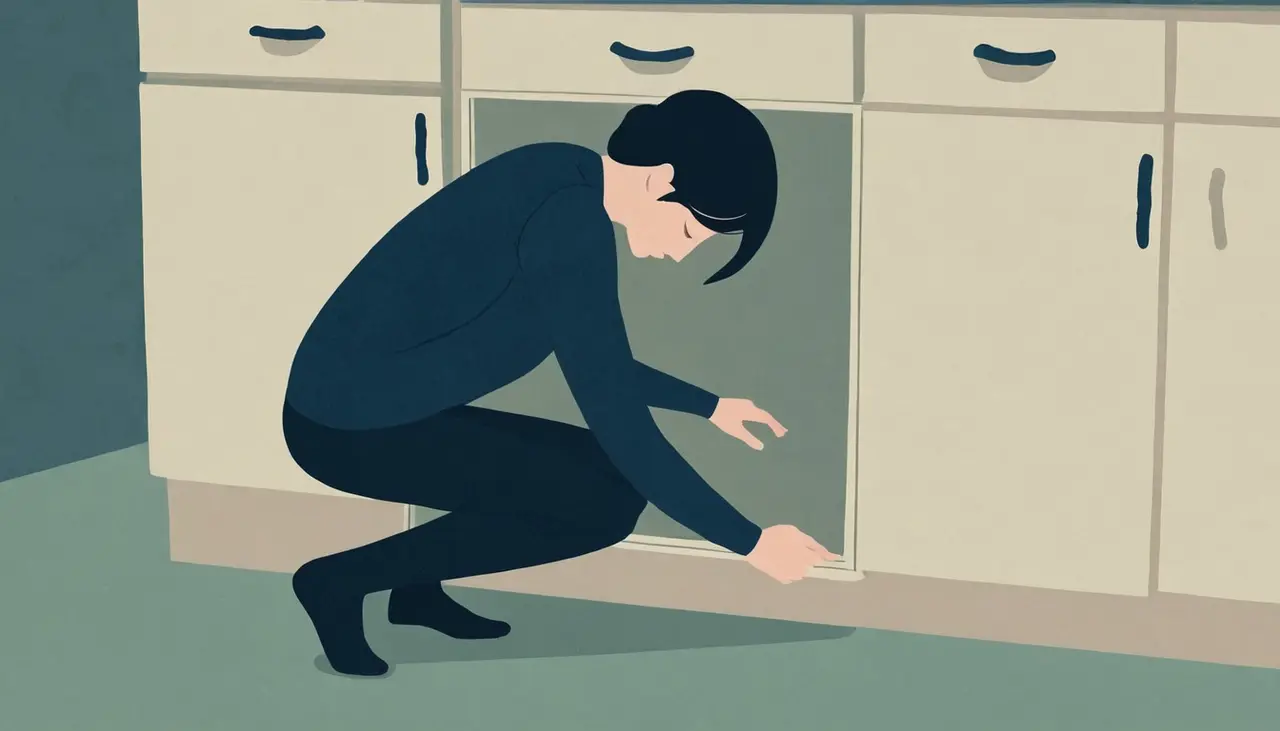
If you are hiding your drinking, this is for the part of you that already knows the hiding matters.
I am not writing to call you a name. I am writing because secrecy has a way of making the question smaller and scarier at the same time. Smaller, because the whole problem becomes the hidden bottle, the missing receipt, the quiet refill, the edited story. Scarier, because you may start to wonder what the secrecy says about you.
The first thing I want you to know
Hiding your drinking does not make you a bad person. It does mean the drinking has crossed into a private pattern worth looking at directly.
People hide drinking for different reasons. Some hide because they expect judgment. Some because they promised to cut back and did not. Some because they want to avoid a fight. Some because the drinking feels like the only quiet thing they have left. Some because they are scared of what would happen if another person saw the real amount.
Those reasons may explain the hiding. They do not make the hiding harmless.
The second thing is about shame
Shame loves vague language. It says, "I am terrible," "I am fake," "I am out of control," or "If anyone knew, everything would fall apart." None of those sentences gives you a next step.
A more useful sentence is smaller: "I hid how much I drank on Friday." Or: "I bought alcohol and did not want anyone to see it." Or: "I poured extra when no one was looking." Those sentences may still feel painful, but they are usable. They describe a pattern instead of turning you into the problem.
You do not have to use a stigmatizing label to take the pattern seriously. You can say, "I am hiding drinking, and I want help getting more honest about it."
The thing I would underline
Secrecy is often a signal that private rules are no longer working.
Maybe you had rules: only weekends, only wine, not around the kids, not before dinner, not alone, not enough for anyone to notice. Then the rules started moving. If a rule keeps moving in private, the question is not whether you are weak. The question is what the rule was protecting you from seeing.
For scale, NIAAA estimates that 27.9 million people ages 12 and older in the United States had past-year alcohol use disorder in 2024. It is context: alcohol concerns are common enough that clinicians hear them every day.
Why "tell everyone" is not the first step
Confessing everything to everyone today is not the move. Forced disclosure can be unsafe, or simply too broad to be useful. If secrecy is tied to violence, coercion, self-harm thoughts, or a relationship where honesty could put you in danger, get safety support before you make any disclosure plan. If you are having thoughts of harming yourself, you do not have to sit with them alone: call or text 988, the Suicide and Crisis Lifeline, to reach a trained counselor now. If you are in immediate danger, call 911.
Carrying it alone is not the alternative, either. There is a middle step between total secrecy and telling the whole world: one safe clinician, one safe support person, or one factual note you bring to an appointment.
The U.S. Preventive Services Task Force (USPSTF) recommends primary-care screening for unhealthy alcohol use, and that kind of brief screening can be useful precisely because it is more specific than shame. You do not have to arrive with a label. You can arrive with facts.
If privacy has been protecting you
There is a difference between privacy and secrecy. Privacy can be healthy. You are allowed to have thoughts, appointments, notes, and decisions that are not public property. Secrecy is different when it keeps you stuck in a pattern you are afraid to name.
If you have been calling it privacy, ask what the privacy is protecting. Is it protecting dignity while you get help, or is it protecting the next hidden drink? Is it giving you room to think, or giving the pattern room to grow? You do not have to answer perfectly. You only have to answer honestly enough to choose the next small step.
One useful private step is to make the hidden part measurable. Not forever. Just once. How many drinks did you hide? How much money? Which time of day? Which person were you avoiding? A number or a time is not a moral verdict. It is a handle.
Once you have a handle, the pattern is less ghostly. You can bring it to one safer person without having to explain your whole life.
That is often the first relief: not being fully exposed, just being less alone with the facts.
A small way to start
For one week, do not try to write a grand explanation. Write three columns:
- What I drank.
- What I hid.
- What I was afraid would happen if it were seen.
Keep it plain. No insults. No courtroom language. No dramatic verdict on your character.
If the same fear shows up more than once, circle it. Fear of judgment. Fear of a fight. Fear of being told to stop. Fear of losing the one thing that shuts the day off. That fear is part of the pattern too.
If someone else has noticed
If a partner, friend, or family member has already noticed, you may feel cornered. Try not to make the first goal winning the argument. The first goal is telling one clean truth.
"I have been hiding some of my drinking. I am not ready to discuss every detail right now, but I know it is a real pattern, and I am going to bring it to someone qualified."
That sentence does not ask them to approve. It does not promise instant change. It keeps the door open without turning the moment into a trial.
Where this leaves you
The hiding is not the whole story of who you are. It is a piece of data that deserves daylight somewhere safe.
Start with one true sentence. Then choose one safer place to take it.
— the Clero editorial team
This letter is general education, not a diagnosis or medical advice. If you are having thoughts of harming yourself, call or text 988 (the Suicide and Crisis Lifeline); if you are in immediate danger, call 911; and if you want help finding treatment, SAMHSA's free, confidential line is 1-800-662-HELP (4357).
- Body & physical health
Does Alcohol Make You Hungry? Why the Drunchies Hit So Hard
Yes — alcohol scrambles hunger signals and lowers the brakes at the same time. Why the drunchies hit, and what actually changes the late-night pattern.
- Mind & mood
Can Alcohol Cause Panic Attacks? Why They Hit After Drinking
An answer-first explanation of alcohol rebound anxiety, 3 a.m. panic, medical red flags, and how to read the pattern without self-diagnosing.
- Mind & mood
Why Do I Drink When I'm Sad?
Drinking when you're sad is usually a learned loop: sadness cues the drink, relief reinforces it, a rough morning restarts it. How to spot and interrupt it.
- Mind & mood
Why Does Alcohol Make Some People Angry?
Alcohol can make anger louder by weakening judgment and self-control. The mechanism explains the pattern; it never excuses harm.
- Medication & treatment
Do I Have to Tell My Doctor I'm Cutting Back on Drinking?
No, you don't have to tell your doctor you're cutting back — but one honest sentence usually helps more than it costs. When it matters, and how to start small.
- Understanding your drinking
Why Do People Become Alcoholics?
Alcohol problems do not develop for one simple reason. This non-stigmatizing explainer looks at risk factors without blame, destiny, or diagnosis.


Be the first to hear when Clero launches.
Join with email only. Clero is still in development, so this is educational content today — not treatment, a prescription request, or medical advice.
First to hear at launchLaunch news only — no spamUnsubscribe anytime