
Why Am I So Tired After Drinking?
Alcohol wrecks the second half of your night — lighter, broken sleep even after a full eight hours in bed. Why dehydration is only the supporting actor.
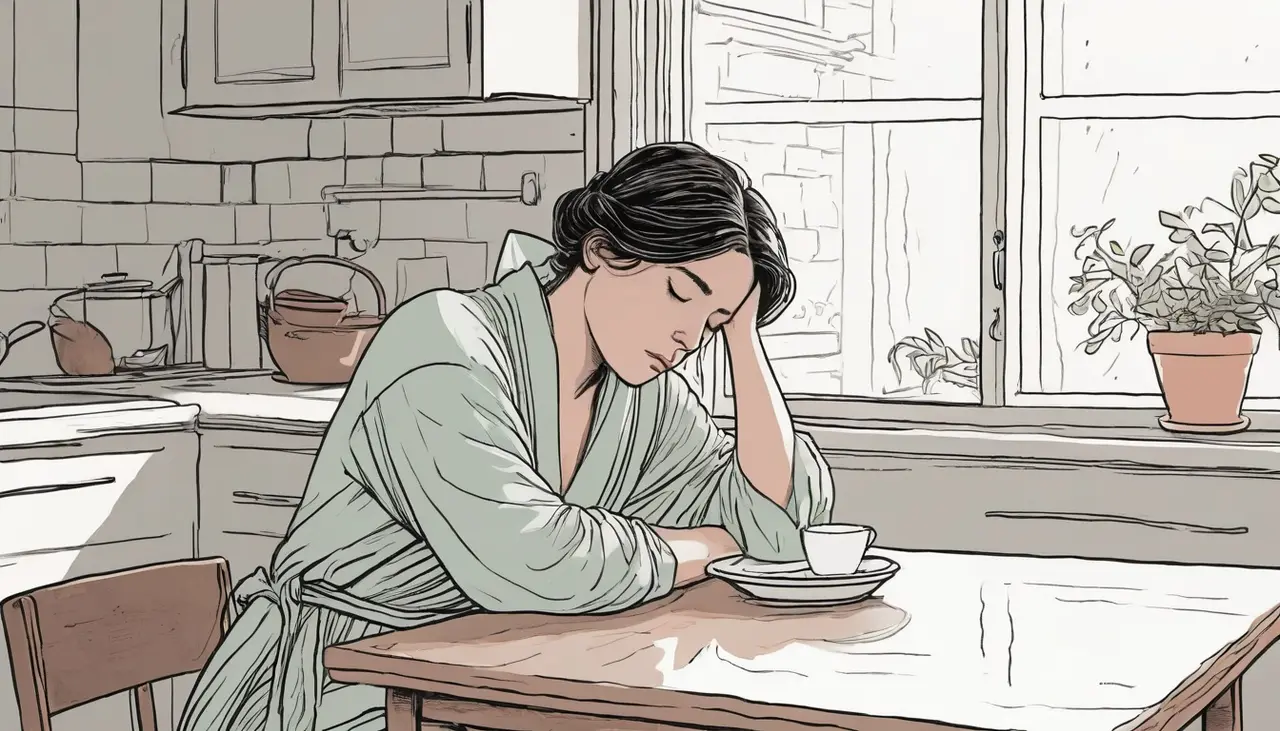
The usual explanation for feeling wrecked the day after drinking is dehydration, or simply having had too much. Both play a part. But the larger reason is quieter and easy to miss: alcohol changes the shape of your sleep, even on a night when it knocked you out fast and you spent a full eight hours in bed. So why does a night that felt like plenty of sleep still leave you flat, foggy, and short-tempered?
What alcohol does to a night's sleep
Fall asleep quickly after a drink or two and it feels like alcohol is helping you rest. The first half of the night can even look fine. The problem is the second half.
A drink near bedtime speeds up how fast you fall asleep, but that sedative effect gets paid back later as lighter, more broken sleep and more time spent awake. A review in Current Opinion in Psychology describes overall sleep quality declining even when total time in bed looks unchanged — you are down the same number of hours, but fewer of them are the deep, restorative kind.
Part of that is what alcohol does to REM sleep, the dreaming stage that helps you feel mentally restored. Reviewing the sleep research, Stein and Friedmann note that alcohol suppresses REM in the first half of the night and is followed by a "rebound" in the second half — more intense dreams or nightmares, and a lighter, fragmented run to morning as your body finishes clearing the alcohol. The knock-out at the start and the restlessness before dawn are two sides of the same process.
There is also a mechanical piece people rarely connect to their drinking. Alcohol relaxes muscle, including the muscles of your throat. The Sleep Foundation notes this can worsen snoring and obstructive sleep apnea — brief dips in blood oxygen during sleep — even in people who don't normally snore. You can't feel those dips, but they fray the night.
And yes, fluids matter. A controlled crossover trial confirms alcohol acts as a potent diuretic, so a heavier night pulls water out of you and you wake up parched. Dehydration is real — it's just usually the supporting actor. The lead is the disrupted sleep.
Why "I only had a couple" can still flatten you
A lot depends on what "a couple" actually holds. A strong cocktail or a generous pour of wine can be more than one standard drink, and the count is what your body responds to. NIAAA counts a U.S. standard drink as 0.6 fluid ounces — about 14 grams — of pure alcohol, and its binge pattern (roughly 5 or more drinks for men, or 4 or more for women, in about two hours, enough to bring blood alcohol to about 0.08%) is just a clear way to describe a heavier episode. The nearer to bedtime you finish, and the more you drink, the more of that second-half disruption you're setting up.
The part that surprises regular drinkers
Here is what a one-off explanation misses. Tolerance to alcohol's sedative effect develops within about three to seven days of steady drinking. So someone who drinks most nights stops feeling the obvious knock-out — but the fragmented, low-quality sleep does not become tolerant. It keeps happening. That answers the question people often ask next: why does a friend who has two glasses every night seem fine, while my one big Saturday flattens me? They may not feel sleepy the way you do; they feel it as a lower, flatter baseline energy they have stopped blaming on alcohol at all. Neither pattern is "free" — the cost just shows up differently.
The disruption can also outlast the drinking. A framework review in Neuropsychopharmacology finds insomnia is common with heavier, longer-term drinking, and the sleep problems — taking longer to fall asleep, waking more, getting less deep sleep — often persist well past the first month of cutting back rather than clearing in a few days. If your energy doesn't rebound the moment you ease off, that lag is well documented; it is not a sign that drinking wasn't the issue.
None of this scales the same for everyone. Age, body size, what and when you ate, other medications, existing sleep problems, and stress all move the dial. The mechanism explains the direction, not your exact timeline.
What you can actually do with this
A few small experiments, each aimed at a different piece of the mechanism:
- Move the last drink earlier. The closer to sleep you finish, the more alcohol is still clearing while you're down. A few hours' gap lets more of it pass before you lie down.
- Count in standard drinks, not glasses. Before bed, jot the rough standard-drink count, when you stopped, and how the first hour after waking felt. Vague inputs give vague patterns.
- Try two alcohol-free nights a week and compare mornings. Rate energy, focus, and mood from 1 to 5 in the first hour after waking — not at day's end, when everything blurs. Change one thing at a time; overhaul sleep, diet, and drinking at once and you'll learn nothing clean.
When it's worth asking a clinician
Bring it to a licensed clinician if the tiredness is severe, new, worsening, lasting far longer than the night warrants, or landing alongside symptoms that worry you — fatigue has many causes besides alcohol, and a clinician can look at the whole picture. Heavy drinking can also act on the blood itself rather than only on the night's sleep — does alcohol cause anemia covers the red-blood-cell and nutrition side, which is a blood-test question. The same goes if you keep drinking more than you planned, or if easing off feels harder than it should. A plain opening line works: "I feel wiped out after drinking and I want help reading the pattern." If you don't already have someone to ask, Clero connects you with a licensed clinician by telehealth who can talk through what's going on and whether treatment options fit.
Two situations skip the tracking and go straight to urgent help. If a stretch without alcohol has ever brought on shaking, confusion, hallucinations, or a seizure, that is a medical emergency — call 911 or go to an emergency room. And if you ever feel unsafe with yourself, call or text 988 for the Suicide and Crisis Lifeline.
Common questions
Is it normal to feel tired for a whole day or two after drinking?
Some people do recover more slowly, especially after a heavier night or when sleep was badly broken. When the flatness lands hardest on the second day, that pattern has its own page — drinking and your energy the second day after. But "common" isn't the same as "nothing to check." If the tiredness is unusually deep, drags on, or keeps recurring, raise it with a clinician rather than waiting it out.
Will drinking water fix the next-day fatigue?
It helps with the dehydration part, which is real but usually minor next to the sleep disruption. Water won't give back the deep and REM sleep the alcohol cost you. When and how much you drank matters more than hydration alone.
Does feeling this way mean I have a drinking problem?
Not by itself. Next-day fatigue is a signal about one night's sleep, not a verdict about your whole relationship with alcohol. Treat it as information — something to track, and to bring to a clinician if the pattern concerns you — not a label.
The tired-after-drinking question mostly comes down to sleep quality, not sleep quantity — which is oddly good news, because timing and amount are things you can adjust and test. Fix the inputs, watch the mornings, and let the pattern tell you what it costs.
This article is general education, not medical advice or a diagnosis. Fatigue that is severe, lasting, or worrying can have many causes — check it with a licensed clinician who knows your history.
- Hangovers & the day after
Alcohol and Headaches the Day After
The headache the day after drinking is usually a stack: temporary fluid loss, broken sleep in the back half of the night, and for some people a flushing reaction.
- Cutting back & moderation
How Long Does It Take to Feel Better After Cutting Back on Drinking?
There is no single clock: mental speed tends to pick up within a month, most cognitive function over 6 to 12. Why sleep and anxiety often get worse first.
- Hangovers & the day after
What Actually Causes a Hangover?
A hangover is a pile-up, not just dehydration: fluid loss, fragmented sleep, stomach irritation, inflammation, acetaldehyde, and the rebound after the buzz.
- Body & physical health
Can You Develop Alcohol Intolerance? Why Drinking Feels Different
Yes, someone who drank comfortably for years can start reacting badly. Intolerance hits during or soon after a drink; a hangover arrives hours later. How to tell.
- Hangovers & the day after
What To Do Before Bed After Drinking Too Much
Check safety first: anyone confused, hard to wake, or breathing strangely needs 911, not bed. Then skip the fixes — no remedy is proven, only time works.
- Quitting & sobriety
Why Can't I Sleep When I Stop Drinking?
Why sleep can feel worse after stopping or cutting back on alcohol, when it may point to withdrawal risk, and what to track next.


Be the first to hear when Clero launches.
Join with email only. Clero is still in development, so this is educational content today — not treatment, a prescription request, or medical advice.
First to hear at launchLaunch news only — no spamUnsubscribe anytime