
Stopped Drinking and Anxiety Went Away: Can That Happen?
A non-diagnostic Q&A on why anxiety may ease for some people after changing drinking, and when anxiety needs more support.
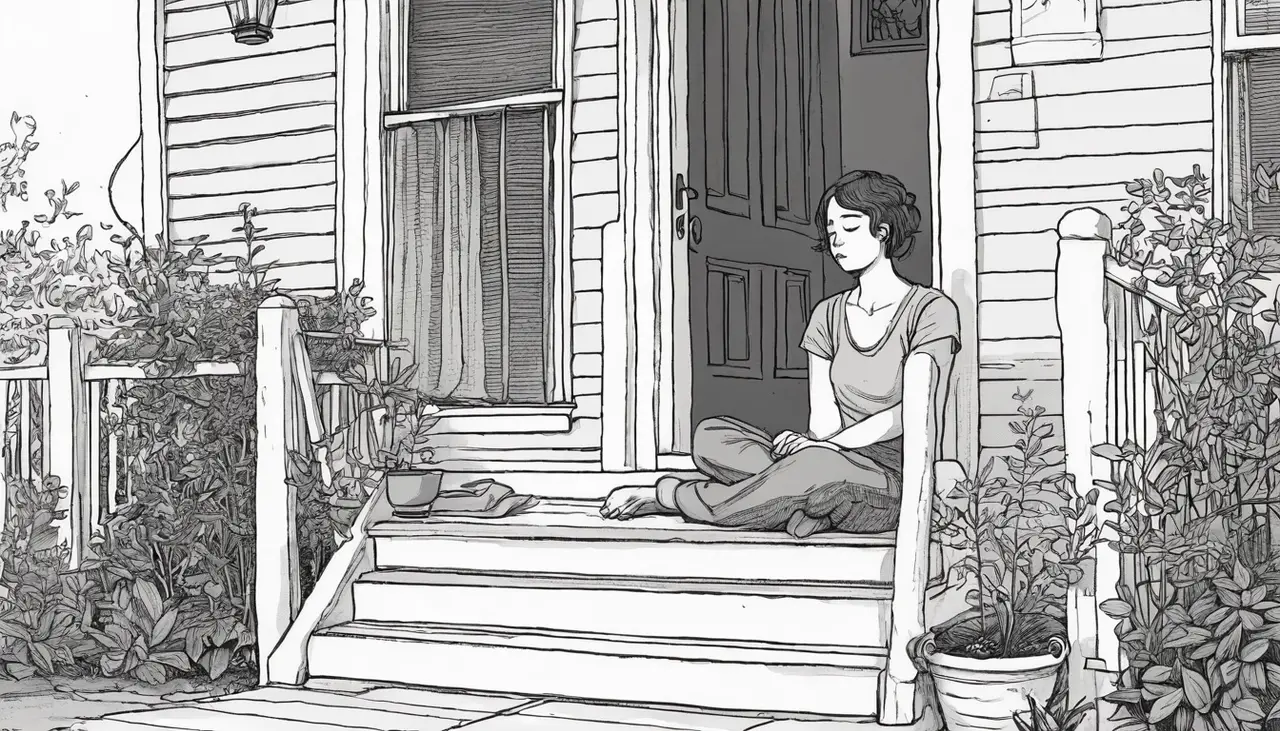
Yes, this happens to a lot of people, and there's a real reason for it — but "went away" isn't the whole story, and it doesn't land the same way for everyone.
You cut back or quit, and somewhere in the second or third week you notice the low background hum of dread has gone quiet. You're not bracing all morning. The 3 a.m. spin cycle eases. It can feel almost suspicious, like it was too simple. It wasn't a trick, and it wasn't only in your head. When you take alcohol out of a nervous system that had been leaning on it, the chemistry that was driving a lot of that edginess gets a chance to settle.
Can quitting alcohol actually calm anxiety?
Yes — for many people, steady anxiety really does ease after they stop, and there's a mechanism behind it. Alcohol acts on two of the brain's main signaling systems: it boosts GABA, the chemistry that slows things down and makes you feel loose, and it dampens glutamate, the chemistry that revs you up. Do that night after night and the brain fights to stay balanced — it turns down its own calming GABA signals and turns up the excitatory glutamate ones. A review of the neurochemistry of alcohol withdrawal describes what happens next: once the alcohol clears, those adjustments are left unopposed, and the brain runs hot. That rebound is felt as anxiety, restlessness, and a wired, can't-settle feeling.
So when you stop for good, you stop feeding that daily push-and-pull. Over weeks, the brain isn't being yanked in both directions anymore, and its baseline can drift back toward calm. That's the version of the story where anxiety "went away."
So why did I feel more anxious at first?
Because the rebound comes before the recovery. In the first days after your last drink, your brain is still in its turned-up, over-revved state with nothing damping it — so a lot of people feel jittery, keyed-up, or more anxious right at the start, not less. That's the same unopposed-glutamate effect, just early. It's a phase, not a verdict on whether quitting was the right call.
Sleep makes it louder. Alcohol is sedating up front, so it speeds you into sleep — but research on alcohol and sleep shows the back half of the night gets lighter and more broken, so overall sleep quality drops even when the hours look normal. A few nights of shallow, fragmented sleep will crank anyone's anxiety up. As sleep knits back together, that layer usually eases too — though not always on the schedule you'd want, which is the next question.
Was the alcohol causing my anxiety, or was it always there?
This is the one worth sitting with, and it's the fork in the road. Broadly, anxiety around drinking comes in two flavors. Some of it is alcohol-driven — the rebound and the wrecked sleep described above — and that kind tends to lift once drinking stops and the brain re-settles. Some of it is an anxiety condition that stands on its own, with its own roots in stress, trauma, genetics, or health, and that kind tends to stick around even after the drinking is gone. A clinical review of co-occurring alcohol use and mood conditions makes exactly this distinction for depression, and the same logic maps onto anxiety: substance-driven symptoms often fade with abstinence, while an independent disorder persists.
Here's the honest part — from the inside, the two can feel identical. You usually can't tell which one you're dealing with by willpower or self-diagnosis; you tell by watching what happens over time once alcohol is out of the picture. If it clears, it was probably riding on the drinking. If it holds, it likely needs its own support. Neither answer is a failure.
Why hasn't mine gone away yet?
If your anxiety hasn't lifted, that doesn't mean quitting isn't working or that something's wrong with you. A few things can be true at once. Recovery is gradual, and it's uneven — sleep in particular can lag. A framework on alcohol use and sleep notes that disturbed sleep frequently persists well into abstinence rather than resolving in the first month, and poor sleep keeps anxiety propped up. Give it more than a couple of weeks before you draw conclusions.
It may also be that alcohol was only ever one input. Anxiety runs on stress, workload, caffeine, relationships, and health, and pulling one lever doesn't switch off the others. And sometimes the drinking was quietly doing a job — smoothing social nerves, filling the after-work gap — so when it leaves, the underlying worry is simply more visible than it used to be. That's not the anxiety getting worse. That's it getting easier to see.
What helps while your brain resets
You don't have to white-knuckle the in-between. A few things carry real weight in these early weeks:
- Sleep: protect it hard, because it's doing double duty as anxiety repair. Keep steady wake and sleep times and go easy on caffeine after midday.
- Movement: even a daily walk burns off some of the excess arousal the rebound leaves behind.
- The morning window: anxiety often peaks early; a small anchoring routine — light, water, a few minutes of slow breathing — takes the edge off the worst part of the day.
- A simple log: for a week or two, jot drinks, sleep, and anxiety intensity side by side. You're not building a science project — you're gathering the pattern that makes the next conversation with a clinician less vague.
When it's more than a drinking-and-anxiety loop
Reach out for real support if anxiety is disrupting your sleep, work, eating, or relationships, if panic symptoms are frightening you, or if it simply hasn't budged after several alcohol-free weeks. The CDC lists anxiety and depression among the long-term effects of excessive drinking, which is part of why heavy or daily drinking is worth naming to a clinician rather than sorting solo — and why a clinician is the right person to tell whether what you're feeling is alcohol-driven, an independent anxiety condition, or both, and whether treatment fits. If you don't have someone to start that conversation with, Clero can connect you with a licensed clinician by telehealth to talk it through.
One safety note that overrides all of the above: if your drinking has been heavy or daily, stopping suddenly can be medically dangerous. If cutting back brings on a seizure, confusion, hallucinations, or a racing heart, that's an emergency — call 911 or go to an emergency room. Don't tough it out.
A couple of quick answers
How long until anxiety settles after quitting? There's no fixed clock. The early rebound often eases within a week or two, but sleep and baseline mood can take longer to fully normalize, and an independent anxiety condition won't resolve on drinking changes alone.
Should I start drinking again if anxiety spikes? Don't use this page to make that call, especially if you drank heavily or daily. An early spike is often the rebound phase, not a sign you need alcohol back — but if it feels unmanageable, that's a reason to talk to a clinician, not to self-medicate.
If your anxiety eased after you stopped, let that be a genuine win — the chemistry behind it is real. And if it's still hanging on, that's not the plan failing; it's a signal that this part deserves its own kind of care.
This page is educational and isn't medical advice. If anxiety ever tips into thoughts of harming yourself, call or text 988 for the Suicide and Crisis Lifeline, and if stopping brings on a seizure, severe confusion, or hallucinations, call 911 or go to an emergency room.
- Hangovers & the day after
Drinking and Constipation the Day After
Alcohol can slow the next-day bathroom pattern for some people; compare the whole night around it, and know when bowel changes need care.
- Understanding your drinking
Why Do I Black Out When I Drink?
An answer-first Q&A on why alcohol blackouts happen, why they can happen after different amounts for different people, and when a memory gap is a safety warning.
- Mind & mood
Can Alcohol Cause Panic Attacks? Why They Hit After Drinking
An answer-first explanation of alcohol rebound anxiety, 3 a.m. panic, medical red flags, and how to read the pattern without self-diagnosing.
- Mind & mood
Why Does Alcohol Make Some People Angry?
Alcohol can make anger louder by weakening judgment and self-control. The mechanism explains the pattern; it never excuses harm.
- Mind & mood
Alcohol and Loneliness
A quiet, non-diagnostic Q&A on why alcohol can become louder during lonely hours and what small next steps can look like.
- Quitting & sobriety
Stopped Drinking and Sleeping a Lot: What It Can Mean
Sleeping a lot after you stop drinking often means your body is collecting the rest alcohol was disrupting. How to tell catch-up sleep from withdrawal.


Be the first to hear when Clero launches.
Join with email only. Clero is still in development, so this is educational content today — not treatment, a prescription request, or medical advice.
First to hear at launchLaunch news only — no spamUnsubscribe anytime