
Why Do I Cry After Drinking?
Alcohol lowers your emotional filter, and the rebound as it clears leaves your nervous system touchier — that is why tears spill over, and why mornings hit harder.
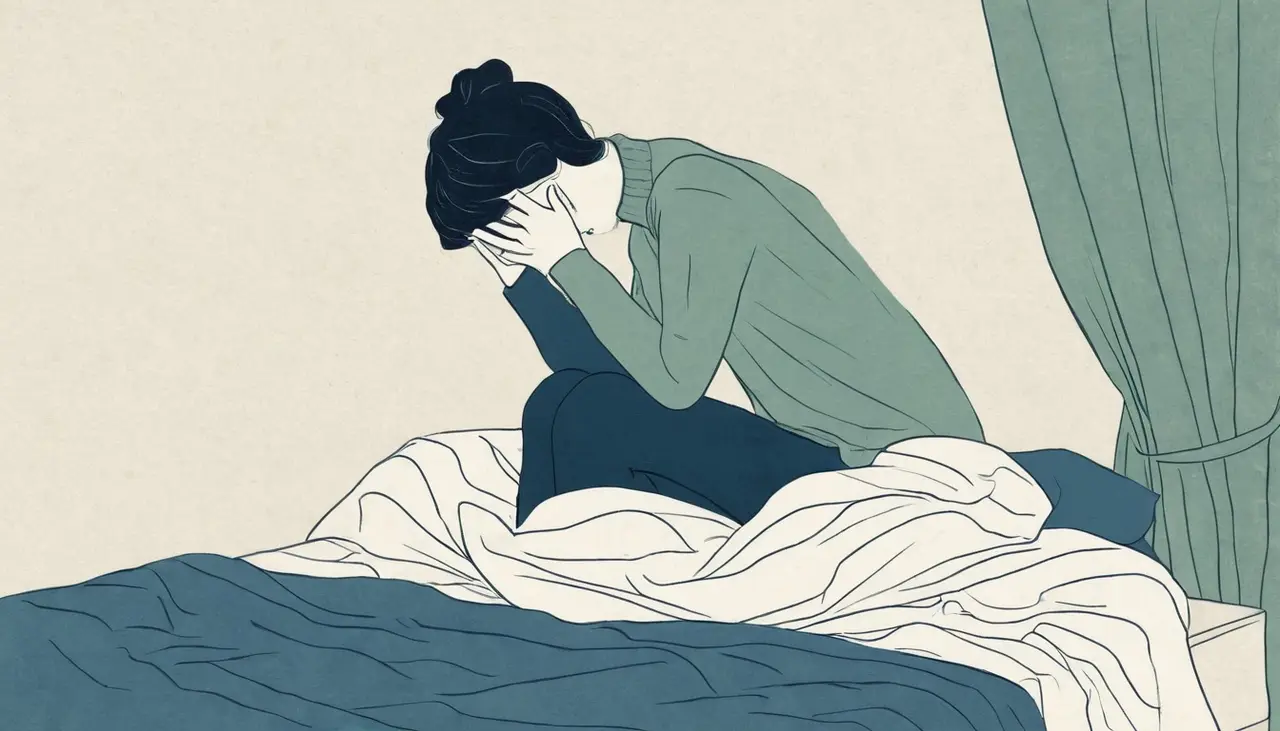
Crying after drinking does not mean you are weak, dramatic, or secretly broken. Alcohol can lower inhibition while you are drinking and leave some people with next-day anxiety, restlessness, irritability, or low mood as it clears. The useful question is not "what is wrong with me?" It is whether the pattern repeats, whether it follows heavier drinking, and whether it ever makes you feel unsafe with yourself.
If crying comes with thoughts of self-harm, suicide, or not wanting to be here, call or text 988 now. The 988 Suicide and Crisis Lifeline provides free, confidential 24/7 call, text, and chat support for people in suicidal crisis or emotional distress.
Why can alcohol make emotions spill over?
Alcohol lowers the inhibition that normally sits between a feeling and an action. While you are drinking, that can mean saying the thing you normally hold back, texting someone, getting sentimental, or crying before you have even named what you feel. The emotion may be real. Alcohol just changes how much space you have around it.
The next-day version can feel even stranger. Peer-reviewed neurobiology literature describes alcohol-related rebound central-nervous-system hyperexcitability as alcohol clears, which can feel like anxiety, restlessness, and insomnia. In plain language, your nervous system can be more touchy after the drinking is over. A sad thought lands harder. A small embarrassment becomes unbearable. A normal regret picks up volume.
NIAAA lists anxiety and irritability among hangover symptoms and notes that hangover symptoms can last 24 hours or longer. So the crying may not be only about the conversation, the photo, the memory, or the Sunday morning silence. It may be that your body is in a state where everything feels closer to the surface.
Does crying mean alcohol is making depression worse?
It might be part of a bigger mood pattern, but one crying episode cannot answer that. A night of drinking can uncover grief, loneliness, anger, stress, or regret that was already there. It can also create a next-day crash that feels like a verdict but fades as your body recovers.
What matters is the pattern. If crying happens mostly after heavier drinking, that is useful information. If it happens when you drink alone, after conflict, or after blacking out, that is also useful. If it keeps showing up on alcohol-free days, lasts for days at a time, or comes with hopelessness, self-harm thoughts, or not wanting to live, that moves beyond a hangover question and into immediate support.
The adjacent question is whether you have to quit forever if alcohol makes you cry. No article can make that call. Some people use the pattern to reduce the amount, avoid certain settings, or stop mixing alcohol with already-hard emotional nights. Others decide alcohol keeps taking them somewhere they do not want to go. The right next step depends on severity, safety, and what repeats.
What people often notice
One pattern is the delayed crash: you were fine at dinner, fine at the bar, maybe even happy, and then tears came when you got home.
Another is the morning-after shame loop. You wake up sad and embarrassed, then feel worse because you are sad and embarrassed. That second layer can be louder than the original trigger.
A third pattern is crying after you crossed your own line. Maybe you drank more than you meant to, hid it, texted someone, got too honest, or do not remember a stretch of the night. The tears are not proof that you are a bad person. They are a signal that something about the pattern deserves attention.
Alcohol can also touch relationships. The CDC lists relationship problems with family and friends, memory problems, and issues at school or work among social and wellness problems associated with long-term alcohol use. That does not mean your one night caused those things. It means repeated drinking-related emotional fallout belongs in the larger picture, not in a private shame folder.
How to hold the pattern without shaming yourself
Try separating three questions:
- What happened in my body? How much did I drink, how quickly, and how did I sleep?
- What happened emotionally? Was I lonely, angry, grieving, scared, overstimulated, or embarrassed before the first drink?
- What happened socially? Did the crying follow conflict, secrecy, a text, memory gaps, or feeling out of place?
That is not a therapy protocol. It is just a way to stop calling the whole thing "I am a mess." Specifics are kinder and more useful than a global label.
If you want a small experiment, choose one variable for the next similar night: drink less, stop earlier, avoid drinking alone, eat first, leave before the after-party, or skip alcohol when you already feel raw. You are not trying to prove a moral point. You are gathering cleaner information.
When crying needs more support
Get immediate support if crying comes with self-harm thoughts, suicidal thoughts, not wanting to be alive, fear that you might hurt yourself or someone else, or a level of hopelessness that scares you. Call or text 988, call 911 if there is immediate danger, or contact a trusted clinician or crisis resource.
Talk with a clinician if the crying is frequent, new, escalating, tied to memory gaps, paired with heavy daily drinking, or showing up alongside panic, depression symptoms, or withdrawal-shaped symptoms. You do not need to decide whether it is "serious enough" before asking. Repeating and distressing is enough.
For related reading, see alcohol and shame after drinking, why do I feel guilty the day after drinking, why sadness pulls toward a drink, and alcohol and anxiety the next day.
This article is general education, not mental-health or medical advice; if alcohol-related sadness ever includes self-harm thoughts or feeling unsafe, use 988 or emergency services now.
- Mind & mood
Can Alcohol Cause Panic Attacks? Why They Hit After Drinking
An answer-first explanation of alcohol rebound anxiety, 3 a.m. panic, medical red flags, and how to read the pattern without self-diagnosing.
- Body & physical health
Does Alcohol Make You Hungry? Why the Drunchies Hit So Hard
Yes — alcohol scrambles hunger signals and lowers the brakes at the same time. Why the drunchies hit, and what actually changes the late-night pattern.
- Cutting back & moderation
How Long Does It Take to Feel Better After Cutting Back on Drinking?
There is no single clock: mental speed tends to pick up within a month, most cognitive function over 6 to 12. Why sleep and anxiety often get worse first.
- Body & physical health
Drinking and Feeling Puffy or Bloated
Puffiness after drinking is mostly a fluid rebound; the bloated stomach is a separate gut effect. Why salt and short sleep make it worse, and what actually helps.
- Body & physical health
How Long Does Alcohol Stay in Your System? The Honest Math
Alcohol leaves your system on the liver's schedule — coffee, showers, and sleep don't speed it up. Why feeling sober isn't proof, and why test windows differ.
- Cravings & triggers
Why Do I Drink When I Don't Want To?
A non-diagnostic self-check for the gap between intending not to drink and drinking anyway, without labels, quiz scoring, or shame.


Be the first to hear when Clero launches.
Join with email only. Clero is still in development, so this is educational content today — not treatment, a prescription request, or medical advice.
First to hear at launchLaunch news only — no spamUnsubscribe anytime