
Why Do I Feel Guilty the Day After Drinking?
Morning-after guilt is partly chemistry — the calm alcohol borrowed gets repaid as rebound 'hangxiety.' How to sort the real signal from the noise.
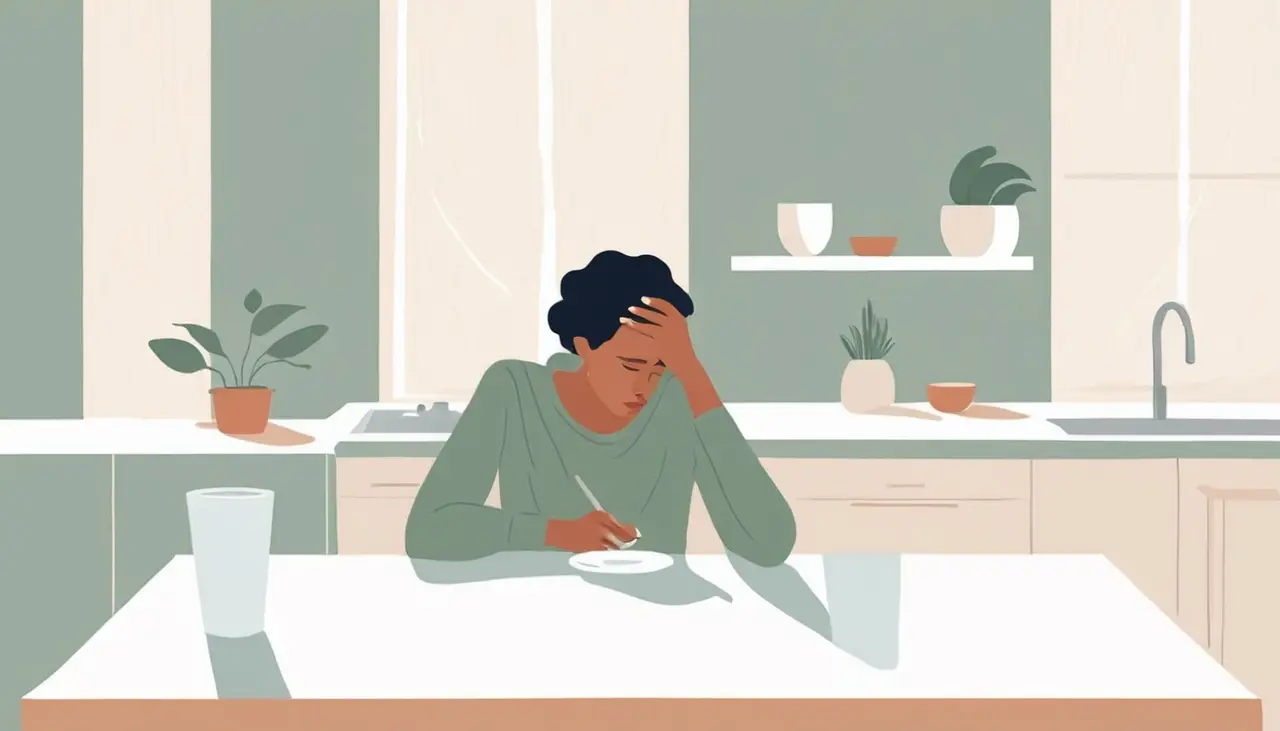
If you woke up this morning already re-reading your texts, already sure you were someone worse last night than you actually were, this is for you. I want to write to you before the day gets loud, because the hours after a heavier night are when a person is most likely to hand down a verdict they will regret.
I'm writing because morning-after guilt gets talked about badly. People either wave it off ("everyone drinks, relax") or treat it as proof of something final. Neither is honest, and neither helps you at 8 a.m. with your stomach turning. So let me tell you a few true things plainly.
Here is the first thing I want you to know: the guilt is information, not a diagnosis. It may be pointing at a specific thing you actually said or did, and if so, that's worth a clear repair when you're steady — how to apologize after drinking too much covers making that one well rather than over-confessing. But it may also be arriving with no clean reason at all — the night looked ordinary from the outside, and the morning still feels like a private trial. That second kind is real too, and it's often less about your character than about your chemistry. When you drink, your nervous system rebounds hard the next day; the calm alcohol borrowed gets repaid with interest, and the wired, jumpy, ashamed feeling that clinicians sometimes call "hangxiety" is part of that rebound, and so, for some people, is crying after drinking. The Cleveland Clinic describes it plainly: the anxiety after drinking is a physical swing back to baseline, not a message from your conscience. A frightened, hungover brain is not a reliable witness to who you are.
The next thing is harder to hear, so I'll be straight with you: memory rounds drinking down. Almost everyone underestimates how much they had, because a "big pour" and a "strong one" don't get counted as more than one. It helps to know the actual unit. The NIAAA counts one standard drink as 0.6 fluid ounces — about 14 grams — of pure alcohol, which is a modest glass of wine or a single shot, not the generous versions most of us actually pour. The same source defines a binge as the pattern that pushes blood alcohol to roughly 0.08 percent, usually five or more drinks for men or four or more for women inside about two hours. I'm not telling you this to hang a label on you. I'm telling you because "it wasn't even that much" is the thing your shame will insist on and the thing that's easiest to be wrong about. Counting honestly is kinder than it sounds — it replaces a vague dread with a number you can actually look at.
Here is what I'd underline. There is a difference between the feeling and the verdict your brain is trying to write from it. The feeling says "I hate who I was last night." The verdict says "so that's who I am." Those are not the same sentence, and the second one does not follow from the first. One heavy night, even a bad one, is an event — it is not a whole identity, and you do not owe it a confession of your entire history before breakfast.
If you want something concrete to do with all of this, do only this much: on paper, separate what you know from what you fear. Write the three things you actually know happened. Then write the three things you're afraid happened. The gap between those two lists is usually where the shame has been living, and seeing it drawn out tends to shrink it. Drink some water, get some daylight, put the group chat down for half an hour. You do not have to make a life decision while you're still inside the feeling.
Now the part I want to say directly, because I think it's the real reason you're up this early. You may be bracing for me to confirm the worst thing you're thinking about yourself. I won't, because it isn't true, and because that fear itself is part of the problem. The dread of being seen and judged is one of the most consistently reported reasons people stay silent about drinking. The NIAAA names stigma as one of the biggest barriers keeping people from ever asking for help — not the drinking itself, but the shame around it. If the guilt is doing anything useful, it should point you toward a conversation, not away from one.
I'm not going to tell you the guilt means nothing. Sometimes it's the honest signal that a pattern has quietly grown — that you keep drinking more than you meant to, that sadness keeps deciding when you pour, that the mornings keep repeating, that the counting keeps coming out higher than the story you tell yourself. If that's what's happening, the guilt isn't your enemy; it's the part of you that noticed first. And I'm not going to tell you it resolves on a schedule. Relief, irritation, and doubt don't arrive in order, and a calmer morning next week won't prove anything one way or the other.
What I will tell you is where the line is. If this shame is severe, if it keeps coming back after drinking occasions, or if it ever tips into thoughts of hurting yourself, that is the moment to reach a person, not a page — call or text 988 for the Suicide and Crisis Lifeline, any hour. If you drink heavily every day, don't stop cold on the strength of a rough morning; stopping suddenly can be medically dangerous for some bodies, and shaking, confusion, or a seizure during a dry stretch is an emergency — call 911. For anything short of that, if you want to bring the pattern to someone, a licensed clinician is the right address, and SAMHSA's free, confidential line at 1-800-662-HELP can point you to one.
If part of what stops you is a sense that reaching out is unusual, it isn't the drinking that's rare — it's the asking. Only about 1 in 13 people with an alcohol problem got any treatment in 2024, not because help doesn't work, but because most never get pointed toward it. That's a gap in access, not a verdict on you.
So here is the one thing I'd want you to carry out of this morning: you can be uncertain and still make a small next move. Write the fear down before you explain it to anyone. Ask one practical question before you make a declaration. Change the next hour without deciding what the rest of your life has to be. The morning is a bad judge and a worse jury. Give it less authority than it's asking for.
— Editorial
This is general education, not medical advice or a diagnosis. If the guilt ever turns into thoughts of harming yourself, call or text 988; if stopping brings on shaking, confusion, or a seizure, call 911 or go to an emergency room; and for a confidential referral to care, SAMHSA's National Helpline is 1-800-662-HELP.
- Cutting back & moderation
How Long Does It Take to Feel Better After Cutting Back on Drinking?
There is no single clock: mental speed tends to pick up within a month, most cognitive function over 6 to 12. Why sleep and anxiety often get worse first.
- Mind & mood
Can Alcohol Cause Panic Attacks? Why They Hit After Drinking
An answer-first explanation of alcohol rebound anxiety, 3 a.m. panic, medical red flags, and how to read the pattern without self-diagnosing.
- Mind & mood
Why Do I Feel Anxious the Day After Drinking?
A non-diagnostic Q&A on next-day anxiety after drinking, why it can happen, what to try in the moment, and when to talk to a clinician.
- Hangovers & the day after
Can I Drive the Morning After Drinking?
Not necessarily — sleep doesn't clear alcohol from your system, and hangover fog impairs driving too. How to judge the morning, and what to do if you're unsure.
- Body & physical health
Why Do I Crave Salt After Drinking Alcohol or When Hungover?
Salt cravings after drinking are real: alcohol flushes sodium and fluid, and your brain rewards salt. What helps when you're hungover — and what doesn't.
- Understanding your drinking
Why Do I Hide My Drinking?
Hiding your drinking doesn't make you a bad person — it usually means private rules have stopped working. How to name the pattern without labels or confession.


Be the first to hear when Clero launches.
Join with email only. Clero is still in development, so this is educational content today — not treatment, a prescription request, or medical advice.
First to hear at launchLaunch news only — no spamUnsubscribe anytime