
How to Find a Sober-Curious Friend or Community
A category-level guide to finding sober-curious peers or alcohol-light community without endorsing a specific group, app, meeting, or program.
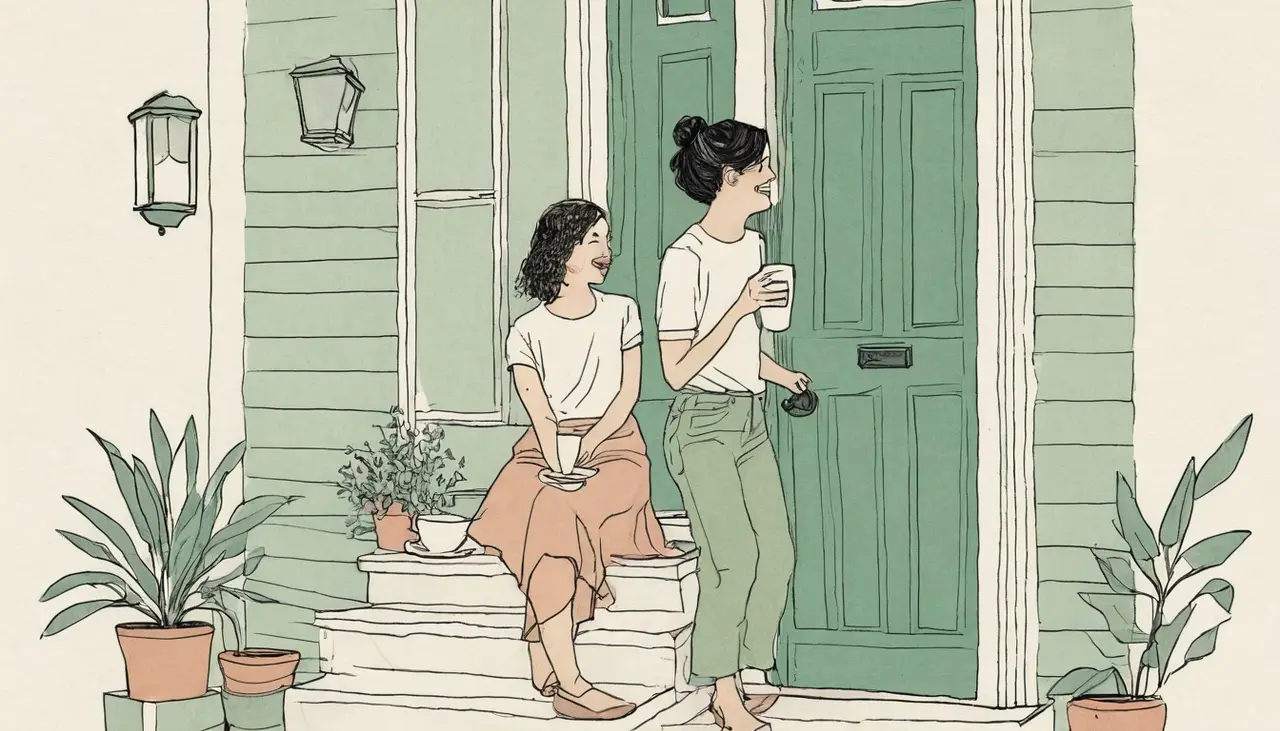
You are at the party you said yes to a week ago, holding a drink you don't want, doing the math on how long you have to stay. Someone tops you off without asking. Someone else says the thing — you're not drinking? are you okay? — and you feel the whole table turn. What you want in that moment isn't a lecture or a program. It's one person in the room who wouldn't have blinked. One face that would've just said cool, more for me and moved on.
That person exists. So do rooms full of them. The problem is almost never that alcohol-light people are rare — plenty of adults drink little or not at all. The problem is that finding them can feel like it requires announcing something you're not ready to announce. It doesn't. You can go looking the way you'd scout anything unfamiliar: quietly, one visit at a time, owing nobody an explanation.
That is the whole method here, and it has a name: the Scouting Pass. You scout before you pledge. Every place you look at is reconnaissance, not a commitment — somewhere to gather information about whether this room makes your next alcohol-light choice easier or harder. You are allowed to walk in, look around, and leave. That single reframe takes almost all the pressure out of the search.
Why the search feels heavier than it is
Part of what makes this hard is stigma, and it isn't in your head. The NIAAA describes stigma as one of the most consistently reported reasons people don't seek help around alcohol — the sense that saying I'm cutting back out loud will get you filed under a label you never signed up for. Most people who could use support never reach for it, and that fear of judgment is a big part of why.
Read that as good news, oddly. The wall between you and alcohol-light company is mostly made of anticipated awkwardness, not scarcity. Anticipated awkwardness is exactly the kind of wall a scouting mindset walks through, because a scout doesn't have to commit, confess, or perform. A scout just looks. And when the stakes of looking drop, the search stops feeling like a verdict on who you are.
If what's actually pulling at you is the loneliness underneath all this, alcohol and loneliness goes there directly. If the harder part is telling people you already know, how to talk to friends about cutting back is the more useful door.
Run the Scouting Pass
The Pass has four moves. Do them in order, and stop whenever you've found enough — you are not required to complete a set.
Scout by category, not by name
Start wide. Before you go hunting for a specific group by its brand, notice that alcohol-light spaces come in whole kinds, and the kind matters more than the name.
There are structured mutual-help rooms. There are secular, science-flavored ones — SMART Recovery, for example, is built around a four-part framework (staying motivated, handling urges, managing thoughts and feelings, and building a life you don't want to escape) and runs on cognitive-behavioral tools rather than any spiritual step. LifeRing organizes around three plain ideas it calls the 3-S's — sobriety, secularity, and self-empowerment — and holds meetings without prayer. Women for Sobriety runs a women-only program built on a set of acceptance statements aimed at rebuilding self-worth. There are faith-aligned groups. There are activity circles — running clubs, climbing gyms, board-game nights, cooking classes — where drinking simply isn't the point. There are online forums you can read for a month before you ever type a word. And there is the quiet option of one alcohol-light person already somewhere in your extended network.
Do this now: write down three categories you'd actually be willing to try. Not the "right" three. The three that don't make you wince.
Buy the trial visit
Here is the move the whole Pass turns on. Pick one place from your three categories and go once — as a scout, not a joiner. One open meeting. One climbing session. One evening reading a forum without posting.
The trap is deciding, before you walk in, whether this is your thing. Drop that question entirely. You are not there to find your people forever. You are there to gather one data point about whether this specific room makes the next sober choice feel lighter or heavier. That's it.
Do this now: put one trial visit on your calendar this week. Give it a hard end time, so leaving early is the plan, not a failure.
Ask the fit questions out loud
Before you hand any group real time, money, or personal disclosure, a few plain questions tell you most of what you need:
- How often does it meet, and is it online, in person, or both?
- Is a cost involved?
- Does it expect you to take on a specific label or identity?
- Is moderation — drinking less — welcome, or is it abstinence-only?
- Is there religious or spiritual framing, or none?
- How does it handle a slip or a change in goals?
- Does the tone read as supportive, pressured, structured, or casual?
These aren't you being difficult. They protect you from turning one bad fit into the conclusion that nothing fits — which is the single most common way a good search dies early.
Do this now: pick the two questions that matter most to you, and let those two be your filter.
Log what the room did to you
After each scouting visit, write two lines: what made the next alcohol-light choice feel easier, and what made it feel harder. Nothing fancier.
You're building a small record of effect, not identity. Over three or four visits a pattern shows up — a certain kind of room settles you, another kind leaves you wanting a drink on the walk home. That pattern is the actual answer, and it's usually more honest than whatever you'd have guessed about yourself in advance.
Do this now: start the log after your first visit, even if it's one grumpy sentence.
When the Pass isn't the right tool
The Scouting Pass is for finding people, and finding people is not the same as getting safe. If your drinking is daily and heavy, the priority isn't a running club — it's a conversation with a doctor who knows your history before you change anything, because stopping suddenly after heavy daily drinking can be genuinely risky for some bodies. Peer company can sit alongside that. It can't replace it.
It helps to describe the pattern in plain numbers when you have that conversation. A U.S. standard drink, per NIAAA, is 0.6 fluid ounces — 14 grams — of pure alcohol, and NIAAA counts binge drinking as the pattern that brings blood alcohol to about 0.08%, often 5 or more drinks for men or 4 or more for women in roughly two hours. Those are shared ways to describe how much and how fast, not a line where harm flips on. For a public benchmark, the Dietary Guidelines for Americans suggest adults who drink keep it to two drinks or less in a day for men, one or less for women. A clinician is better served by a real number than a vague one.
And if a stretch without alcohol has ever brought on shaking, sweating, confusion, or a seizure — or if you ever feel unsafe with yourself — that is not a scouting problem. Call 911 or go to an emergency room for the physical symptoms, call or text 988 for the moment you don't feel safe, or reach the SAMHSA National Helpline at 1-800-662-HELP for a free, confidential 24/7 referral. FindTreatment.gov, also run by SAMHSA, is a free and confidential locator if you'd rather search for care near you on your own.
One rough night is not a verdict
Here's the honest part the method can't hide: sometimes you'll scout a room and it'll be a dud. The meeting is preachy, the climbing-gym clique is closed, the forum is grim. That's normal, and it's not information about you — it's information about that one room.
The reason the Scouting Pass works is that a dud costs you almost nothing. You went as a scout. You logged one line. You cross it off and try the next category. Nobody who searches this way finds their people on the first pass every time, and treating the first miss as proof that this doesn't work for me is how people quit the search one room too early.
So keep it small. Three categories, one trial visit, two fit questions, two lines in a log. You're back at that party in your head — the drink you don't want, the whole table turning. Somewhere not far from you is the room where nobody would have turned. Scouting is just how you find it: one quiet visit at a time, owing no one an explanation for looking.
For the nights the urge to drink shows up before you've found anyone, how to handle alcohol cravings and urges is the fuller toolkit.
This is general education, not medical advice or a substitute for care that knows your history. If your drinking is heavy or daily, talk with a licensed clinician before making changes — and in an emergency, or any moment you don't feel safe, use 911, 988, or the SAMHSA National Helpline at 1-800-662-HELP.
- Alcohol Questions
Drinking and the Pressure to Toast at a Summer Dinner or Event
How to think through the specific pressure of a coordinated toast when you are cutting back, without one-size-fits-all etiquette rules.
- Alcohol Questions
Do Drunk People Tell the Truth?
Not reliably. Alcohol lowers the filter, but it also warps judgment and memory — drunk words are information, not proof. How to weigh them and follow up sober.
- Alcohol Questions
How To Get Sober: Where To Start Safely
Getting sober starts with a safety check if you drink heavily, then a support plan, craving tools, and a path that fits you.
- Alcohol Questions
How Long Does Alcohol Stay in Your System? The Honest Math
Alcohol leaves your system on the liver's schedule — coffee, showers, and sleep don't speed it up. Why feeling sober isn't proof, and why test windows differ.
- Alcohol Questions
Can Alcohol Cause Panic Attacks? Why They Hit After Drinking
An answer-first explanation of alcohol rebound anxiety, 3 a.m. panic, medical red flags, and how to read the pattern without self-diagnosing.
- Alcohol Education
How To Get Into a Healthy Routine in Recovery
A flexible guide to rebuilding routine after drinking changes, focused on anchors instead of perfection or a branded program.


Be the first to hear when Clero launches.
Join with email only. Clero is still in development, so this is educational content today — not treatment, a prescription request, or medical advice.
First to hear at launchLaunch news only — no spamUnsubscribe anytime