
Drinking Alone: Signs Worth Noticing Without Labeling Yourself
A private, low-stigma guide to noticing solo drinking patterns, asking better self-check questions, and knowing when to talk to someone.
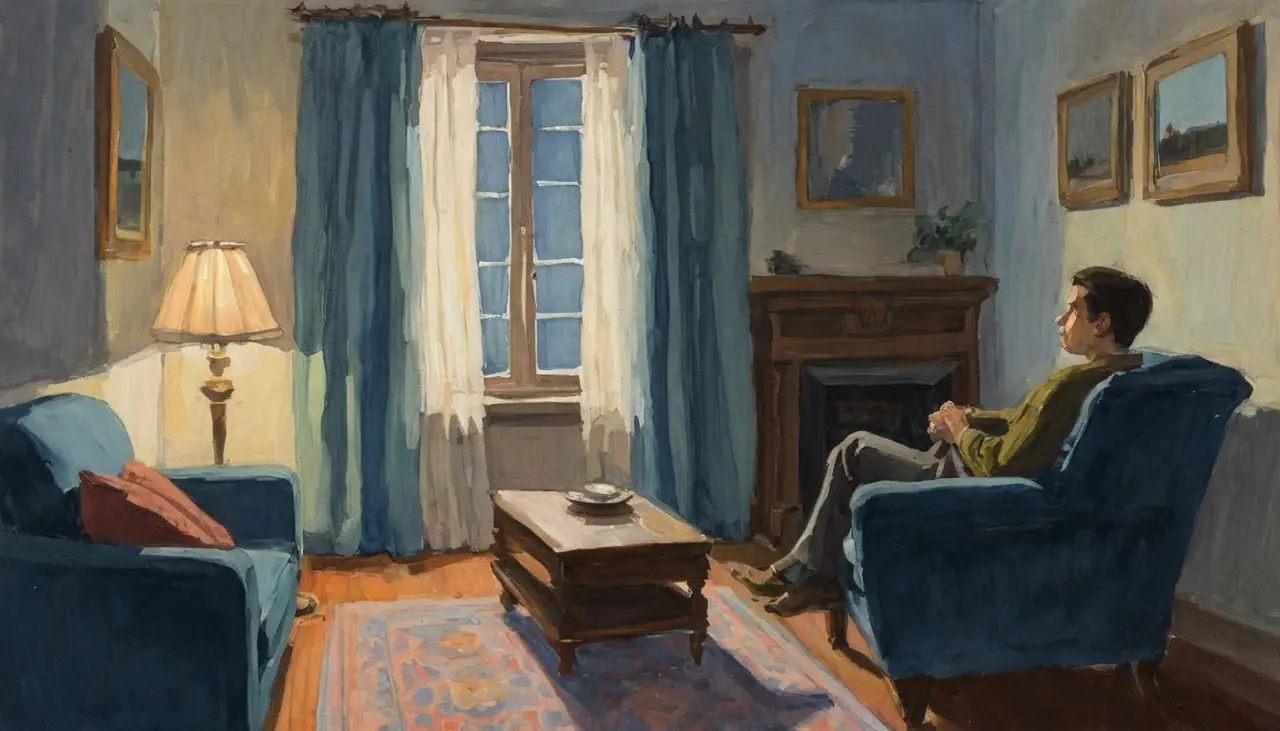
Almost everyone can name the warning sign. You picture the problem drinker as the person who pours one alone, in a quiet house, with no occasion and no company — and somewhere along the way "drinking alone" became shorthand for "drinking gone wrong." It is a tidy rule. It also lets a lot of people relax, because their drinking happens at dinners and on patios, in plain sight, so surely that is the safe kind.
But when researchers actually follow solo drinkers over time, the tidy rule does not survive contact with the data. It turns out to be pointing at something real and getting the aim wrong. So the question worth asking is not "do I drink alone?" It is: what were the studies actually measuring when they linked solitude to risk — and is that the thing you are doing? If what you are after is the pull itself rather than the risk math, why we drink alone works through the reasons.
Why the rule caught on
The belief is not made up out of nothing. Drinking with other people comes with built-in brakes: a last call, a ride to catch, someone who notices your third refill, the plain social friction of ordering one more while everyone else has stopped. Take those away and the only limit left is you. So it is reasonable to suspect that alcohol drunk with no witnesses might drift further than alcohol drunk at a table.
There is also an older cultural picture underneath it — the solitary drinker as a figure of secrecy and shame, the bottle in the drawer. That image is vivid, and vivid images make sticky rules. The trouble is that a sticky rule and an accurate one are not the same thing, and this one has a specific flaw you can see once it is named.
The crack: mistaking the where for the why
Here is the flaw in one line. The folk rule tracks the setting — you, alone, with a drink — when the research that gave the rule its authority was really tracking the reason.
Picture two people, each pouring a glass at home with nobody around. The first is unwinding at the end of a good day; the drink is a small pleasure, and the evening would have been fine without it. The second is reaching for the glass to switch off a feeling — the anxiety, the low mood, the loop of thoughts that will not quiet down. Same room, same pour, same absence of company. The folk rule cannot tell them apart, because it only looks at the room. The studies can, because they looked at the motive.
When you sort by motive instead of setting, the two people separate cleanly. Researchers who built a social-contextual framework for solitary drinking found that drinking alone tends to become a risk marker specifically when it is driven by a wish to cope with negative feelings — to manage distress rather than to enjoy a drink. Solitary drinkers in that work reported more depression and social anxiety; social drinkers leaned toward the pleasant, enhancement end. The authors are explicit that solitude on its own is not the pathology. The self-medication is. Call the flaw the where-for-why swap: the rule flags the location and quietly assumes it has found the cause.
What the evidence actually shows
Once you keep the motive in view, the real findings are sharper and more useful than the folk rule.
A 17-year longitudinal study that followed 4,464 adolescents and 4,561 young adults out to age 35 found that those who drank alone were meaningfully more likely to show alcohol use disorder symptoms years later — about 35% higher odds for the teenagers and 60% higher for the young adults, even after accounting for how often and how much they were already drinking. That is a real signal, and it is worth respecting. But read what the authors say it is: an early warning marker at the population level, not a clinical conclusion. In their own words, the measures do not yield a clinical diagnosis. Solitary drinking is a flag that raises the odds a clinician might want to look closer — not a verdict on any one person who ever drank a beer by themselves.
Two things in that study are easy to miss and worth pulling out. First, almost all of it is about teenagers and people in their early twenties, a stretch of life when drinking alone is genuinely unusual and stands out for a reason. It says far less about a 45-year-old who has a glass of wine on the couch. Second, "higher odds" is a statement about a large group, not a switch that flips inside you. Most people in the solo-drinking column did not go on to develop a disorder.
And here is the tell that should retire the folk rule for good. The clinical definition of a drinking problem does not mention drinking alone at all. When the NIAAA lays out the criteria for alcohol use disorder, the list runs to things like drinking more or longer than you meant to, wanting to cut down and not managing it, cravings, spending a lot of time drinking or recovering, and continuing despite harm to your work, relationships, or health. "Drinks by themselves" is nowhere on it. The thing the folk rule points at is not the thing clinicians actually use to name a problem.
What we still do not know
The honest edges are worth holding. The strongest evidence is concentrated in the young; researchers have not tracked middle-aged solitary drinkers with anything like the same depth, so applying the teenage findings to a lifelong habit is a stretch the data does not fully license. And because motive is measured by asking people, it is imperfect — the line between "I enjoy a quiet drink" and "I need this drink to cope" is not always crisp even to the person drinking. The research narrows the question well. It does not close it.
How to read your own solo drinking
So drop the courtroom question ("does drinking alone mean I have a problem?") and pick up the more useful one the evidence points to: when you drink alone, what is the drink for?
For a week, notice the reason without grading yourself on it. Are you reaching for the glass to feel good, or to stop feeling bad? Is the pour steady, or is it creeping earlier and getting larger on the hard days? When you told yourself you would skip tonight, did the plan hold? Those questions track the why and the pattern — the two things the research says actually carry the risk. Where you happen to be sitting is close to noise by comparison.
If the honest answer is that the drink has mostly become a way to switch off a feeling, that is not a character verdict, and it is not a reason to add secrecy on top of it. It is the specific pattern worth talking through with a clinician. Clero can make that first conversation possible from home: a private review of your pattern and whether medication is even worth discussing. And if cutting back ever leaves you feeling physically unwell or unsafe on your own, that is a moment for real-time help, not a self-check — call SAMHSA's free, confidential line at 1-800-662-HELP (4357), or 988 if you feel unsafe with yourself.
This is general education, not a diagnosis — what your own drinking means is a question for a clinician who knows your history.
- Understanding your drinking
12 Uncomfortable Questions to Ask Yourself About Your Drinking
The three questions that matter: how much you drink, what the drink is doing for you, and what it's quietly costing. Twelve prompts to work through in private.
- Understanding your drinking
Signs You Are Drinking More Than You Meant To
A low-stakes self-check for noticing drinking drift without using a quiz, a label, or diagnosis language.
- Cutting back & moderation
What Does 'Sober Curious' Mean? A Plain-Language Guide to the Term
Sober curious means questioning your drinking without declaring yourself sober forever. How it differs from sobriety and moderation, and what to try first.
- Helping someone who drinks
How To Help Your Partner Quit Drinking (Without Losing Yourself)
A partner-support guide on what to say, what backfires, how to set boundaries, and when safety comes before the drinking conversation.
- Understanding your drinking
Drinking in the Morning: Signs To Consider
A non-diagnostic, safety-first guide to morning drinking patterns, especially drinking to feel normal, relieve symptoms, hide a pattern, or get through the day.
- Hangovers & the day after
Drinking and Constipation the Day After
Alcohol can slow the next-day bathroom pattern for some people; compare the whole night around it, and know when bowel changes need care.


Be the first to hear when Clero launches.
Join with email only. Clero is still in development, so this is educational content today — not treatment, a prescription request, or medical advice.
First to hear at launchLaunch news only — no spamUnsubscribe anytime