
What to Do After a Slip: Restart Strategies That Do Not Start With Shame
After a drinking slip, focus on safety and the next step. Notice what led up to it, adjust your plan, and decide what support you need.
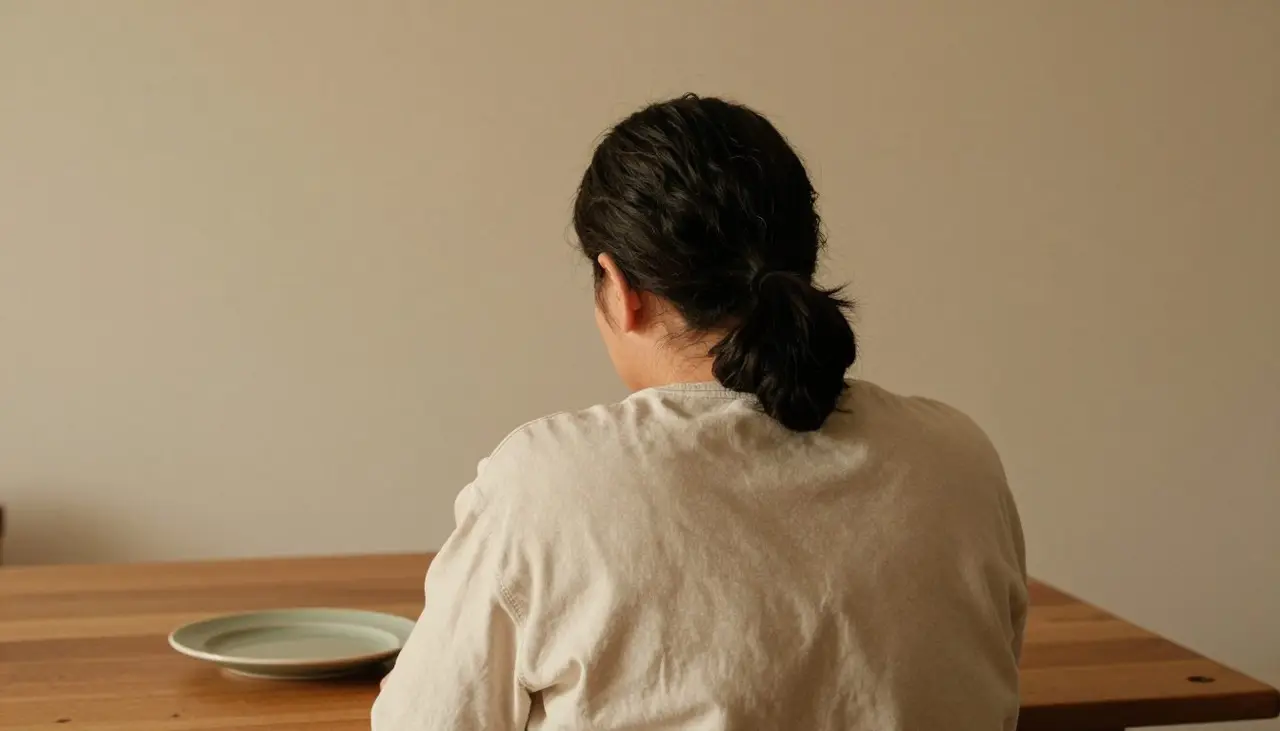
It's 7:40 on a Tuesday morning and the evidence is right there in the recycling. You had forty-one days, or nine, or a careful month of two-drink weekends — and last night, somewhere between the argument and the quiet house, that stopped being true. Now you're standing in the kitchen doing the math on everything you've supposedly lost. Here's a better question: what do the next 24 hours look like?
Because that's the part you can still decide. A slip — one return to drinking after a stretch of cutting back or stopping — doesn't delete the days you practiced, the evenings you got through, or the reasons you started. It feels like it does. That feeling is the real hazard, and it's the thing this piece is built to interrupt. The tool is the Next-24 Restart: five small moves, all doable before this time tomorrow, none of which require you to feel good about last night first.
Why one night tries to become a week
Drinking habits run on cues — a time of day, a room, a feeling, a person handing you something. Last night, one of those cues won. That's the whole event. But the morning after has its own trap, and it isn't the leftover craving. It's the story: I ruined it, so it doesn't matter now. All-or-nothing thinking turns a single night into permission for a lost week, because if the streak is already broken, why guard tonight?
That logic feels airtight at 7:40 a.m. It isn't. The streak was never the asset — the skills were. You still know which evenings are hardest, what helped even a little, what your first excuse sounds like. One night can't take any of that. Only the "might as well" story can.
The Next-24 Restart
Five moves, in order. Each one is small on purpose — small enough to do while you still feel embarrassed, which is exactly when a restart strategy has to work.
Steady the body first
Shame says you should skip breakfast and sit with what you did. Don't. Eat something real, drink water, get outside for ten minutes, and sleep tonight if you possibly can. A body that's dehydrated, underslept, and running on coffee makes every craving louder and every dark thought more convincing. This isn't a reward for last night. It's maintenance on the person who has to handle tonight.
Right now: get a glass of water and something to eat. That's the whole step.
Write the ten-word note
While it's fresh, write the shortest factual account of what happened. Not a confession — a sequence. "Friday, lonely, bought beer on the way home." "Wedding, anxious before the speeches, took the glass someone handed me." "Argument, kitchen, poured before I decided." You're capturing the cue before memory blurs the night into "I just failed."
If the amount matters to you, count it in shared units instead of guessing — NIAAA defines a U.S. standard drink as 0.6 fluid ounces, or 14 grams, of pure alcohol, and a generous pour or a strong cocktail is often two of them. Five or more of those within about two hours for males, or four or more for females, is what the same page calls binge drinking — the pattern that typically brings blood alcohol concentration to 0.08% or higher. But the sequence usually teaches more than the total.
Right now: write the note in your phone. Time, place, feeling. Leave blank whatever you don't know.
Keep the next window
Don't wait for Monday, the first of the month, or a cleaner-feeling version of yourself. If your next planned alcohol-free evening was tonight, it's still tonight. Keeping the very next promise — not re-earning the old streak — is what actually interrupts the spiral, because it takes away the "already ruined" story's best evidence. The restart isn't something you schedule. It already started when you woke up.
Right now: name the next window out loud or in writing. "Tonight, no drinks, in bed by eleven." Nothing grander.
Move one cue
Your note from step two probably points at something specific: the route home past the store, the empty hour after work, the phone argument that ends in the kitchen. Change one physical or social detail in that path — not your personality, one detail. A different route. Food before the hard hour. The difficult texts answered in a room where you've never poured a drink. Willpower is weakest when the old option is already within arm's reach, so make the old option require one extra step.
Right now: set up the one cue change — move the bottles, plan the route, put the alternative drink at the front of the fridge.
Tell one safe person
Secrecy is fuel for the shame spiral. If there's someone who can hear "I drank last night and I'm restarting today — no lecture needed, I just don't want to hide it" without drama, send that message. If nobody in your life can hold that sentence, a mutual-support meeting can: SMART Recovery, for instance, is a free, secular program whose 4-Point approach includes coping with urges and learning from exactly this kind of night, and it runs meetings online.
Right now: send the message, or look up one meeting time. Either counts.
When a slip is something more
An honest admission: some nights the cue wins even with the note written and the fridge rearranged. One rough evening isn't a verdict on you or on the method. But there's a distinction worth knowing — people who work in this field usually separate a slip, a one-off return to drinking that you catch and learn from, from a relapse, a sustained slide back into the old pattern. The line between them is mostly what happens in the days right after. That's why the 24-hour window gets so much attention here.
If the slips keep coming closer together, if the amounts are climbing, or if drinking has stopped feeling like a choice at all, that pattern is asking for more than a self-coaching loop. The American Academy of Family Physicians recommends pairing medication with behavioral support rather than relying on either alone — and notes, strikingly, that most people with alcohol use disorder are never even offered medication.
The numbers behind that gap are stark. In 2024, an estimated 27.9 million Americans ages 12 and older had past-year alcohol use disorder, and about 2.1 million of them — 7.6% — received any alcohol treatment. That isn't evidence that treatment fails; it's evidence that most people never get the conversation.
If repeated slips are your pattern and you don't have a clinician to bring them to, Clero connects you with a licensed clinician by telehealth who can look at the whole picture with you — including whether a medication like naltrexone deserves a place in the plan.
One safety line that outranks everything above: if your drinking has been heavy and daily, stopping abruptly can be medically dangerous. MedlinePlus lists shaking, sweating, a racing heart, confusion, hallucinations, and seizures among alcohol-withdrawal warning signs — and the severe ones are a call-911-or-go-to-the-ER situation, not a restart-plan situation.
Back to the kitchen
Same Tuesday, 7:55 now. The recycling hasn't changed. What's changed is the question — not "how much did I lose?" but "what happens in the next 24 hours?" Water and food, a ten-word note, tonight's window kept, one cue moved, one honest message sent. That's the whole restart. It won't feel triumphant. It will feel ordinary — which is the point, because ordinary is what you can repeat, and repetition is the only thing a slip has ever actually threatened.
This is general education, not medical advice or a treatment plan. If a slip comes with thoughts of harming yourself, call or text 988 — free, confidential, answered 24/7. If stopping drinking brings severe shaking, confusion, hallucinations, or a seizure, call 911 or go to an emergency room.
- Understanding your drinking
Is My Husband an Alcoholic? What a Quiz Cannot Tell You
A quiz cannot diagnose your husband. Describe what you have observed, how his drinking affects you, and what support you need next.
- Understanding your drinking
Found Hidden Bottles of Alcohol? What to Do Next
Hidden alcohol proves there is secrecy, not why it happened. Wait for a sober moment, name what you found, ask one direct question, and keep safety first.
- Quitting & sobriety
How do I stop drinking?
Stopping drinking starts with safety, not willpower. If you drink heavily every day or have had withdrawal symptoms, ask a clinician what level of care is safest before you stop suddenly. If you are medically stable, the next step is to choose support that matches your goal, privacy needs, and risk level: therapy, peer support, medication education, primary care, telehealth, outpatient treatment, or a higher level of care.
- Quitting & sobriety
What Happens When I Stop Drinking? A Realistic Look at the First Weeks
A realistic first-weeks timeline for sleep, mornings, energy, focus, blood pressure, and withdrawal safety after stopping alcohol.
- Helping someone who drinks
How to Help an Alcoholic Who Doesn't Want Help
If he doesn't want help, the job is timing, safety, and a specific next step — not winning the label argument. What to try after the first ask fails.
- Cutting back & moderation
Sober Curious Benefits
What sober curious can mean, which benefits people often watch for, and when experimenting with less alcohol is not enough support.


Be the first to hear when Clero launches.
Join with email only. Clero is still in development, so this is educational content today — not treatment, a prescription request, or medical advice.
First to hear at launchLaunch news only — no spamUnsubscribe anytime