
How to Help an Alcoholic Who Doesn't Want Help
If he doesn't want help, the job is timing, safety, and a specific next step — not winning the label argument. What to try after the first ask fails.
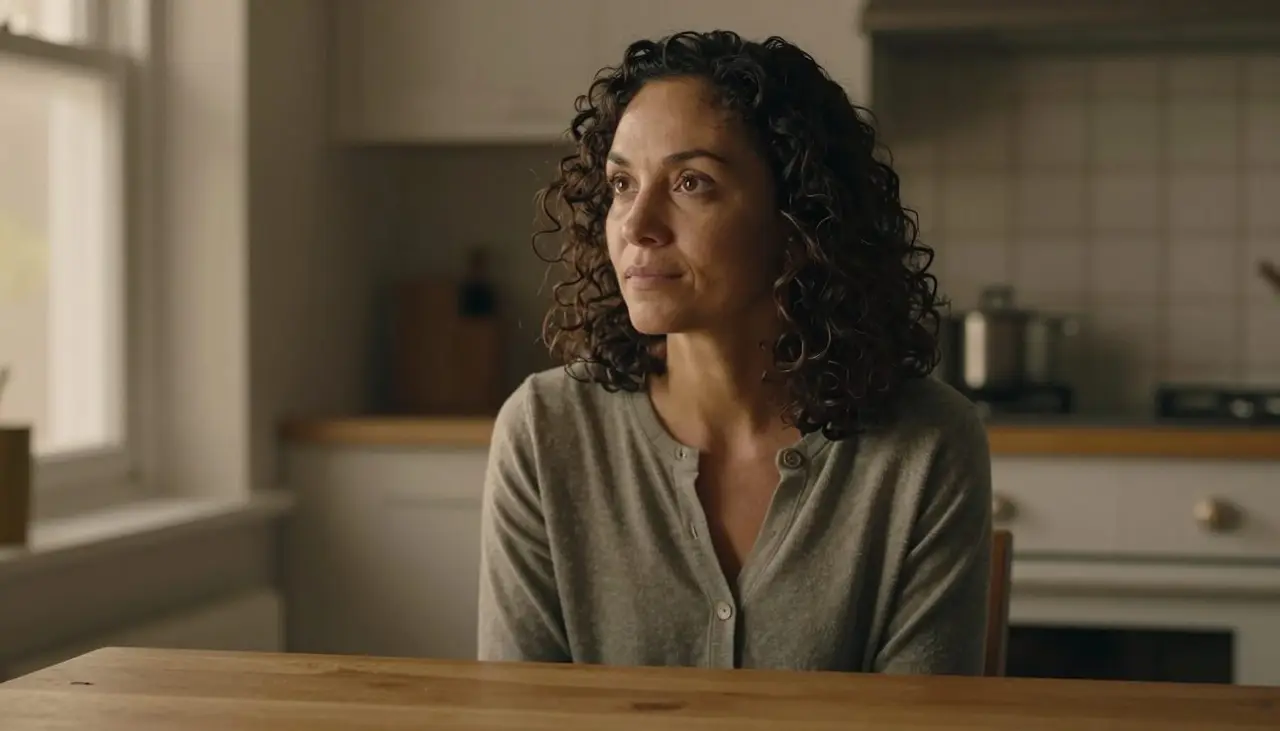
If he does not want help, there is no one best move. Pressing harder can make the shame wall higher. Saying nothing can leave you carrying the whole cost. A surprise confrontation sometimes works when it actually happens, but many families never get that far. The safer question is not "how do I make him want help?" It is: which next move changes the conditions without putting you, children, or him in danger?
The answer depends on what "doesn't want help" means. A man who says "I'm fine" after an ordinary hard week is in a different situation than a man who shakes when he has not had a drink, threatens you when you bring it up, or talks about not wanting to live. The first may call for timing and a better ask. The others are safety problems first.
First, sort refusal from danger
Refusal sounds like "I don't need treatment," "you're overreacting," or "I'll handle it myself." Danger looks different.
If there is violence, threats, coercive control, stalking, or fear about what happens when you stop smoothing things over, do not treat this as a persuasion problem. The National Domestic Violence Hotline is 1-800-799-7233, text START to 88788, or chat at thehotline.org. If anyone is in immediate danger, call 911.
If he talks about suicide, says the family would be better off without him, or you are worried he may hurt himself, call or text 988 for crisis support. If the risk is immediate, call 911.
If he drinks heavily every day and suddenly stops or cuts way down, withdrawal can become a medical emergency. MedlinePlus, the US National Library of Medicine's consumer health service, lists shaking, sweating, hallucinations, seizures, severe confusion, and irregular heartbeat among alcohol-withdrawal warning signs. Seizure, severe confusion, hallucinations, or an irregular heartbeat means 911 or an emergency room, not a wait-and-see conversation.
Only after those bright lines are clear does the "how do I help?" question belong back on the table.
The options, weighed side by side
Argue the label. This is the option most families try first: "You're an alcoholic. Admit it." It feels direct, and sometimes the directness is a relief. The drawback is that it asks him to accept an identity in the most defended moment of the conversation. If shame is part of the refusal, the label can become the whole fight. This is why helping someone in denial usually starts with events and effects rather than the word.
Make one planned ask. The National Institute on Alcohol Abuse and Alcoholism (NIAAA) Alcohol Treatment Navigator says to plan the conversation, choose a calm time, avoid raising it while the person is intoxicated, and not gang up on or corner them in the conversation (NIAAA Navigator). This option is best when the problem is real but the home is not unsafe. Its limit is obvious: one careful conversation may still get a no.
Change what your help pays for. If you have been calling his boss, covering the kids' disappointment, replacing money, or cleaning up after nights of drinking, changing those actions can matter more than another speech. The fuller version is how to stop enabling an alcoholic, but the simple test is: does this make drinking cheaper for him than not drinking? Stop with one item you can safely follow through on. Not everything. One.
Learn CRAFT skills. CRAFT is the family-skills approach designed for this exact problem: a person who refuses treatment. In the 1999 trial by Miller, Meyers and Tonigan, 130 concerned family members were assigned to about 12 hours of one of three approaches. By 12 months, CRAFT had engaged 64% of the drinkers in treatment, compared with 30% for a staged confrontation approach and 13% for Al-Anon facilitation. Those are treatment-entry numbers, not proof that anyone stopped drinking. They are still a useful comparison because the person refusing help was the point of the trial.
Prepare a confrontation. The same trial complicates the usual story. In the confrontation arm, 70% of families never held the planned meeting. Among the 30% who did, three-quarters got the person into treatment. That does not make confrontation fake. It makes it a high-stakes tool that many families cannot or will not carry out. If there is fear or coercion in the home, it is the wrong tool.
There is no universal winner in that list. The right next move is the one that fits the risk, the relationship, and what you can repeat calmly next week.
A better ask than "please get help"
"Get help" is too vague to accept. It asks him to agree to a foggy future: rehab, meetings, shame, cost, being seen. A narrower ask is easier to answer.
Try this shape:
"I don't want to fight about whether the word alcoholic fits. I want to talk about Tuesday. You were too drunk to drive, and I covered for you with the kids. I am not going to do that anymore. I would like you to talk with a doctor or counselor about what options you have."
That sentence does three things. It names a fact. It names your action. It gives one next step. It does not demand a confession.
If he says no, the conversation does not have to keep going. "I hear you. I'm still not covering for drinking anymore" is more useful than another twenty minutes of evidence.
Have a real door ready
If he ever says, "Fine, what am I supposed to do?" that moment is too important to spend searching.
The NIAAA Navigator's treatment overview is useful because it widens the menu beyond residential treatment and meetings. It names professionally led treatment as talk therapy and medications, and notes that a primary-care clinician or board-certified addiction doctor can prescribe non-addicting medications for alcohol problems. It also names phone or video care as a legitimate treatment route.
That does not mean you pick a medication for him, or arrange a prescription without him. It means the next step can be smaller than the word "treatment" makes it sound: his own doctor, a therapist who treats alcohol use, or a telehealth service such as Clero that connects him with a licensed clinician to discuss whether medication is appropriate for his situation.
Once he wants to explore help, how to compare alcohol-care options together offers a shared shortlist for recording provider answers while keeping him involved.
When waiting is not the same as doing nothing
Waiting can be avoidance. It can also be strategy.
The difference is whether you are using the waiting period to change your part of the pattern. If you keep absorbing consequences and quietly hoping his mind changes, nothing has changed. If you use the waiting period to stop one cover-up, get your own support, learn CRAFT skills, and decide where your safety line is, that is work.
A 2020 systematic review in Addiction found CRAFT about twice as effective as comparison approaches for getting treatment-refusing people into care across 14 studies, but results varied widely by delivery: trained individual or mixed programs did better than self-directed workbooks. That is a useful warning. Reading one page is not the method. Training, coaching, or a skills group is closer to what was studied.
The family resources page from the NIAAA Navigator names three places for your side of the work: family counseling, Al-Anon, and SMART Recovery Family & Friends. Al-Anon is for your stability and support. SMART Family & Friends is more skills-focused. Family counseling can help if he is willing or if you need support deciding what to do next.
What you are not doing is standing still. You are stopping the exhausting project of making him agree with your wording, and starting the slower one of making reality clearer.
This is general education, not therapy, legal advice, or a safety plan; if anyone is in immediate danger call 911, if self-harm is part of the situation call or text 988, if heavy drinking stops suddenly with shaking, confusion, hallucinations, or seizures treat it as an emergency, and SAMHSA's National Helpline at 1-800-662-HELP can provide confidential treatment referrals.
- Helping someone who drinks
How to Help an Alcoholic Brother
Help a brother who drinks by checking safety, speaking one-to-one with facts, offering one real support option, and keeping family concern from becoming a pile-on.
- Understanding your drinking
Found Hidden Bottles of Alcohol? What to Do Next
Hidden alcohol proves there is secrecy, not why it happened. Wait for a sober moment, name what you found, ask one direct question, and keep safety first.
- Quitting & sobriety
How do I stop drinking?
Stopping drinking starts with safety, not willpower. If you drink heavily every day or have had withdrawal symptoms, ask a clinician what level of care is safest before you stop suddenly. If you are medically stable, the next step is to choose support that matches your goal, privacy needs, and risk level: therapy, peer support, medication education, primary care, telehealth, outpatient treatment, or a higher level of care.
- Understanding your drinking
Am I an Alcoholic?
“Alcoholic” is not a diagnosis; alcohol use disorder is assessed by symptoms and impact. See how screening differs from diagnosis and what to do next.
- Helping someone who drinks
How to Help an Alcoholic in Denial: Why Making Him Admit It Backfires
Denial is usually shame, not ignorance — which is why arguing the word 'alcoholic' fails. What works instead, and what a 1999 trial found about confrontations.
- Helping someone who drinks
How to Help Someone Who Drinks Too Much
A safety-first guide for partners, parents, adult children, siblings, and friends who are worried about someone else's drinking.


Be the first to hear when Clero launches.
Join with email only. Clero is still in development, so this is educational content today — not treatment, a prescription request, or medical advice.
First to hear at launchLaunch news only — no spamUnsubscribe anytime