
What to Do Instead of Drinking After Work
Instead of drinking after work, change the first ten minutes home: eat, change clothes, swap the glass, keep the ritual. Five small moves that break the cue.
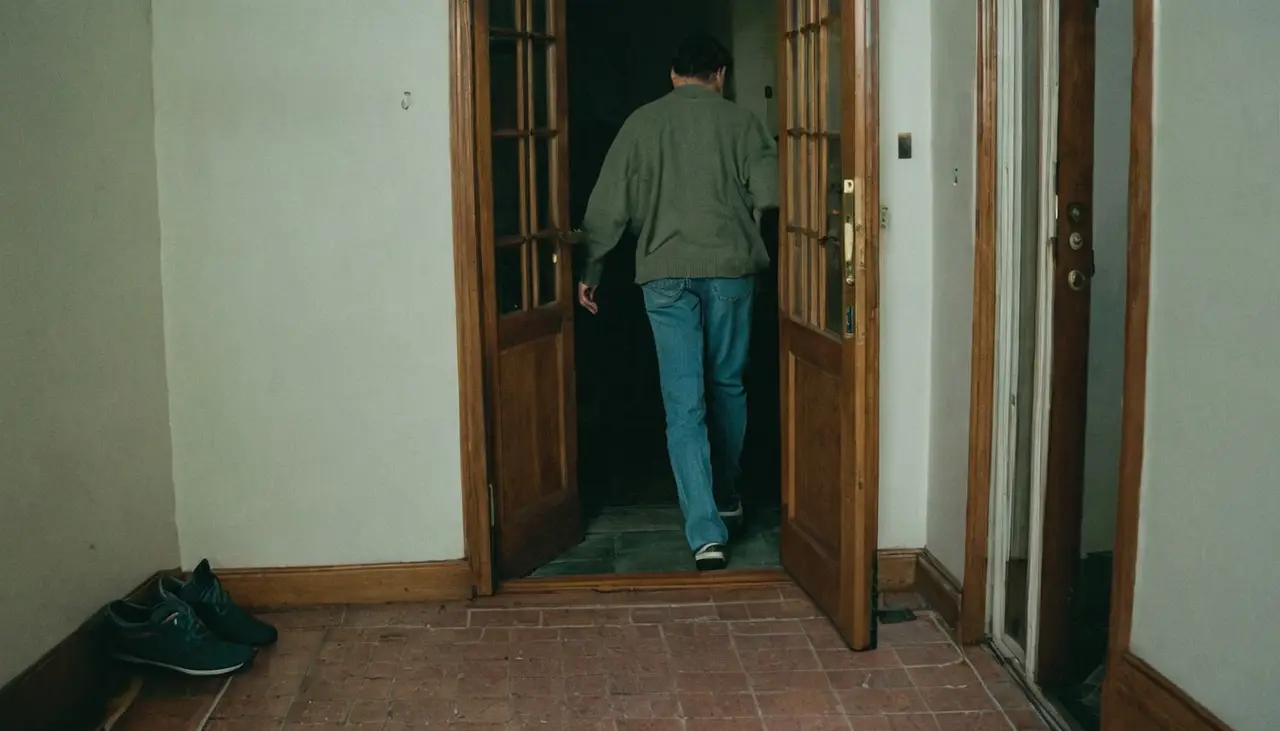
It's a little after six. You're through the door, keys still in your hand, and before you've even decided anything, you're reaching for the glass. The day wasn't even a disaster. This is just the part where the day ends and you get to stop holding it all together.
That reach feels automatic because it mostly is. Automatic things run on cues, and cues can be swapped. Forget out-arguing the urge at the door — change what happens in the first ten minutes.
This is a transition problem, not a willpower problem
The after-work drink rarely has much to do with thirst. The first hour home carries leftover stress, hunger, irritation, the family noise, or the strange flatness that lands once you stop performing for the day. The drink is the thing that says: work is over, you can put it down now.
So "just don't drink" tends to fall flat. You're not really choosing alcohol. You're choosing the signal that the shift is complete, the reward you can count on, the something for your hands. Treat that as a normal need to unwind rather than a character flaw, and the whole problem gets smaller. If the question you actually want answered first is whether the daily drink is a problem at all, is it bad to have a drink after work takes that on directly. The goal is to give that same need a different first move at 5:30.
What follows is one small framework, built around a single idea: the moment you walk in is a doorway, and you can route through it differently. Call it the Doorway Reset — a short detour you take between walking in and reaching for the glass, so the day's autopilot drops you somewhere other than the usual spot.
How a cue actually loses its grip
A habit runs on a loop: a trigger fires, you do the thing, you get the payoff, and the loop tightens every time you run it. The after-work pour has a fat, obvious trigger stack: the door, the couch, the counter, the first quiet minute. Each one is a tripwire wired straight to the glass.
You weaken that wiring by stepping between the trigger and the payoff with something else — something small enough that you'll actually do it when you're tired and a little fried. Insert a different action into the gap often enough and the old wire stops firing on its own. That's the whole mechanic. The Doorway Reset is just a way to buy that gap, every evening, in the same spot.
The Doorway Reset
Think of it as a fork in the road that shows up the second you're inside. The old route runs straight to the pour. The reset is a short detour you take first — long enough that the autopilot loses the thread. Run the five moves below as one quick sequence, or pick the single one you'll actually reach for on a wrung-out Tuesday. The best detour is the one that's almost embarrassingly easy.
Break the first ten minutes
Before you land in the usual spot, do one fixed thing first: shower, change clothes, walk the block, make a snack, feed the dog, sit in the car for one song. The content barely matters. The point is to interrupt the automatic sequence so the pour stops being the first thing your hands find.
Do it now: decide tonight's ten-minute action before you leave work, so it's already chosen when you walk in.
Eat before you decide
A lot of after-work urges are just hunger wearing a costume. The "empty and wired" feeling reads as a craving when it's partly low fuel. So eat something simple first — leftovers, toast, yogurt, soup, whatever's nearest — before you decide what to drink. Call it friction against the fastest version of the habit.
Do it now: keep one no-effort food in reach so "eat first" takes thirty seconds, not a recipe.
Swap the contents, keep the ritual
The replacement doesn't have to be sad water. Half the pull is the ritual — the cold glass, the fizz, the marker that says the workday is closed. So keep the marker and change what's in it. Sparkling water in the same glass, tea, something tart, anything you associate with "off the clock."
Do it now: put the nonalcoholic option at the front of the fridge, where your hand goes first.
Move the first sit-down
If the couch, the kitchen counter, the porch, or the garage is welded to the first pour, sit somewhere else for the first ten minutes. Put the phone in another room. Change the light. Open the mail standing up. Small staging changes make an automatic habit a little less automatic, because half of it was the place.
Do it now: pick one "wrong" spot to sit in tonight and aim for it the moment you're inside.
Say "not yet," not "never"
"Never again" is a heavy thing to swing at a random Tuesday. "Not until I've eaten" or "not until I've showered" is small enough to actually hold. A "not yet" rule buys you a real pause without forcing a whole identity decision in the doorway — and a pause is usually all the loop needs to lose momentum.
Do it now: write your one "not until ___" rule on a sticky note where you'll see it walking in.
The drink stops being the thing you're forbidding and becomes the thing you're simply not getting to yet. Same evening, much less fight.
When the reset doesn't land
It won't always work. Some evening you'll do the shower, eat the toast, pour the fizzy water, and still end up with the old drink in your hand. That's not the detour collapsing. That's one data point.
So don't hand a single rough night the power to call the whole thing off. Get curious instead. Jot down a few notes while it's fresh: What time did the urge hit? What were you feeling right before? Had you eaten? Where were you sitting or standing? Did the first drink quietly become three? What would have made those first ten minutes easier?
Those notes are how you find your real tripwire, so next week's detour aims at the right thing.
One honest measuring stick helps here: count by NIAAA's standard drink rather than by glasses, since a generous home pour or a strong mixed drink can quietly be more than one. That just lets you name a heavier evening in plainer terms, without turning the notebook into a scorecard.
Where this stops being a habit tweak
The Doorway Reset is a tool for a normal habit — and some signals mean it's time to bring in someone trained. Talk with a licensed clinician if the urge feels unsafe, if you feel physically unwell when you drink less, if you keep drinking more than you planned, or if the after-work drink has become the only reliable way you can come down.
If the six o'clock pull feels bigger than habit — bigger than anything a detour would touch — that's worth a professional read, not just a better sticky note. A licensed clinician can hear what your evenings actually look like and weigh whether something beyond a detour would earn its place.
If you want a confidential place to start, SAMHSA's National Helpline is a free, confidential, 24/7 service for individuals and families dealing with substance use. You don't need a speech. "I'm using alcohol to transition after work, and I want help changing that" is a clear enough opening line.
The one thing to carry out the door
Back to six o'clock, keys in hand. The whole Doorway Reset comes down to a single move: put one small action in the gap between walking in and reaching for the glass, and do it before you decide anything else.
So pick your one detour for this week and write it down before the workday ends, in plain words you'll believe when you're tired: "When I get home, I'll do ___ before I decide about alcohol." Not the whole evening. Just the first ten minutes. That's the part you can actually change tonight.
This article is general education about an everyday habit, not medical advice. If any of the signals above sound like your evenings, the next step isn't a better detour — it's a conversation with a licensed clinician who knows your history.
- Social events & holidays
How to Handle Friends Who Keep Offering You Drinks
When friends keep offering you drinks, repeat one flat line instead of re-explaining. Justifying reopens the vote; five moves that hold without a speech.
- Social events & holidays
Going Home When Old Friends Still Want to Drink
Going home to friends who still drink runs on an old script — but you can step off it without a speech. Five moves for the first night, from arrival to early exit.
- Social events & holidays
Drinking on Father's Day When You're Cutting Back
To drink less on Father's Day, pick your number before the cookout — then pour your own, keep a glass in hand, and plan your exit. Five small grips that hold.
- Cravings & triggers
How to Handle the After-Bedtime Trigger When the Kids Are Asleep
The pull to pour once the kids are asleep is a habit cue, not weakness. Reset the first twenty minutes of the night and the automatic drink loses its runway.
- Cravings & triggers
How to Handle the 5pm Trigger When You Work From Home
The 5pm pour fills the gap your commute used to — work ends with one click and nothing marks it. Build a short airlock instead: leave the room, fake the commute.
- Body & physical health
Is Alcohol a Depressant or a Stimulant? Why It Feels Like Both
Alcohol is a depressant — it slows the central nervous system — even though the first drinks can feel like energy. Why the early lift happens and fades.


Be the first to hear when Clero launches.
Join with email only. Clero is still in development, so this is educational content today — not treatment, a prescription request, or medical advice.
First to hear at launchLaunch news only — no spamUnsubscribe anytime