
How to Restart a Cutback Week After a Bad Night
One heavy night doesn't blow a cutback week — the pattern absorbs a bad data point. Steady the body first, review tomorrow, and rejoin the plan you already have.
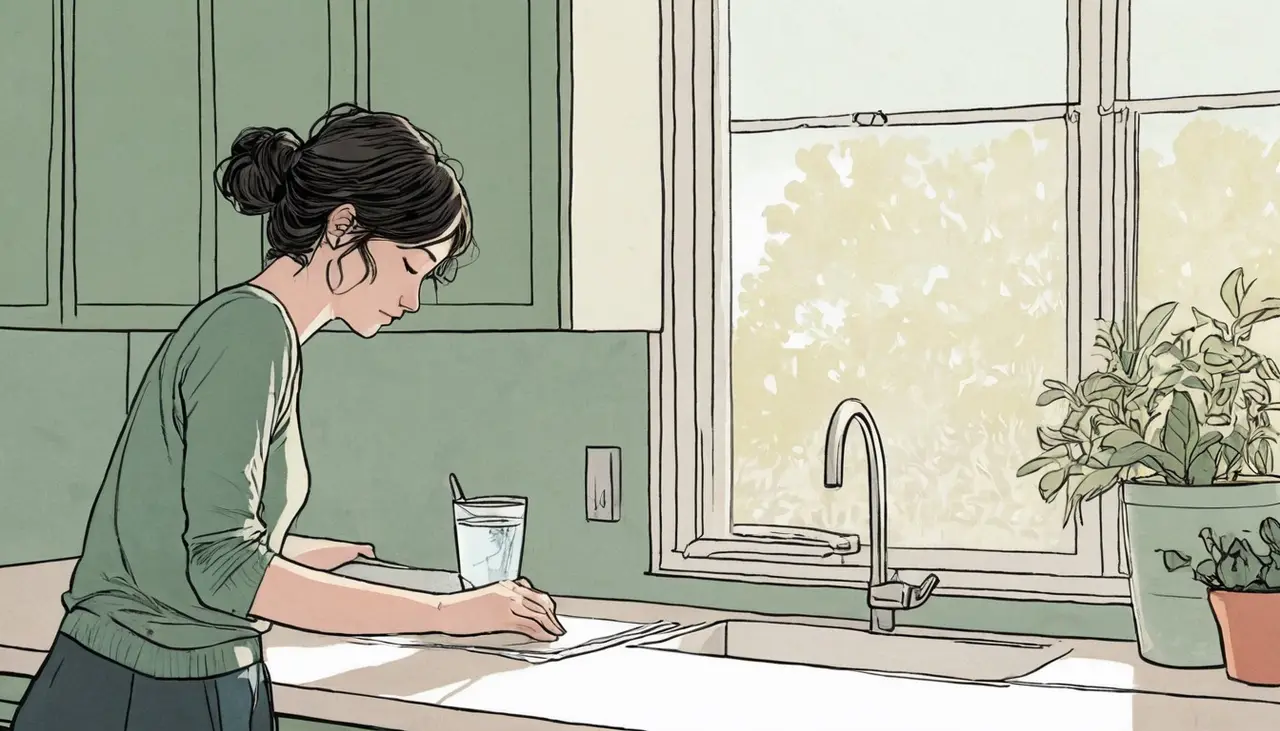
The alarm goes off and for two seconds you're fine. Then the night comes back in pieces — the second round you didn't plan, the point where you stopped counting, the plan on the fridge that says two drinks, twice this week. Looking at it feels like being looked at. Somewhere between the headache and the first coffee, a verdict starts drafting itself: the week is blown.
It isn't. But what you do in the next few hours decides whether one heavy night stays one heavy night — or becomes the reason next week starts from zero too.
Going past your own limit isn't proof that you can't do this, and it isn't a character reading. Plans bend under real conditions — a party, a fight, a long week, a second location — and a cutback plan that has never met real conditions hasn't been tested yet. What helps the morning after is a small, repeatable routine. Call it the Next-Morning Reset: four moves — steady, count, find the bend, rejoin. It's a debrief, not a trial.
Why the morning after goes wrong
Shame is a lousy planner. The morning-after mind tends to swing to one of two extremes: the punishment plan ("no alcohol for a month, starting now, while I feel terrible") or the erasure plan ("that didn't count, fresh start Monday, no review"). Both go wrong the same way — they respond to the feeling instead of the pattern. Punishment plans are built oversized and collapse by Friday, which conveniently delivers the next "I blew it." Erasure plans throw away the only useful thing a bad night produces: information about where the plan bends.
What actually matters for a cutback attempt is the running pattern across weeks, not a perfect streak. A pattern can absorb one bad data point. A streak can't — which is exactly why streak thinking turns one rough night into a quit. The reset below is built to protect the pattern.
Steady the body first
You're reviewing last night with a brain running on fragmented sleep, low fluids, and whatever your stomach is doing about it. Alcohol speeds you into sleep but fragments the back half of the night, so the 7 a.m. version of you is the least qualified analyst you'll be all day. Don't write rules from that chair.
Keep the day deliberately simple. Water, plain food, gentle movement if it helps you feel less stuck. No big declarations, no new lifetime rules, no tearing the plan off the fridge.
Do it now: drink a glass of water and set a note for tomorrow evening that says "review the night." The review keeps; the shame won't be running it by then.
Count it straight
When you do review, use real units instead of impressions. NIAAA counts a U.S. standard drink as 0.6 fluid ounces — about 14 grams — of pure alcohol, which means a generous pour of wine or a strong cocktail can quietly be two. The same page defines binge drinking as a pattern that typically brings blood alcohol concentration to 0.08% or higher — usually about five drinks for men or four for women within roughly two hours.
If the night met that bar, name it plainly. Not "I was terrible" and not "it was basically fine" — just the number and what it means. An honest count isn't a shame ritual; it's the difference between reviewing what happened and reviewing how you feel about it.
Do it now (or tomorrow evening): write one line. The number, the place, the time it started. That's the whole entry.
Find the first bend
The night didn't go sideways at drink five. It went sideways earlier, at the moment the plan first bent. Three questions find it:
- What was the first moment the plan bent? Not the worst moment — the first one.
- What made it easier to keep going after that: the "already had one" logic, the second location, someone else ordering?
- What one thing would make that same moment go differently next time?
The answers are usually unglamorous: eat before the event, leave when the group moves venues, have a default answer ready for "one more?", keep the first drink from being automatic. One concrete change beats five resolutions. And if the moment that bent the plan was a craving itself, handling alcohol cravings and urges covers that tool on its own.
Do it now: answer just the first question. The other two get easier once you know where the bend was.
Rejoin the week — don't rebuild it
Go back to the same plan you had before the bad night, with at most the one change from the step above. Resist the urge to "make up for it" with a compensatory dry week invented at your lowest hour — plans built from shame are built to be abandoned. If you genuinely want an alcohol-free stretch, choose it on a calm day, for reasons that will still be true on Friday.
It also helps to know what you're steering toward. The CDC's description of moderate drinking — two drinks or fewer in a day for men, one or fewer for women, and drinking less is better for health than drinking more — is an orientation point, not a pass/fail line your week gets graded against. Your plan is yours; the definition just keeps the map honest.
Here's the language shift worth keeping: you're not making up for the night, you're picking the plan back up. One is a debt. The other is a Tuesday.
Do it now: put the next planned day — drinking or not — back on the calendar where you can see it.
When the reset isn't the tool
This routine won't always be enough, and pretending otherwise would make the rest of it less trustworthy. One bad night is a data point. A bad night every week is a pattern, and the honest read of a repeating pattern — heavier episodes, blackouts, limits that break the same way every time — is not "try harder." It's "this plan is underpowered for what it's up against." That's information, not a verdict on you.
Two things make that information easy to bury. The first is stigma: NIAAA calls it a pervasive barrier to care, and the most common reasons people give for not seeking help — too embarrassed, should be strong enough to handle it alone — are stigma in different clothes. People hide exactly the nights that most deserve a second opinion. The second is the belief that "help" means one dramatic thing. It doesn't. SMART Recovery, for one, is a free, secular mutual-support program whose 4-Point Program treats coping with urges as a skill you practice, not a test you pass. And if you don't already have a clinician to bring the pattern to, Clero connects you with a licensed clinician by telehealth who can look at your cutback plan with you and talk through whether more support — including medication — belongs in it.
One physical flag outranks all of this: if skipping alcohol brings shaking, sweating, or confusion, that's withdrawal territory. It needs medical guidance — an emergency room or 911 if symptoms are severe — before any more self-experiments.
The same morning, run differently
Same alarm, same headache, different hour one. The plan stays on the fridge. You drink the water, you skip the courtroom, and tomorrow evening you write one line and answer one question. The week continues — not because the night didn't matter, but because you took what it knew and left the rest.
That's the whole reset: steady, count, find the bend, rejoin. Keep the sentence that helps ("the plan bends at the second location") and drop the one that doesn't ("I always do this"). Restarting a cutback week after a bad night isn't a fresh start from zero — it's the same week, resumed one honest day at a time.
This is education, not medical advice. If stopping drinking brings shaking, confusion, hallucinations, or a seizure, call 911 or go to an emergency room; if you're having thoughts of harming yourself, call or text 988; and for a free, confidential treatment referral any time, SAMHSA's National Helpline is 1-800-662-HELP (4357).
- Helping someone who drinks
How to Help an Alcoholic Who Doesn't Want Help
If he doesn't want help, the job is timing, safety, and a specific next step — not winning the label argument. What to try after the first ask fails.
- Social events & holidays
How to Handle FOMO When You're Cutting Back on Drinking
FOMO is rarely the whole night — it is the people, the place, the drink, or the feeling. Name which corner is hot, give it one small move, and set the phone down.
- Social events & holidays
How to Handle Thanksgiving When You're Cutting Back on Drinking
Thanksgiving is an all-day drinking cue: plan the timeline, family lines, and first sober holiday pressure before the table fills.
- Social events & holidays
How To Not Drink at a Party
A low-drama party plan for not drinking, built around the first round, the first question, and the first exit point.
- Family & relationships
Alcohol Causing Problems in Relationships
Drinking does not have to be the only problem in a relationship to be a real one inside it. How to name the pattern, and what repair actually starts with.
- Quitting & sobriety
How to Restart After Breaking a Sober Streak
A calm guide for restarting after a slip during a no-drink month or personal streak, with clinician-first safety limits.


Be the first to hear when Clero launches.
Join with email only. Clero is still in development, so this is educational content today — not treatment, a prescription request, or medical advice.
First to hear at launchLaunch news only — no spamUnsubscribe anytime