
Why Can't I Sleep When I Stop Drinking?
Why sleep can feel worse after stopping or cutting back on alcohol, when it may point to withdrawal risk, and what to track next.
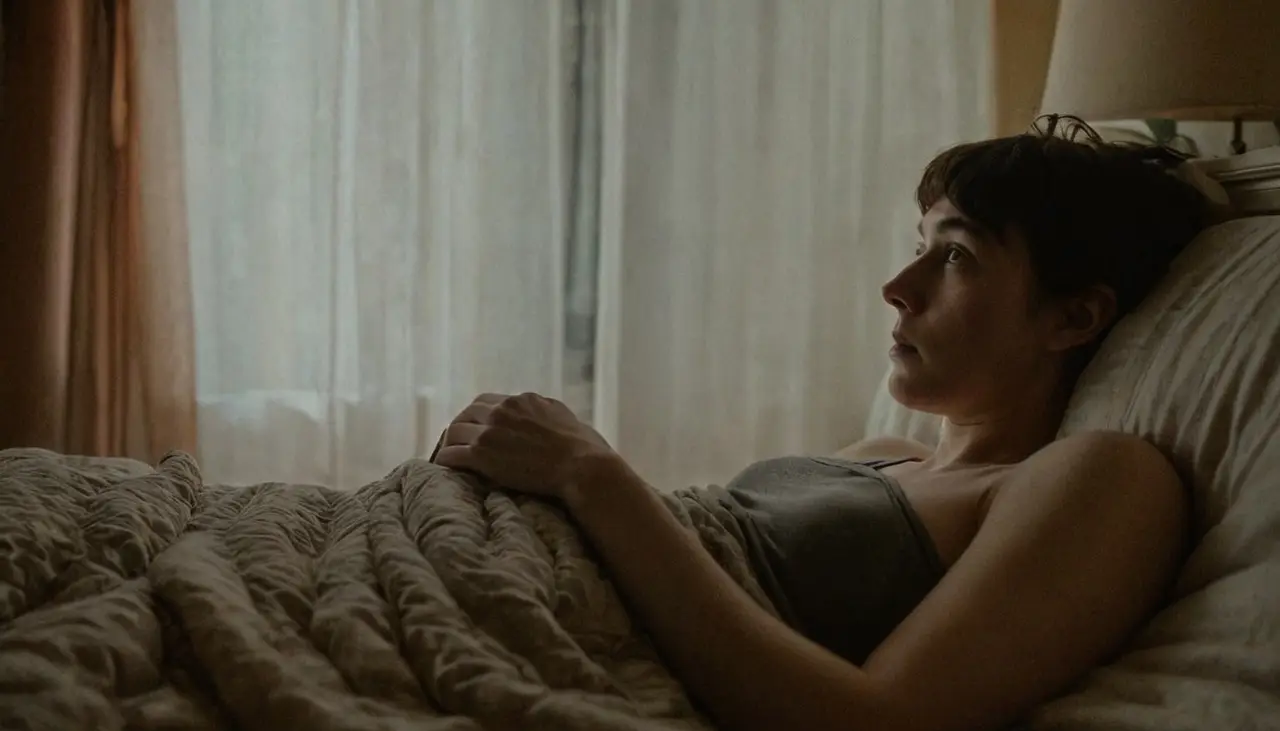
Losing sleep after you cut back on drinking is common, it usually is not a sign the change was a mistake, and in a few situations it is a signal to get checked quickly — here is how to tell which is which.
You expected the opposite. Fewer drinks, cleaner nights, better mornings. Instead you are wired at bedtime, awake at 2am, or half-tempted to pour one just to knock yourself out. That is a real and well-recognized pattern, not a personal failing. For most people it eases with time. For a smaller group — heavy daily drinkers especially — new sleeplessness after stopping can be the first visible edge of alcohol withdrawal, which is a different and more urgent situation. Sorting those two apart is the whole point of this page.
Why does my sleep get worse after I stop drinking?
Because your brain spent a while adjusting to the alcohol, and now it is adjusting to its absence. A drink can make you drop off faster while still wrecking the back half of the night, so people often lean on it as a sleep aid without noticing how poorly it was actually working. Take it away and the body has to re-learn its own rhythm, which can feel like being keyed up right when you want to wind down.
There is a deeper reason this can drag on. In alcohol use disorder, sleep problems are extremely common and often outlast the first month of not drinking rather than clearing up in a few days — longer time to fall asleep, more waking through the night, lighter and less restorative sleep. So if a week without alcohol has not fixed your nights, that does not mean something is wrong with you. It means sleep is one of the slower things to come back.
Is it normal to feel wired instead of tired?
Yes, and it has a name most people never hear: nervous-system rebound. When a regular drinker removes the nightly sedating routine, the "settle down" and "wake up" signals in the brain can fall out of sync for a while. What you feel from the outside is restlessness — trouble falling asleep, sleep that comes in short blocks, vivid dreams, restless legs, or snapping awake before dawn. A smaller number of people notice the opposite direction while they are still drinking, where the night gets more active rather than lighter — can alcohol make you sleepwalk takes that one on.
That said, "wired" is not one thing. Feeling mentally busy and slow to switch off at night is ordinary early on. Feeling physically revved — heart racing, hands shaking, drenched in sweat — is a different signal, and the section below on when to get help quickly is written for exactly that.
Should I just drink again so I can sleep?
No — and the reason is worth being honest about. The thought is seductive precisely because it might work in the moment: alcohol probably did knock you out before. But it is not a sleep strategy that holds, and for a heavier daily drinker, reaching for a drink to stop the sleeplessness can paper over a withdrawal-safety problem instead of solving it.
If you take one thing from this page, let it be that the "I'll just have one to sleep" thought is normal to have and not one to act on automatically. Name it when it shows up, then make the next step small rather than arguing with yourself for an hour.
Could this be alcohol withdrawal?
It can be, and this is the question that changes what you should do. The biggest dividing line is how much and how regularly you were drinking. For someone who was drinking heavily every day, suddenly not sleeping after stopping can be one thread in a broader withdrawal picture — not just a bad night.
Take these as more than a rough night. Alcohol withdrawal can escalate, and MedlinePlus lists severe symptoms — confusion, hallucinations, fever, and seizures — as reasons to get emergency care. If sleeplessness comes with shaking, heavy sweating, a racing or pounding heart, confusion, hallucinations, a seizure, fever, or repeated vomiting, call 911 or go to the emergency room now. Those are the signs of severe withdrawal, which can become life-threatening fast — urgent care is not the right setting for a seizure or delirium.
Short of that, it is still worth talking with a clinician soon if you have had withdrawal symptoms before, feel you need alcohol to steady your hands or your nerves, or feel physically unsafe when you try to stop. You do not need the perfect words. "I stopped drinking and now I can't sleep, and I used to drink a lot" is enough to start.
What actually helps while sleep resettles?
Keep it small and specific. The goal is not a flawless sleep diary — it is a clearer picture of what is discomfort and what is a warning sign, and a calmer next few nights. A few things that tend to help:
- Track the basics, not everything. Note your last regular drinking day, roughly how many standard drinks you were having, your caffeine timing, when you got in bed, and when you woke. NIAAA counts a U.S. standard drink as 0.6 fluid ounces, about 14 grams, of pure alcohol — worth knowing because a big home pour can quietly be two or three drinks, which changes what "cutting back" actually meant for you.
- Watch the line between discomfort and danger. A restless night after a lighter week is one thing. A sleepless night with tremor, a racing heart, or confusion is another — the first you can ride out, the second you act on (see above).
- Shrink the night down. Instead of trying to fix the whole evening, record just the first hour before bed, the first time you woke, and the first body symptom that worried you. That is enough to make tomorrow less vague without turning 3am into a research project.
- Handle the drink-to-sleep thought out loud. When "one drink and I'd sleep" arrives, you do not have to obey it or debate it. Write down something plain — "this is here because my routine changed" — then go simple: lights low, phone away, water nearby.
Try not to treat one rough night as proof the change was a mistake. It is far more often just the resettling.
What if I don't have anyone to ask about this?
If your drinking has been heavy or daily, the safest version of stopping is one a clinician helps you plan, because the withdrawal risk is real and hard to judge from the inside. If you do not already have a clinician to raise this with, Clero can connect you with a licensed clinician by telehealth to talk through your drinking, your sleep, and whether a medication for alcohol use disorder fits your situation. That is a routing option, not a diagnosis — the point is simply to make the conversation easy to start.
For related reading, see drinking when you can't fall asleep without it and drinking less for better sleep. If your version is the opposite problem — sleeping a lot after you stopped drinking — that has its own explanation.
How long will the insomnia last?
There is no honest single timeline, and anyone who promises one is guessing. Some people notice sleep settling within a couple of weeks; others find it takes longer, especially after years of heavy drinking, because — as above — alcohol-related sleep problems can persist well past the first month of abstinence. And sometimes the sleeplessness is riding alongside something else worth a clinician's eyes: withdrawal risk, anxiety, or a separate sleep problem. If it is dragging on or wearing you down, that is a reasonable thing to bring to a professional rather than tough out alone.
This page is general education, not a sleep or withdrawal plan. If stopping has ever brought on shaking, confusion, hallucinations, or a seizure, treat it as an emergency and call 911. To talk through your drinking with a licensed clinician, or to find free, confidential referrals any time, SAMHSA's National Helpline is at 1-800-662-HELP.
- Mind & mood
Alcohol and Anger Outbursts
Alcohol lowers restraint, which can make anger outbursts easier to act on — and the next-day rebound explains why the morning after feels so raw.
- Body & physical health
Mixing Alcohol and Energy Drinks: Why 'Wide Awake Drunk' Is Riskier Than It Feels
Caffeine does not cancel out alcohol; it can make impairment harder to feel. Know the CDC risk pattern and when mixed drinks become a 911 issue.
- Quitting & sobriety
How do I stop drinking?
Stopping drinking starts with safety, not willpower. If you drink heavily every day or have had withdrawal symptoms, ask a clinician what level of care is safest before you stop suddenly. If you are medically stable, the next step is to choose support that matches your goal, privacy needs, and risk level: therapy, peer support, medication education, primary care, telehealth, outpatient treatment, or a higher level of care.
- Quitting & sobriety
What Happens When I Stop Drinking? A Realistic Look at the First Weeks
A realistic first-weeks timeline for sleep, mornings, energy, focus, blood pressure, and withdrawal safety after stopping alcohol.
- Quitting & sobriety
Why Alcohol Withdrawal Can Get Worse Each Time
A safety-first explanation of alcohol withdrawal kindling, repeated quit-restart cycles, and when withdrawal symptoms need medical help.
- Quitting & sobriety
Why Can't I Stop Drinking? What's Actually Going On in Your Brain
Repeated drinking trains the brain to expect relief from alcohol, so the urge peaks just as you try to stop. The loop, why willpower loses, and what helps.


Be the first to hear when Clero launches.
Join with email only. Clero is still in development, so this is educational content today — not treatment, a prescription request, or medical advice.
First to hear at launchLaunch news only — no spamUnsubscribe anytime