
Drinking and Saturday Mornings Feel Different When You Cut Back
A clear Saturday morning can feel strange rather than triumphant: what's missing is the structure, not the drink. Why the empty hours don't need a productivity plan.
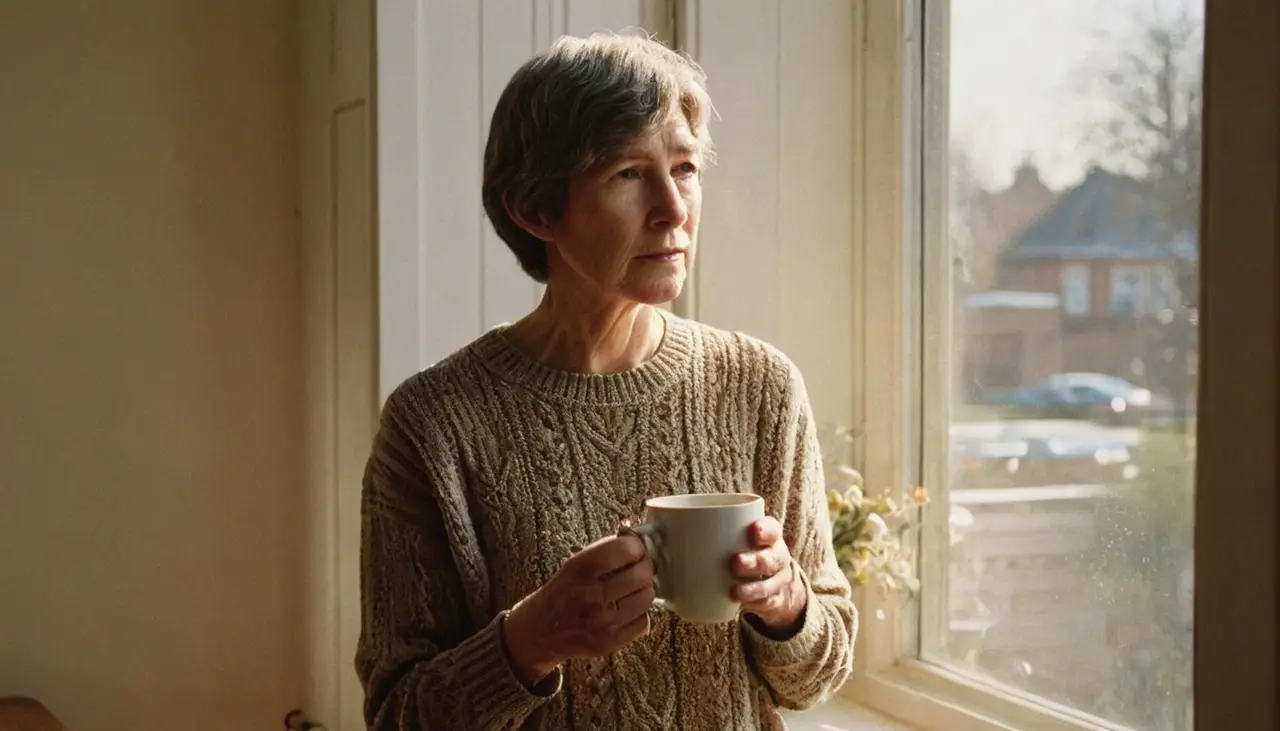
The light comes in earlier than you remembered. Seven-something, and the room is already the color of weak tea, and there is no headache waiting behind your eyes to tell you what kind of day this is going to be. You lie there for a second doing the old inventory anyway — how bad, how much, what did I say — and the inventory comes back empty. Just a Saturday. A whole one, handed to you at the front.
It should feel like a win. Sometimes it does. But a lot of mornings it just feels strange, like walking into a room where someone has moved the furniture an inch to the left. You can't say what's different. You only know that it is.
For a long time Friday night decided Saturday morning before Saturday ever arrived. Drinking on Friday meant a certain kind of Saturday — the late sleep, the slow start, the coffee-and-ibuprofen liturgy, the half a day spent paying it back. That was a cost. It was also a shape. The morning knew what it was for: recovery. There was nothing to decide, because the night before had already decided everything.
Cut back, and the shape goes with it. What's left is time you didn't budget for. Not lost, not owed to anyone, just there — quiet and unassigned, waiting to see what you'll do with it.
And that's the part that catches people off guard. Not the craving, not the missing drink. The missing structure — the way the drinking used to hand the morning a job before you were even awake to argue with it.
There's a plain reason the morning after used to feel the way it did, and it isn't only the hangover. Alcohol reshapes the night itself. A drink helps you drop off fast, but sleep researchers describe that early sedative effect getting paid back later — the second half of the night going lighter and more broken, so the sleep quality falls even when you technically slept the same hours. Dig into what's actually breaking, and the older sleep literature points at the dreaming stages: alcohol flattens them early, then they come roaring back near dawn in a restless, over-vivid rebound. So the fog you woke into wasn't just chemistry leaving your bloodstream. It was a night that had been quietly taken apart while you slept. A cutback puts the night back together, more or less. And a night that was left whole gives you a morning you don't quite know how to hold.
*
Here is the question under the question. You think you're asking why does Saturday feel off now. What you're really asking is what was the drinking doing for me that I never had to name.
Because it turns out it was doing a lot. It gave the weekend a starting gun. It was permission — the small ceremony that said the week is over, you're allowed to stop now. It was, for some people, a whole social self, the version of you that showed up at nine and was funny by ten. Take a drink away and you take a drink away. Take the ritual away and you're left holding the thing the ritual was standing in for.
So the flat Saturday, the exposed one, the one that doesn't feel like a victory lap — it isn't the cutback failing. It's the cutback showing you the bill it was always paying. The relationship tension is still there. The phone is still there. The errands, the boredom, the quiet you used to drink your way past — all still there, no longer explained away by a headache. A clear morning doesn't add those things. It just stops giving you a reason to look past them.
That can feel like a loss. Something used to make the emptiness legible — I feel bad because I drank — and now the emptiness is just emptiness, with your own name on it.
But sit with it a beat longer and it turns over. A flat morning is still a morning that belongs to you. It costs nothing. It takes nothing back. And whatever it's showing you — that the weekend was thin underneath the drinking, that you don't actually know what you like to do at eight on a Saturday — is worth knowing rather than drinking past. Call it a reading of where things actually stand, not a grade on how you're doing.
You don't owe it a routine. You don't have to become a person who runs at dawn, or journals, or turns the empty hours into a productivity plan by noon. The instinct to immediately fill the space is just the old ritual asking for a replacement, and you can decline. A Saturday can be small on purpose. One anchor that isn't about discipline — coffee outside, groceries before the crowd, a walk with no distance goal, a real breakfast, an hour of nothing without being sick. Not to fix the morning. Just to make it feel like yours.
If it helps to know you're in ordinary company: in 2024, about 178.7 million people ages 12 and older in the United States reported drinking in the past year, per NIAAA — roughly three in five. Reworking how a weekend feels when the drinking changes is not a strange, solitary problem. It's one a very large number of people are quietly working out on their own Saturdays.
*
There's one Saturday morning this essay can't just let be, though.
If the mornings you're describing aren't quiet but rough — if a night without alcohol brings on shaking, sweating, a racing heart, a stomach that won't hold anything, a mind that won't settle — that isn't the weekend rearranging itself. That's a body that had come to depend on the alcohol, and pulling it away too fast can be genuinely dangerous. If you drink every day, the safe version of cutting back is one a clinician helps you plan, not one you tough out alone on a Saturday.
And some mornings the quiet turns heavy in a different direction — a low that sits on your chest, thoughts that scare you. That morning deserves a voice on the other end of a line, not another hour alone with it.
The old Saturday came pre-explained. This one you get to name yourself. Start with the smaller question, the one you can actually answer from bed: what would make this morning feel like mine?
This is general education, not medical advice — and not a routine you owe anyone. If you drink heavily every day, talk with a licensed clinician before stopping suddenly; if cutting back has ever brought on shaking, confusion, a racing heart, or a seizure, treat it as an emergency and call 911. For confidential, 24/7 support and referrals, the SAMHSA National Helpline is 1-800-662-HELP (4357); if a morning brings thoughts of harming yourself, call or text 988.
- Body & physical health
Does Alcohol Affect Your Taste Buds and Sense of Smell?
Yes — alcohol really can change how things smell and taste, dulling some senses and sharpening others. What's moving, and what recovers if you cut back.
- Social events & holidays
How to Handle a Baseball Game or Stadium Event While Cutting Back
At a ballgame, set your number before the first pitch and count the 24-ounce souvenir cup as two drinks, not one. A plan that runs on the game's own rhythm.
- Social events & holidays
How to Handle a Concert or Music Festival When You're Cutting Back
At a concert or festival, the drinking happens in the gaps: set changes and bar lines, not the music. Plan the set breaks and the day stays yours.
- Social events & holidays
How to Handle Halloween When You're Cutting Back on Drinking
Halloween gets easier when you decide the cup, the shot answer, and the exit before the night starts moving.
- Social events & holidays
How to Handle Pride Events When You're Cutting Back on Drinking
A practical Pride Month pacing guide for brunches, parades, block parties, clubs, and house gatherings when you want the day to include less alcohol.
- Hangovers & the day after
Drinking and Sweating the Day After
Sweating the day after drinking comes from your nervous system rebounding as the alcohol clears. Why 3am is the usual hour, and the sweat that means call 911.


Be the first to hear when Clero launches.
Join with email only. Clero is still in development, so this is educational content today — not treatment, a prescription request, or medical advice.
First to hear at launchLaunch news only — no spamUnsubscribe anytime