
Drinking and the Friday Night Loosen-Up Pull When Cutting Back
The Friday night loosen-up pull isn't really about alcohol; it's a transition that got wired to a bottle. The Threshold: four moves that re-mark the end of the week.
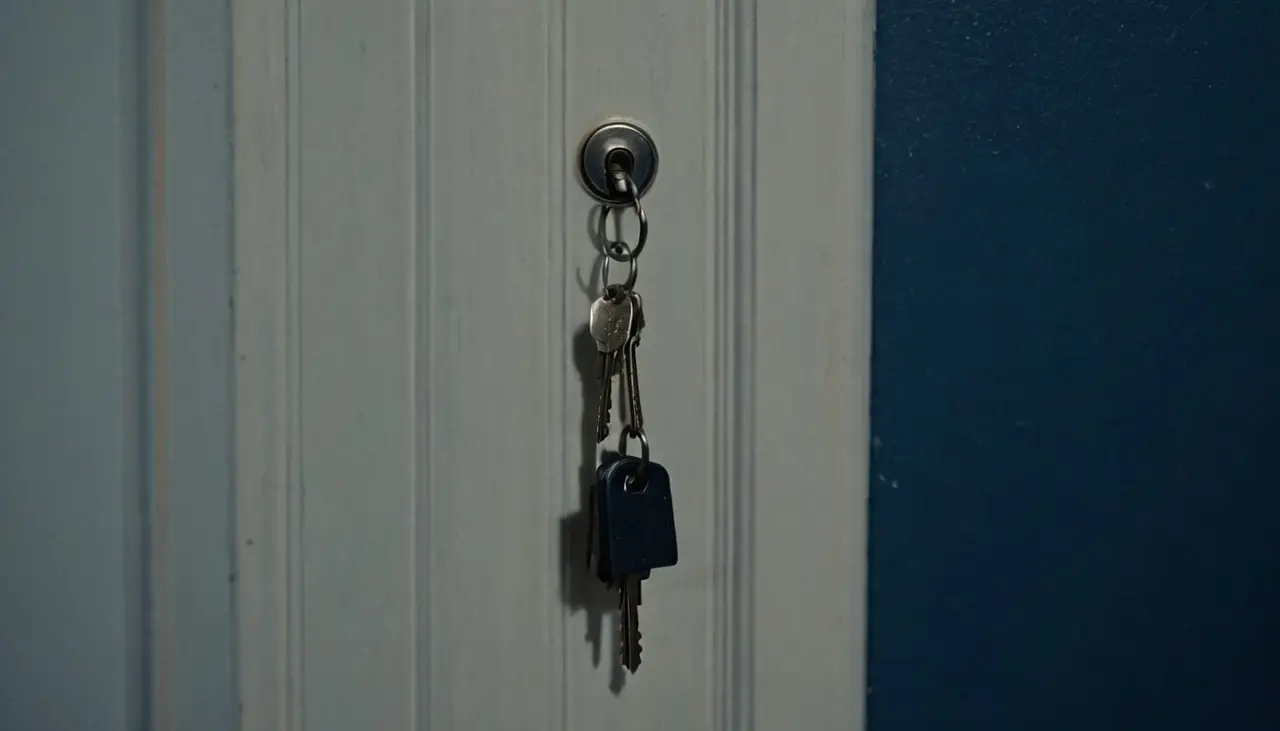
It's a little after six on a Friday. You've shut the laptop, kicked off your shoes, and the week is finally letting go of your shoulders. And there it is, right on time — the thought that arrives before you've decided anything: now the weekend can start. Not a craving with claws. More like a door swinging open on a hinge it's used a thousand times. The drink isn't the point; it's how Friday says out loud that the work is done.
Here's what's worth knowing before you reach: that pull isn't weakness, and it isn't really about the alcohol. For a long time a drink was the bell that rang the week to a close, and now the clock rings it whether or not a glass is in your hand. You're not fighting a taste. You're fighting a transition that got wired to a bottle — and a transition can be re-wired.
I'll call the method the Threshold. Picture Friday evening as a doorway between two rooms — the week behind you, the weekend ahead — and the old drink as the only thing that ever marked the crossing. You don't have to tear the doorway down. You just hang a different marker on it.
Why Friday gets so loud
Friday isn't harder because the craving is bigger. It's harder because it's carrying more than a craving — the end of the workweek, the I earned this thought, the loosen-up ritual, and a quiet worry that the weekend won't count unless something marks the line. All of that lands in one hour.
Underneath it is plain wiring. Alcohol leans on the brain's reward system, the part that tags an experience as worth doing again, and on the nervous system that sets how settled your body feels; NIAAA's overview of alcohol and the body describes those overlapping pathways. Ring that bell at the same hour, in the same chair, after the same commute, enough Fridays running, and the hour itself becomes the cue. Six o'clock, therefore drink. That fusing is why it feels automatic, and it's also why it's workable: a cue that got learned can get pointed somewhere else.
It helps to see the pattern in plain numbers first. A U.S. standard drink is 0.6 fluid ounces — about 14 grams — of pure alcohol, smaller than most Friday pours, so "just one" is often closer to two. NIAAA describes binge drinking as the pattern that brings blood alcohol to roughly 0.08 percent — often five or more drinks for men or four or more for women in about two hours — but that names a pattern, not a line where harm flips on. Risk climbs with how much you drink and how long you've drunk that way, and it lands differently from one body to the next depending on genetics, what else you're taking, and what the week has done to you. No single number is safe or harmful for everyone. Counting honestly just shows you the real size of the Friday pour.
And in case Friday feels like a private failing: about 174.4 million U.S. adults reported drinking in the past year in 2024 — roughly two in three, per NIAAA. A loud Friday is a common hour, not a verdict on your character.
The Threshold, one marker at a time
Four moves. Do them in order, and only for the first hour of the evening — not the whole night. The whole night tends to decide itself once the first hour has a shape.
Name what the drink was for
Before you swap anything, get honest about the job the Friday drink was doing. Marking relief? Softening the week's stress? Feeling social? Permission to stop being productive? Say it plainly — "the six o'clock drink is how I clock out." You're not solving it yet; you're finding out what the marker actually marks, because you can't replace a signal you haven't named. Do it now: finish the sentence "on Fridays, the first drink is really about ___."
Set the crossing time
The pull's launch point is earlier than the glass — it's the seam where the workday ends and nothing yet has edges. So put a marker there, before the old cue fires. Pick the exact moment the week ends — the laptop closing, the shoes coming off, the drive home — and ring it with something small and deliberate: change clothes, step outside, start the one task that officially closes the week. Do it now: pick the single action that will mean "the week is over" tonight, and the time it happens.
Give the first hour a shape
An unshaped hour is the cue, so hand it a mild edge and the cue quiets. Not a wholesome-evening fantasy — one concrete thing with a start time: food before anything gets negotiated, a walk, a call to one person, a show you'll actually begin. The content matters less than the fact that the hour has an opening that isn't just waiting. Ordinary counts. Do it now: write down the first block of tonight's evening with a time attached to it.
Push the decision past the threshold
You don't have to decide never. You only have to decide not in this first hour. Move the drink question to a later, clearer point — after the food, after the walk, after the restless edge of six o'clock has crested — and make the call then instead of on autopilot the second you walk in. A craving tends to rise, peak, and settle if you don't feed it, and the first hour is usually the peak. Put the alcohol somewhere less reachable for that window, too. Do it now: name tonight's "I'll decide at ___" time and say it out loud.
There's a small language swap that carries all four: stop treating Friday night as the thing you've waited all week for and start treating it as an evening that hasn't been assigned yet. Same hours. One version hands the wheel to the old marker; the other keeps it in your hands.
When Friday wins anyway
Some Fridays it won't hold. You'll set the crossing, shape the first hour, and still pour at six. That has to be said plainly, because a method that pretends otherwise isn't worth trusting. One Friday that goes the old way isn't proof the cutback is doomed; the loud hour was always going to be the last to change.
The move on those nights is to get curious instead of hard on yourself. Ask what the cue really was this time. The specific chair? Being alone with the quiet? A week that left you wrung out and reaching for the fastest relief? Each answer points somewhere different, and a Friday that keeps winning isn't a character flaw. It's usually the sign that this hour is the load-bearing part of the pattern and needs more support than one walk can give.
That's the honest line where a plan stops being a solo project. If you're drinking daily, if Friday is one edge of a heavy weekend, if easing off brings on shaking, sweating, or your body plainly protesting when you go without, or if the drinking is reaching into your health, driving, work, or the people you care about — that's the point to bring in a licensed clinician. A withdrawal reaction is a reason to make that call before your next attempt to stop, not after: stopping heavy daily drinking suddenly can be genuinely dangerous, so plan it with someone who knows your history rather than tough it out alone. And if none of that applies but Friday just keeps winning, that counts too — you don't need a crisis to justify the conversation. What often keeps people from it is the "everyone drinks on Friday" shrug; NIAAA names that stigma as a real barrier to reaching for help.
Back to the doorway
Next Friday around six, the door will swing open the same way, and the old marker will still be right there, still sounding reasonable. That part doesn't leave on a schedule. What changes is that the doorway has a different marker now, and you know how to hang it: name what the drink was for, set the crossing time, shape the first hour, push the decision past the threshold.
So write the first hour of this coming Friday before it arrives — the crossing action, the time, the one block that isn't just waiting. You don't have to make Friday feel easy for the cutback to be working. You just have to be the one who marks the crossing.
When the pull spikes anyway, how to handle alcohol cravings and urges is the toolkit for the next ten minutes. If the real cue is the end of the workday, see instead of drinking after work; if it's the weekend that keeps getting bargained back, the just-this-weekend loop; for the morning after, Saturday mornings feel different now that you're cutting back.
This is general education about one hour of the week — not medical advice, and not a plan for stopping. If changing your drinking ever feels physically unsafe, the SAMHSA National Helpline offers free, confidential, 24/7 support at 1-800-662-HELP (4357). And if easing off ever brings on shaking, confusion, or a seizure, treat it as an emergency and call 911 or go to an emergency room.
- Social events & holidays
How to Handle Halloween When You're Cutting Back on Drinking
Halloween gets easier when you decide the cup, the shot answer, and the exit before the night starts moving.
- Social events & holidays
How to Handle FOMO When You're Cutting Back on Drinking
FOMO is rarely the whole night — it is the people, the place, the drink, or the feeling. Name which corner is hot, give it one small move, and set the phone down.
- Social events & holidays
Drinking at a Wake or Funeral When You're Cutting Back
You can decline the drink and still be there for the goodbye. How to handle the glass at the door, the toast, and the late-night kitchen while cutting back.
- Cutting back & moderation
Drinking After a Really Hard Workday When You're Cutting Back
The after-work drink gets decided long before you reach the door, so move the decision earlier. A four-step checkpoint for hard days while you're cutting back.
- Social events & holidays
Drinking at a Summer Wedding When You're Cutting Back
The way to drink less at a summer wedding is deciding before it starts: your first drink, your switch point, and your exit. How the three posts hold all night.
- Social events & holidays
Drinking and the Pressure to Toast at a Summer Dinner or Event
How to think through the specific pressure of a coordinated toast when you are cutting back, without one-size-fits-all etiquette rules.


Be the first to hear when Clero launches.
Join with email only. Clero is still in development, so this is educational content today — not treatment, a prescription request, or medical advice.
First to hear at launchLaunch news only — no spamUnsubscribe anytime