
Cutting Back When Your Dad Was the Heavy Drinker and Father's Day Is Tomorrow
A non-diagnostic guide to the Father's-Day-eve cutback pull when your dad's drinking shaped the day, with 988 and SAMHSA routing.
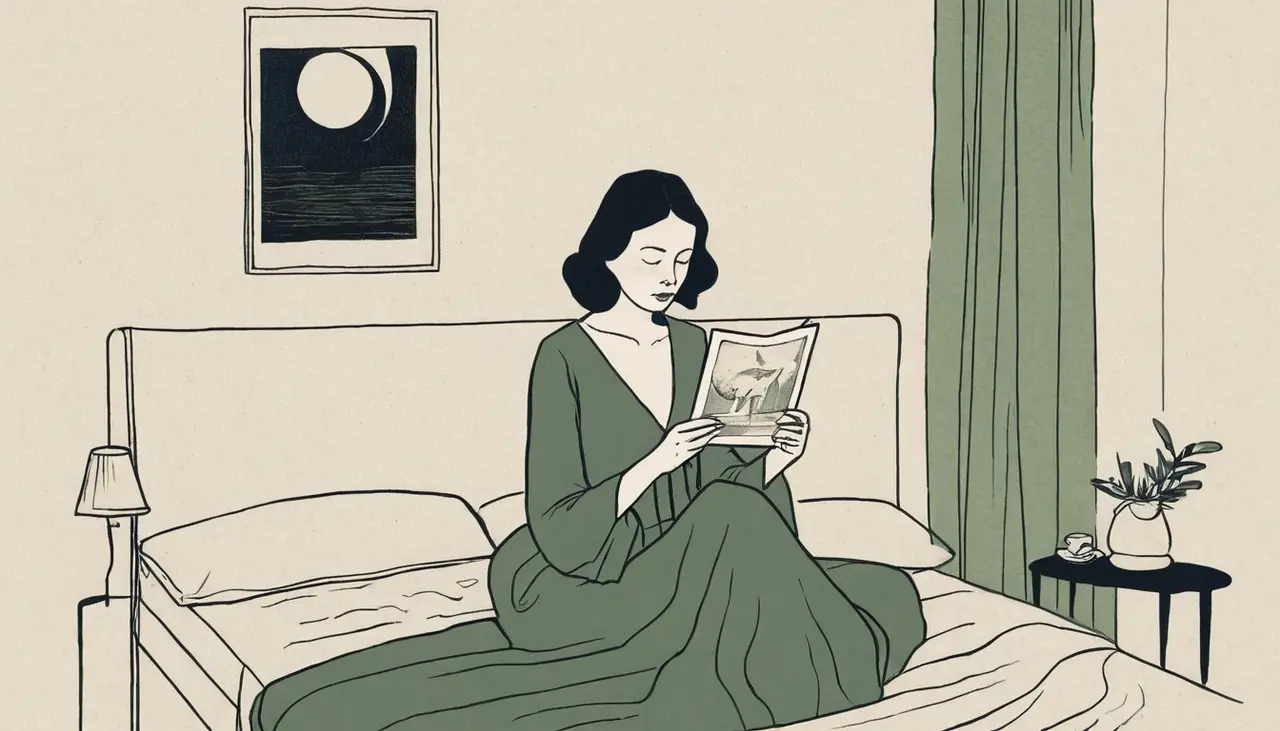
The cards went up in the drugstore sometime in late May, a whole endcap of them, and tonight one of them is in your hand. A grill. A recliner. A line about the best dad in the world in a font that leans like a signature. Behind the rack, on a lower shelf, the beer is stacked in cardboard flats for the weekend. You put the card back. You were not going to buy it anyway.
Father's Day eve is a manufactured evening, and most years that is fine. The trouble is that the manufactured version and the one you actually remember do not match. The culture hands you the beer-handed dad, the bourbon toast, the photo at the grill with the tongs raised like a small victory. Your version has the same props in it and means something else entirely.
If your father was the heavy drinker, the night before the holiday can carry a weight the calendar does not explain. Tomorrow's brunch is almost beside the point. What presses in tonight is the collision of a public ritual with a private climate, the particular weather of a house you grew up inside.
Every house had its weather. Some were temperate. Yours had a front that moved through it on certain evenings, and you learned to read the pressure before it broke the way farmers read a sky. You are an adult now, possibly a parent now, and you have spent years trying to keep that same front from forming over your own kitchen. Cutting back was part of that. So it is a strange thing, on this specific Saturday, to feel the old pull return, and to recognize whose voice it borrows.
There is a paradox a lot of people meet on exactly this night, and it sounds like a contradiction until you hold it long enough to see it is just grief. I cut back so I would not become him. And tonight, because of him, I want to drink.
You are not the only person standing in this. In a 2023 federal analysis, the National Institute on Alcohol Abuse and Alcoholism estimated that over 12 million U.S. children were living with a parent whose substance use disorder was primarily alcohol — part of roughly 19 million children living with at least one parent who met the criteria for a substance use disorder at all. Those children grow up. They get their own kitchens, their own weather to manage. The endcap of cards does not have a section for them, but there are millions of them, reading the same sky tonight.
That number does not diagnose your father, and it does not diagnose you. It only explains why a grown adult's quiet decision to drink a little less can feel, on this one weekend, like it is tangled up with someone else's drinking from twenty years ago. The pattern can matter without anyone signing a verdict on it.
What you may also notice is that cutting back made the feelings louder, not softer. This surprises people. The drink had been a kind of insulation, a layer that kept the old weather a room away, and when you thin the layer the drafts come back. Clinical reviews of alcohol and depression describe the two as moving together in both directions, and note that low mood driven by drinking itself often eases as alcohol recedes, while a depression that stands on its own tends to stay. Which is its own small mercy and its own caution: the heaviness you feel this weekend may be weather, passing, or it may be climate, and the two ask for different things.
So the feelings come, and they refuse to sort themselves into a single clean one.
You can miss a father who frightened you. You can be furious at a father who also, unmistakably, loved you. You can feel relieved by the distance and feel the distance as a loss in the same breath. You can feel nothing at all and then notice that the nothing is heavy, that it takes up room, that a numbness can have weight.
None of those is the wrong feeling. The holiday wants you to pick one — the grateful son, the forgiving daughter, the figure in the font that leans like a signature — and the truer thing is that you may be holding four of them at once, in no particular order, which is less a failure of the day than the ordinary interior of an inherited climate.
There is a second silence stacked on the first one, and it is worth naming. Adult children of heavy-drinking parents often carry a double quiet: a reluctance to put a label on the parent, and a reluctance to admit that their own cutting back is hard. The first silence protects him. The second one isolates you. This was years ago. Other people had it worse. I should not still care. Every one of those sounds reasonable at eleven at night, and not one of them gets to decide what support you are allowed to want.
You do not have to settle the whole estate of this tonight. You do not have to decide whether to call him, see him, skip it, forgive it, name it to your partner, or explain your changed drinking to anyone at the table. A quieter version of the weekend does not have to be forgiveness, or estrangement, or anything that needs a name. Call it giving the day fewer ways to catch you off guard — a shorter visit, a phone call instead of a room, a private remembrance, a meal that is not the whole performance, or no contact at all, with no one keeping score.
One practical note belongs here, and only this one. If you drink heavily every day, the body builds a dependence that makes stopping suddenly genuinely unsafe; talk with a licensed clinician before you change a daily pattern abruptly, so the change gets planned instead of improvised. And if the night tips past sadness into hopelessness that feels unsafe, or thoughts of harming yourself, that is not a weekend to wait out. The 988 Suicide and Crisis Lifeline is there by call, text, or chat, and 911 is for an immediate emergency. If what surfaces tonight, or at the table tomorrow, is mainly the urge to pour, give your hands a smaller job first — fill the kettle, pick the mug, stand with it while the steam does its three minutes of work. When they want more than that, how to handle alcohol cravings and urges is a place to put them.
Here is the part the drugstore endcap will never print.
The reason this weekend reaches you is that you are doing the thing he could not. You are standing in the same pressure he stood in, feeling the same front move through, and reaching for something other than the flat of cans on the lower shelf. That is not a small act. It can feel like proof of a larger fate — see, the wanting is still in me, it was always going to be — but a craving on a hard night is not an inheritance collecting its due. It is a signal, and you are the one reading it.
Tomorrow the cards will still lean in their font. The grill photo will still mean what it means to other people. You can let it. You grew up learning to read a sky for the weather other people made. Tonight you get to decide what the weather in your own house will be — and that, quietly, is the inheritance you are choosing to keep.
This essay is company, not medical advice, and it diagnoses no one — not him, not you. Questions about your own drinking belong with a licensed clinician who knows your history.
- Social events & holidays
How to Handle Pride Events When You're Cutting Back on Drinking
A practical Pride Month pacing guide for brunches, parades, block parties, clubs, and house gatherings when you want the day to include less alcohol.
- Cutting back & moderation
How to Stay Motivated When Cutting Back on Drinking
A grounded guide to motivation dips during a cutback attempt, with small next steps and no willpower-test framing.
- Social events & holidays
Drinking on Father's Day When You're Cutting Back
To drink less on Father's Day, pick your number before the cookout — then pour your own, keep a glass in hand, and plan your exit. Five small grips that hold.
- Social events & holidays
Cutting Back on the Saturday Before Father's Day When You Already Feel It Coming
Why the Saturday before Father's Day can feel like its own cutback trigger, with a quiet planning frame and clinician-first safety routing.
- Social events & holidays
Drinking and the Fear of Becoming the Boring One Without It
A nonjudgmental guide to the identity fear that cutting back will make you boring, with safety routing when mood turns unsafe.
- Family & relationships
Cutting Back When Your Sibling Asks Why You're Not Drinking
When your sibling keeps asking why you're not drinking, one flat answer repeated beats a better argument. The Two-Foot Rule for getting through the family thing.


Be the first to hear when Clero launches.
Join with email only. Clero is still in development, so this is educational content today — not treatment, a prescription request, or medical advice.
First to hear at launchLaunch news only — no spamUnsubscribe anytime