
What Is Zebra Striping? The Alternating-Drinks Trick, Explained
Zebra striping means alternating every alcoholic drink with a non-alcoholic one — same rounds, roughly half the alcohol. It only works if the pace stays honest.
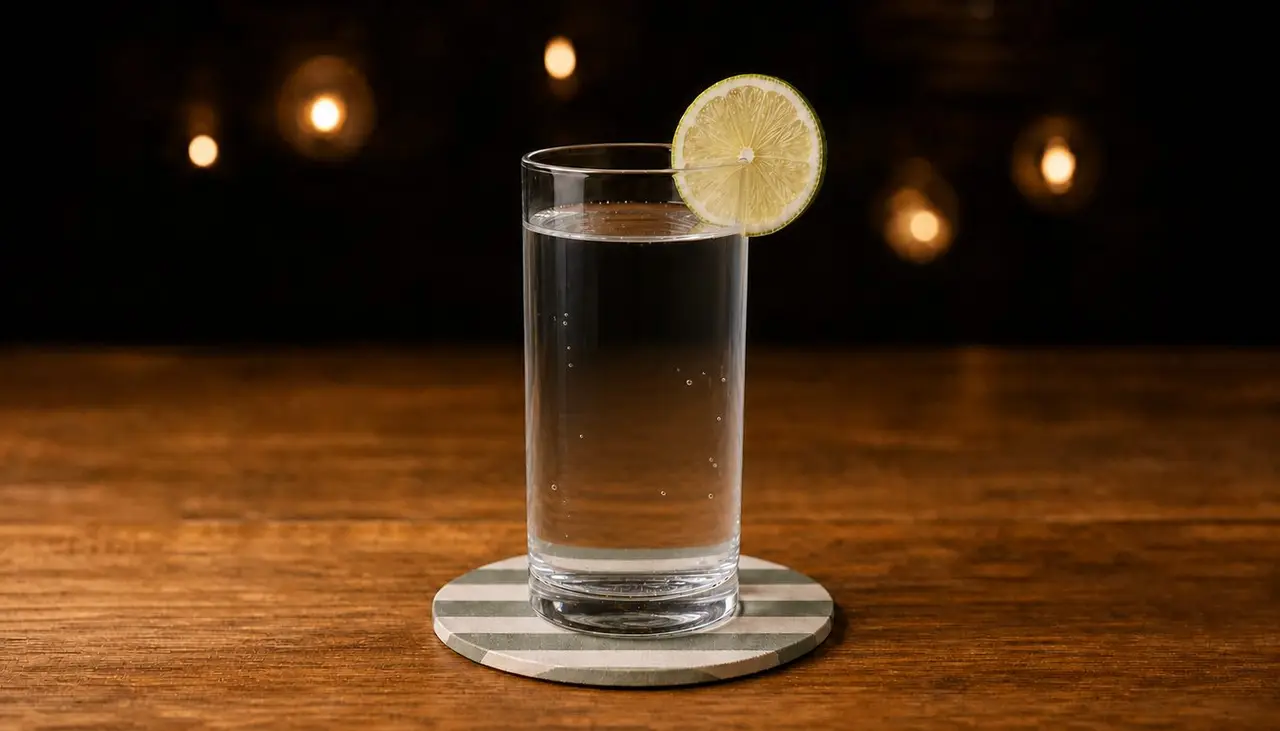
You are at the bar, and the night has a rhythm before you have made a choice: someone orders, glasses land, the table drinks, the next round appears. Zebra striping interrupts that rhythm without making you hold a speech.
The rule: alternate every alcoholic drink with a non-alcoholic one.
Beer, then zero-beer. Wine, then sparkling water. Cocktail, then soda with lime. The pattern stripes the night: alcohol, no alcohol, alcohol, no alcohol.
Why the simple math matters
Zebra striping is not magic. It is arithmetic.
CDC defines a U.S. standard drink as 14 grams of pure alcohol: for example, 12 ounces of 5% beer, 5 ounces of 12% wine, or 1.5 ounces of 80-proof distilled spirits. If you keep the same number of rounds but make every other round non-alcoholic, the alcohol count can drop by about half.
That only holds if the rounds stay the same size and pace. A 16-ounce strong beer is not the same as a standard beer. A heavy cocktail may count as more than one drink. A "stripe" you chug in five minutes does not slow much down.
So the real rule is this: alternate drinks and keep the pace honest.
Why spacing helps
NIAAA's alcohol-metabolism overview explains that the body clears alcohol at a roughly constant pace. Drinking faster does not make the body process faster; it stacks more alcohol before the body has caught up.
Zebra striping works with that fixed pace. The non-alcohol round adds time, fluid, and a physical object in your hand while your body keeps doing its slow work.
This is why the tool can feel socially easy. You still order. You still toast. You still hold something. You just stop making every round alcohol.
Set your stripes before round one
Do not wait until drink three to become strategic. Decide the pattern before the night starts.
Try one of these:
Classic stripe: alcoholic, non-alcoholic, alcoholic, non-alcoholic.
Start-on-zero stripe: non-alcoholic first, then alternate. This is good when the first round arrives before food.
Last-call stripe: the final two rounds are non-alcoholic, no matter what came before.
Quiet stripe: order a zero-beer, soda water, tonic with lime, mocktail, coffee, or tea without announcing the reason.
Do-it-now action: choose your default stripe order before the event. If you wait for the menu, the group will decide for you.
How to do it without explaining
The stealth part matters. Many people are not afraid of drinking less. They are tired of talking about drinking less.
Use normal ordering language:
- "I'll do a soda water with lime."
- "Zero-beer for me this round."
- "I'm pacing."
- "I'll catch the next one."
- "Same glass, no alcohol this time."
If someone asks why, keep it boring: "Long day tomorrow." "Just pacing." "I'm good." Then move on.
For more no-drink language, see excuses not to drink.
Where zebra striping fits
It fits best when the main problem is pace. A wedding. A work dinner. A game. A party where the glass keeps getting refreshed. A night where you want to drink less without leaving the setting.
It is less useful when the real problem is drinking alone after the event, using alcohol to manage distress, or being unable to keep the alternate round after the first few drinks. In those cases, the pattern is giving you information: the tool is not matching the load.
Try how to stop using alcohol as a crutch if the drink is carrying stress or loneliness, and how to handle alcohol cravings and urges if the urge feels bigger than the setting.
The honest health frame
The WHO's 2023 position is blunt: no amount of alcohol has been established as safe for health, and risk climbs from the first drink. Zebra striping does not turn alcohol into a health product. It reduces exposure when it actually reduces the number of standard drinks.
That distinction keeps the tool honest. Zebra striping is a pacing method, not a loophole. It can help a night stay smaller. It cannot make a high total consequence-free.
Common failure modes
You skip the stripe after round three. Build in a visible cue: cash for only two alcoholic drinks, a ride time, or a friend who knows the plan.
You drink the non-alcohol round too fast. Choose something you actually like, not punishment water.
You add more total rounds. Four rounds with stripes may mean two alcoholic drinks. Eight rounds with stripes may still mean four.
The first drink is oversized. Count the alcohol, not the glass.
FAQ
Is zebra striping just drinking water between beers?
Water can be one stripe, but the broader idea is alternating alcoholic and non-alcoholic drinks. A zero-beer, soda, tea, or mocktail can all be stripes. If a zero-beer is your stripe, know that most bottles labeled non-alcoholic still carry a trace — does non-alcoholic beer have alcohol covers the label rules.
Does zebra striping make drinking safe?
No. It can reduce the amount you drink if it truly replaces alcoholic rounds. It does not erase alcohol-related risk.
What if I cannot stick to the alternate round?
That is useful information. You may need a stronger plan than pacing, a different setting, or a clinician conversation if cutting back feels hard to control.
This article is general education, not medical advice or a promise that a pacing tool will fit every drinking pattern. If cutting back feels physically unsafe, talk with a licensed clinician; SAMHSA's National Helpline is 1-800-662-HELP for confidential referrals.
- Social events & holidays
How to Handle the Fourth of July When You're Cutting Back
A ten-hour Fourth of July pours itself unless you set edges first. Decide your leave time and drink number in the car, then keep a non-alcoholic can in hand.
- Understanding your drinking
When a Loved One Asks You to Pick Them Up After Drinking
A pickup request is not a promise to solve the night. Confirm danger, offer only safe transport you can actually provide, and keep the boundary clear.
- Helping someone who drinks
How to Help an Alcoholic Brother
Help a brother who drinks by checking safety, speaking one-to-one with facts, offering one real support option, and keeping family concern from becoming a pile-on.
- Social events & holidays
How to Handle FOMO When You're Cutting Back on Drinking
FOMO is rarely the whole night — it is the people, the place, the drink, or the feeling. Name which corner is hot, give it one small move, and set the phone down.
- Cutting back & moderation
What Is Mindful Drinking? The Practice Behind the Buzzword, Explained
Mindful drinking means deciding when, why, and how much you drink before the room decides for you. The three parts, five concrete moves, and who it fits.
- Medication & treatment
What medications can you take to stop drinking?
Naltrexone, acamprosate, and disulfiram are FDA-approved for alcohol use disorder; a healthcare provider can weigh other options for your health history and goals.


Be the first to hear when Clero launches.
Join with email only. Clero is still in development, so this is educational content today — not treatment, a prescription request, or medical advice.
First to hear at launchLaunch news only — no spamUnsubscribe anytime