
What Is Mindful Drinking? The Practice Behind the Buzzword, Explained
Mindful drinking means deciding when, why, and how much you drink before the room decides for you. The three parts, five concrete moves, and who it fits.
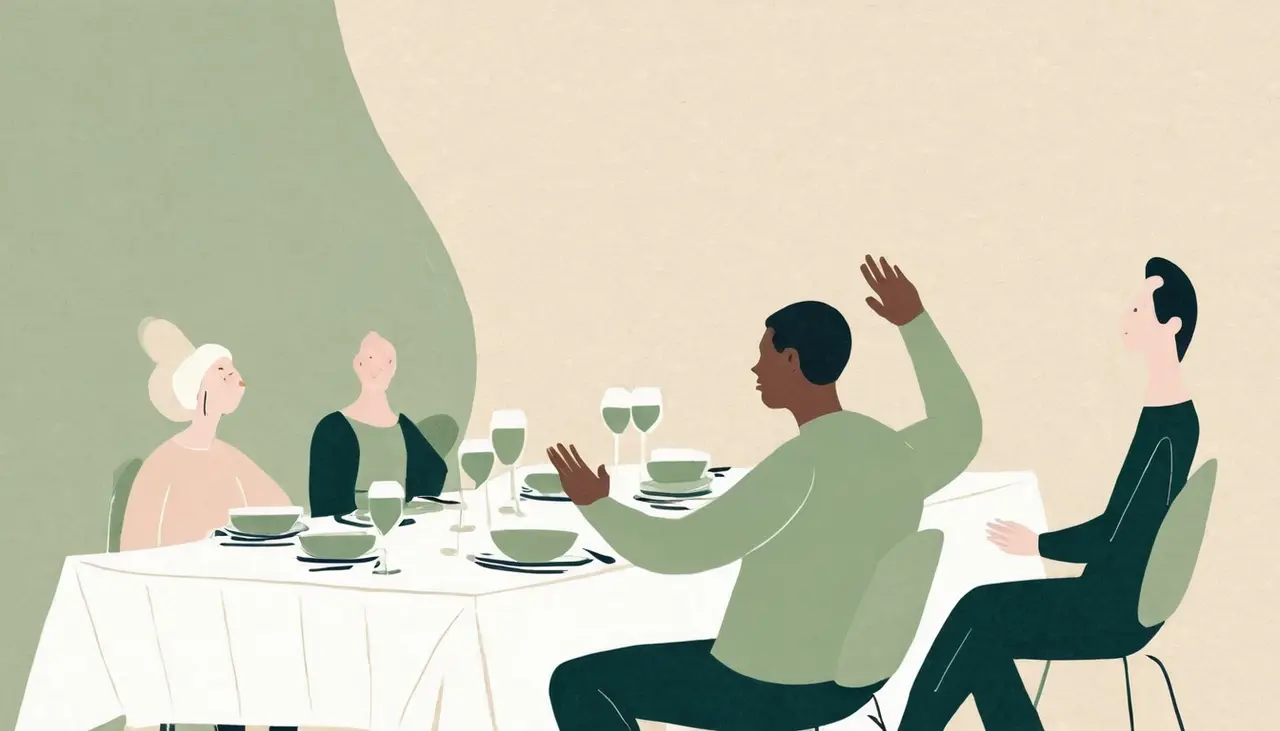
Mindful drinking means deciding on purpose when, why, and how much you drink instead of letting the setting decide for you.
That is the useful definition. Not an app. Not a personality. Not a guarantee that every night will stay inside the plan. A practice: intention before, attention during, honest review after.
The word can sound soft. The work is concrete.
What mindful drinking actually means
Mindful drinking has three parts.
Before: decide what you want the night to look like. That might be no alcohol, two drinks, a first drink after dinner, or an early exit.
During: notice the urge, the pace, the pour, the setting, and whether the drink is still doing what you wanted it to do.
After: review what happened without turning it into a trial. Did the plan fit? Did the first drink change the second decision? How did sleep, mood, memory, and the morning feel?
The point is not perfect self-control. The point is removing autopilot.
Five concrete moves
Mindful drinking only becomes useful when it leaves the slogan stage.
Pick the number before the first drink. A limit chosen while sober is usually clearer than a limit negotiated after the second round.
Use the first-sip check. Ask: do I actually want this, or am I just matching the room? If you do want it, drink it slowly enough to notice it.
Add a pacing rule. Alternate with water or a non-alcohol drink, eat before the second round, or set a time gap between drinks. For a more specific pacing tool, see what is zebra striping.
Ask "why now?" The answer may be pleasure, habit, stress, boredom, loneliness, or wanting the day to end. Each answer calls for a different response.
Do the next-morning debrief. Not as punishment. As measurement. Did this version of drinking give you what you hoped it would give you?
Mindful drinking vs moderation vs sobriety
These terms overlap, but they are not the same.
| Term | What it means | What it leaves open |
|---|---|---|
| Mindful drinking | Paying attention to the decision, pace, and effect of drinking | The final amount can vary |
| Moderation | Staying within a chosen or official limit | The reason for drinking may still be unexamined |
| Sobriety | Not drinking alcohol | The tools for stress, social pressure, and cravings still matter |
Mindful drinking can lead someone toward moderation. It can also show someone that moderation is harder than expected. For some people, the clearest mindful choice is not drinking at all.
No single term wins. The right word is the one that helps you act more honestly.
The health frame
Mindful drinking is often sold as a way to make drinking feel healthier. Be careful with that.
WHO stated in 2023 that no level of alcohol consumption has been established as safe for health and that risk starts from the first drink and rises with the amount consumed. CDC guidance for adults who choose to drink sets moderate drinking at 2 drinks or less in a day for men and 1 drink or less in a day for women, and says drinking less is better for health than drinking more.
That does not mean every article about drinking less has to become alarm copy. It means mindful drinking should be honest about direction: less alcohol generally means less alcohol-related risk, and awareness is useful because it helps you change the amount, the frequency, or both.
The International Agency for Research on Cancer has also reviewed evidence on alcohol reduction and cessation and found that reducing or stopping alcohol lowers the risk of alcohol-related cancers compared with continuing to drink. The practical takeaway is not that one mindful night erases risk. It is that reduction is a real lever.
Who it tends to fit
Mindful drinking tends to fit people who still have enough choice in the moment to pause, decide, and revise. It can be especially useful if your drinking is mostly habitual: work wine, event rounds, boredom beer, the second drink you barely wanted.
It may not be enough by itself if you repeatedly cannot keep the plan, feel withdrawal symptoms when you stop, drink to avoid severe distress, or keep waking up scared by what happened. In those cases, the most mindful move may be involving a clinician or another qualified support person rather than adding another private rule.
A realistic first evening
Try this once, not forever.
Before the event, write the plan: "Two drinks, no drinking before food, leave by 10." During the event, check in before each order: "Do I want this drink, or do I want the feeling I think it will give me?" After the event, write three lines: what worked, what did not, what I would change next time.
If the answer is "that helped," you have a tool. If the answer is "I ignored every part of it," you also have useful data.
FAQ
Is mindful drinking just drinking less?
Not exactly. Drinking less is often the result, but mindful drinking is the practice of paying attention before, during, and after the drink.
Can mindful drinking help me quit?
It can help some people see whether quitting, cutting back, or another plan fits. It is not a guaranteed path and should not replace clinical support when alcohol feels hard to control.
Is mindful drinking safe for everyone?
No. Some people should not drink at all, including people who are pregnant, under 21, taking certain medications, managing certain health conditions, or advised by a clinician not to drink.
This article is general education, not medical advice or a promise that any self-guided practice will fit your pattern. If cutting back feels physically unsafe, talk with a licensed clinician; for confidential treatment referrals, SAMHSA's National Helpline is 1-800-662-HELP.
- Social events & holidays
How to Handle Friends Who Keep Offering You Drinks
When friends keep offering you drinks, repeat one flat line instead of re-explaining. Justifying reopens the vote; five moves that hold without a speech.
- Social events & holidays
Going Home When Old Friends Still Want to Drink
Going home to friends who still drink runs on an old script — but you can step off it without a speech. Five moves for the first night, from arrival to early exit.
- Medication & treatment
How to Drink Less Without AA: A Practical Cutback Framework for People Who Aren't Doing a Program
Drinking less without AA works best as four weekly jobs: measure honestly, plan a number, prepare for the hard moment, and check in.
- Social events & holidays
How to Handle Pride Events When You're Cutting Back on Drinking
A practical Pride Month pacing guide for brunches, parades, block parties, clubs, and house gatherings when you want the day to include less alcohol.
- Family & relationships
How to Set Boundaries With Family When You're Cutting Back on Drinking
A calm guide to extended-family drinking pressure, short answers, and exit plans when you are trying to drink less.
- Medication & treatment
What is pharmacological extinction?
Pharmacological extinction is when medication blocks alcohol's reward so the learned habit fades while you still drink. It's the idea behind the Sinclair Method.


Be the first to hear when Clero launches.
Join with email only. Clero is still in development, so this is educational content today — not treatment, a prescription request, or medical advice.
First to hear at launchLaunch news only — no spamUnsubscribe anytime