
Going Home When Old Friends Still Want to Drink
Going home to friends who still drink runs on an old script — but you can step off it without a speech. Five moves for the first night, from arrival to early exit.
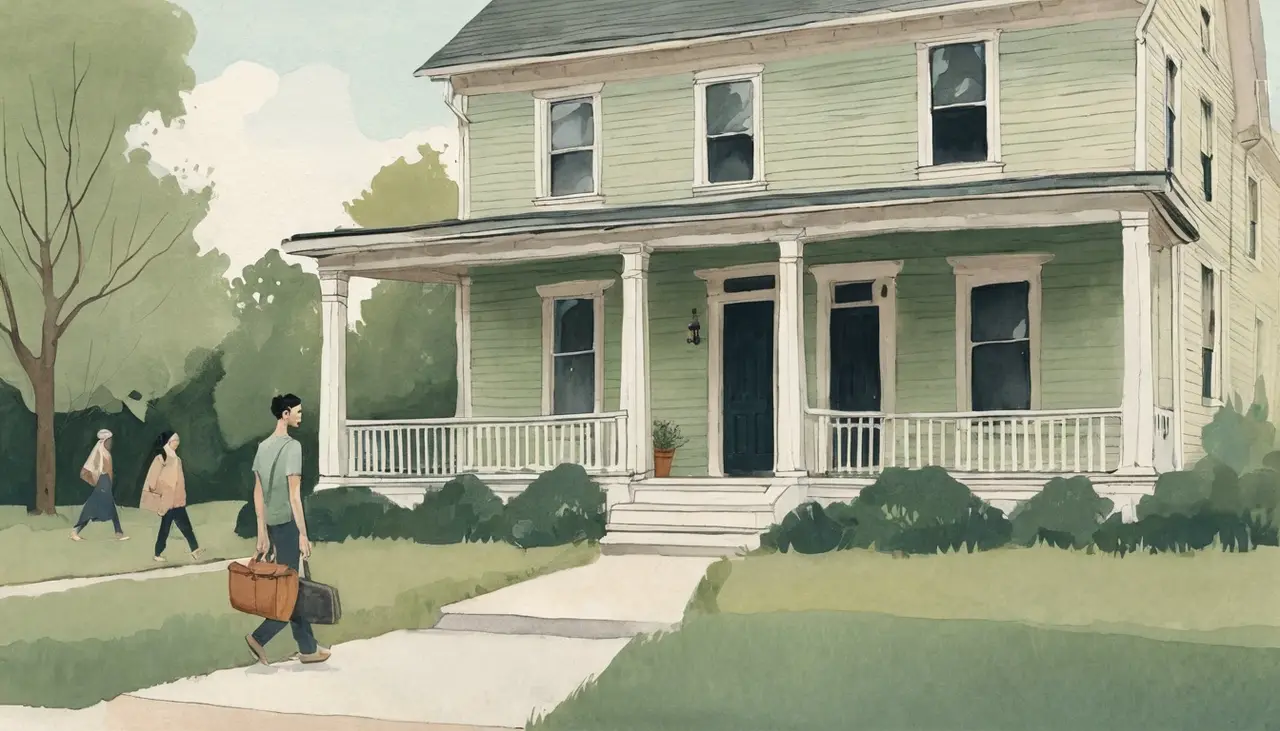
You are barely through the door. Your bag is still on your shoulder, the porch light is doing the thing it always did, and someone you have known since you were fifteen is already reaching into the cooler and holding one out to you before you have said hello. The old shorthand runs faster than you can think. And some part of you had already decided, on the drive in, that taking it was how you say I'm still one of you.
Here is the thing that makes this workable: the pull you feel is not really about the drink. It is about the script — the well-worn path this group walks every time you are together, the one everyone knows by heart. You do not have to blow up the friendship to step off the path for a night. You just need to see the path clearly enough to choose your own footing on it. Call it the First-Night Map: a way of reading the weekend's terrain before it reads you.
Why the old route pulls so hard
Old friendships come with a groove worn into them. The group remembers a specific version of you — the one who closed the bar, opened the next bottle, called the round. That memory is affectionate and heavy at once, and it moves fast: one person says "first round at the old place," another says "like old times," and the plan is made before anyone actually decided anything. A reunion is that same memory with a schedule attached and a name tag on it; if that's the weekend you're facing, drinking at a class reunion when you're cutting back reads the whole arc rather than just the first night.
Researchers who study this split the force into two kinds. There is direct pressure — the drink literally held out to you — and indirect pressure, the quieter tug you feel just from being in a room where everyone else is drinking, as NIAAA's Rethinking Drinking describes it. The direct kind is loud but easy to answer. The indirect kind is the one that closes the bar with you at 2 a.m. because it never asks a question you can say no to. The Map is built to handle both.
The First-Night Map
Five moves. You can run them in your head on the drive in, and you can run them again in the moment. None of them requires a speech.
Scout the terrain before you arrive
A hometown weekend is not one night; it is a Friday, a Saturday afternoon, and a Saturday night, each with its own weather. Decide them one at a time instead of pre-approving the whole trip. Reunions and weddings actually help here — a formal event gives the evening a built-in start and finish you can use as edges. The college-roommate reunion and the holiday visit run hotter, because the group has not been together in years and wants the old shorthand back all at once.
Do it now: before you leave, name the single evening most likely to run long. That is your first-night terrain, and knowing which one it is takes half its power away.
Tell one person you're pacing
Give someone close to you a heads-up before you arrive — "I'm pacing this trip" does the whole job. The exact words matter far less than the fact that one person in the room already knows, so you are not improvising an explanation at the cooler while five people watch.
Do it now: text one trusted friend a single line today. Not the group chat. One person.
Answer the drink, not the friendship
When a drink comes at you the second you walk in, read it as hospitality, not a test. You do not owe the moment a courtroom. Set your bag down, get a glass of water, help carry something in — an early "no, thanks" said fast and light is far easier than one you agonize over, and NIAAA's own refusal guidance is blunt about this: the quicker you answer, the less likely the pressure is to win. Have your line ready before you need it, the way you would rehearse anything you want to sound easy.
Do it now: pick your one sentence now — "I'm good with water for a bit" — so you are not writing it under fire.
Offer a plan, don't just decline the bar
A refusal leaves a hole; an offer fills it. The bar is only the proof of the friendship if nothing else is on the table. Breakfast, a walk, coffee on the porch, a diner at midnight, a pickup game, the old bookstore — any of these keeps the connection active without routing it through the tap. This is how you answer indirect pressure, the tug you cannot say no to: you give the room a second thing to do.
Do it now: have one non-bar plan in your pocket before the first night, ready to say out loud the moment the group starts drifting toward the usual place.
Leave the first night early on purpose
Treat the first night as the strongest stretch of the path — the place the old script has the deepest groove. Leaving before the version of you from ten years ago would have left is not the visit failing. It is you choosing the footing. The group closes the bar; you were there for the part that mattered and went home while it was still good.
Do it now: decide your exit before you arrive — a time, a ride, a reason. An exit you planned sober at noon is much easier to take than one you have to invent at midnight.
When the Map doesn't hold
Some nights the groove wins anyway. You planned the exit and stayed; you had the line ready and took the drink instead. One rough evening is not a referendum on whether you still belong to these people, and it is not proof the whole approach is broken. A single night that ran long is a data point about which part of the script pulls hardest — the first bar, the kitchen before dinner, the porch cooler, the after-hours text — not a verdict on you. If you overdid it, how to restart a cutback week after a bad night picks up exactly there.
It is worth being honest that the Map is for social pull, not for a body that has come to depend on alcohol. If cutting back has ever left you shaky, sweating, or confused when you go a stretch without a drink, that is a medical situation, not a willpower one — stopping suddenly after heavy daily drinking can be dangerous, so plan it with a clinician rather than white-knuckling a weekend. If those symptoms hit, treat them as an emergency: call 911 or go to an emergency room.
What one lighter visit actually shows
Numbers can help you read your own weekend without reading the room. A U.S. standard drink is 0.6 fluid ounces — about 14 grams — of pure alcohol, and NIAAA counts binge drinking as the pattern that brings blood alcohol to roughly 0.08%, often 5 or more drinks for men or 4 or more for women in about two hours. For each day of the visit, the Centers for Disease Control and Prevention (CDC) counts drinking as moderate at 2 drinks or fewer for men and 1 or fewer for women. These are shared ways to describe a pattern, not a line where harm switches on for everyone at once — how much is too much shifts with your body, your history, your sleep, and what else is going on. Use them for your own map, not to score the group.
One lighter visit tends to show two things. The friendship was never only the drinking — that part survives the change. And the old script has specific hot spots, particular moments where the pull is real, which is useful to know before the next trip rather than after it. Some friend groups adapt in a single weekend. Some need the same visit two or three times. Either way, the trip is not a test of whether you still belong.
The quieter obstacle is the story you tell yourself about all this — that needing a plan means something is wrong with you. Stigma is one of the most consistently reported reasons people avoid dealing with alcohol at all, NIAAA notes. Framing it as "I just get wild with old friends" is one version of that. Bringing a map to a hard weekend is not the wild version of you failing. It is a steadier version of you showing up.
So: text one person today, decide which night runs long, and pack one non-bar plan and one early exit. If the old-friend pour still tugs once you are actually standing there, how to handle alcohol cravings and urges is the fuller toolkit. For the related friend dynamics, see how to talk to friends about cutting back and how to handle friends who keep offering you drinks. The friendship is bigger than the route you used to walk. You are just choosing where to put your feet.
This is general education, not medical advice. If daily drinking or old-friend weekends keep outrunning your plan, or you are worried it is unsafe to cut back on your own, talk with a licensed clinician; for a free, confidential referral any time, call SAMHSA's National Helpline at 1-800-662-HELP (4357).
- Social events & holidays
How to Handle Friends Who Keep Offering You Drinks
When friends keep offering you drinks, repeat one flat line instead of re-explaining. Justifying reopens the vote; five moves that hold without a speech.
- Mind & mood
My Husband Is Sober, but I'm Still Angry
Your husband's sobriety can stop new damage without repairing the old damage. Anger may be naming unpaid repair work, not a failure to appreciate recovery.
- Cutting back & moderation
What Is Mindful Drinking? The Practice Behind the Buzzword, Explained
Mindful drinking means deciding when, why, and how much you drink before the room decides for you. The three parts, five concrete moves, and who it fits.
- Understanding your drinking
I Drink Too Much but Not an Alcoholic
You can drink too much without accepting the label alcoholic — both can be true at once. How to look at the pattern instead of arguing with a word.
- Social events & holidays
Drinking at a Wake or Funeral When You're Cutting Back
You can decline the drink and still be there for the goodbye. How to handle the glass at the door, the toast, and the late-night kitchen while cutting back.
- Helping someone who drinks
Can You Go to an AA Meeting to Support a Friend?
You can accompany a friend to an AA meeting if that meeting admits guests. Confirm its rules, agree on your role, and protect what others share.


Be the first to hear when Clero launches.
Join with email only. Clero is still in development, so this is educational content today — not treatment, a prescription request, or medical advice.
First to hear at launchLaunch news only — no spamUnsubscribe anytime