
How to Recover After Sending a Drunk Text (And Stop the Next One)
A calm morning-after guide to drunk text regret, apology scripts, memory gaps, and prevention that still works when judgment is offline.
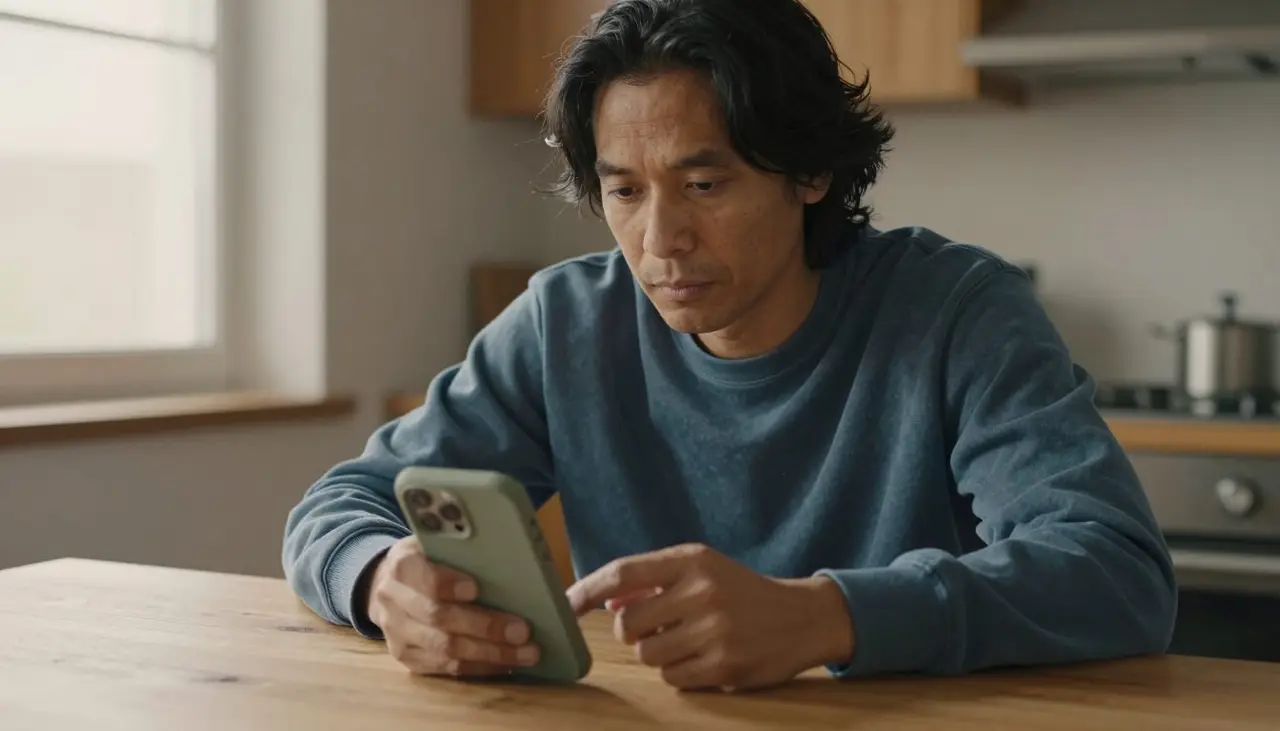
The morning after a drunk text has its own weather. The phone is too bright. The sent bubble is sitting there like evidence. Your brain wants to solve the whole relationship, your reputation, and your drinking pattern before breakfast.
Use a smaller job: read, sort, repair, block the repeat.
That is the whole first pass. Read what you actually sent in daylight. Sort it into cringe, harm, or boundary-crossing. Repair only what needs repair. Then add friction before the next drinking night, because the same late-night setup can recreate the same send button.
The first ten minutes: read, do not spiral
Start with the exact text, not the feeling around it. A message that says "miss you" to an ex is different from a string of angry messages, a professional boundary crossing, or a threat. Shame flattens all of those into one verdict. The text itself usually gives better instructions.
Make three quick categories:
- Cringe: embarrassing, needy, overshared, but not harmful.
- Repair: rude, confusing, unfair, or unfairly timed.
- Boundary: sent to someone who asked for no contact, a work contact, or anyone who may feel unsafe or pressured.
The cringe category often needs time, not more texting. The repair category may need one clean apology. The boundary category usually needs you to stop adding messages.
That distinction matters because the panic move is often the seventeenth follow-up. Do not send the courtroom brief. Do not explain your whole inner life. Do not ask them to make you feel better about what you sent.
The apology that lands
If an apology is owed, keep it short enough that the other person does not have to manage you.
Try this:
I am sorry. I had too much to drink, and that was not fair to send. I understand if you do not want to respond.
That sentence does three jobs. It names the context without using alcohol as an excuse. It owns the impact. It removes the demand for immediate forgiveness.
If the message went to an ex, respect the existing boundary more than your urge to clarify. If it went to a coworker, manager, client, or someone whose trust matters professionally, keep the apology even plainer and do not add romantic, emotional, or self-dramatic detail. If the content involved threats, harassment, or anything that could make someone feel unsafe, stop messaging and consider getting outside help before trying to repair it alone.
Why drunk you hit send
Alcohol does not create a new person, but it does change the filter. NIAAA describes alcohol as interfering with the brain's communication pathways, including functions tied to judgment, speech, memory, and behavior. In plain language: the part of you that normally pauses, weighs consequences, and says "not tonight" gets less useful.
That is why drunk texting can feel so out of character and so familiar at the same time — and why whether drunk people mean what they say is such a live question the morning after. The thought may have existed sober. The veto failed while drinking.
The setting adds fuel. Late night. Loneliness. An old thread. A profile photo. A fight replaying in your head. Alcohol lowers the gate, and the phone puts the person one thumb away.
The useful conclusion is more specific than "I am secretly terrible": this situation is predictable enough to plan around.
If you do not remember sending it
Finding messages you do not remember writing deserves a different level of attention. A memory gap is not proof that you meant nothing by the message, and it is not a shield from repair. But it is also not just ordinary embarrassment.
Clinical research on alcohol-induced blackouts describes how alcohol can block memory formation for events that happen while someone is drinking. The person may still talk, type, move around, and look awake. The memory may simply not store.
If that has happened once, treat it as serious data. If it has happened more than once, read more about what a blackout from drinking is and consider telling a clinician plainly: "I found messages I do not remember sending." That is a clear enough reason to talk.
Prevention that works at 11pm
The best prevention plan is built while sober for the version of you that will not be making careful decisions later. If you are actively cutting back on drinking, drunk texting when you're cutting back is the fuller build-out — three kinds of distance to set up before the night speeds up.
Use friction, not heroics:
- Move the thread: archive the person you text when drinking, or remove the shortcut from your home screen.
- Change the phone rule: put the phone in another room once drinking starts, or ask a trusted person to hold it during the stretch that usually gets messy.
- Pre-write the choice: "If I want to text after two drinks, I wait until morning." Put that sentence where you will see it.
- Name the drink pattern: if drunk texting happens only after a certain number of drinks, the number matters more than the contact list.
- Plan the lonely hour: if the texts happen when the night winds down, schedule the last twenty minutes before bed with something that does not involve scrolling old conversations.
None of this requires becoming perfect. It just makes the risky action less available at the hour your filter is weakest.
When the pattern is about drinking, not texting
A one-off drunk text can be a bad night. A recurring drunk text pattern is usually telling you something wider: alcohol is changing your judgment in a way that costs you trust, sleep, dignity, or relationships.
NIAAA's hangover resource notes that hangovers can include anxiety and irritability, and that time is what resolves a hangover. That matters because the morning-after shame can feel like emergency truth even when your body is also in a loud, depleted state.
Still, do not dismiss the pattern just because the feeling softens by dinner. Write down what happened, how much you drank, who you contacted, and whether you remembered it. If the same kind of damage keeps showing up, the variable worth changing may be the drinking context.
FAQ
Should I delete the drunk text?
You can delete it from your phone if seeing it keeps you spiraling, but deleting your copy does not undo what the other person received. Read it once first so you know whether repair is needed.
Should I apologize right away?
If there was real harm, a short apology can help. If it was only embarrassing, waiting a few hours may keep you from sending another message out of panic.
Why do I keep drunk texting my ex?
The ex may be the emotional target, but alcohol is often the accelerant: lower judgment, late-night loneliness, and easy phone access combine into a repeatable loop.
If the shame after a message turns into thoughts of self-harm, hopelessness, or feeling unsafe with yourself, call or text 988; if anyone is in immediate danger, call 911.
This article is general education, not therapy, legal advice, crisis care, or a substitute for a clinician who knows your drinking pattern.
- Understanding your drinking
How to Respond to Drunk Calls and Texts From a Loved One
A drunk call or text does not prove safety. Separate crisis signs from circular talk, end nonurgent exchanges, and set contact times later.
- Mind & mood
Alcohol and Shame After Drinking
Shame is loud, but it is not always accurate. How to separate the useful information inside morning-after regret from the story that keeps you hiding it.
- Hangovers & the day after
Drinking and Your Memory the Next Day
How alcohol can affect memory formation, why the next day can feel foggy, and when repeated memory gaps should be treated as a safety signal.
- Quitting & sobriety
One or Two Weeks Drinking After Four Months Sober
A calm restart letter for someone who drank again after four sober months: safety first, shame second, and the sober stretch still counts as information.
- Quitting & sobriety
How To Stay Sober
Staying sober usually works better as a repeatable support structure than as a daily test of character. A practical, non-diagnostic guide to common pressure points and safer next steps.
- Cutting back & moderation
How to reduce drinking alcohol on your own?
You can reduce drinking on your own by running it as a one-week experiment: log a baseline, change one variable, and count in standard drinks — not willpower.


Be the first to hear when Clero launches.
Join with email only. Clero is still in development, so this is educational content today — not treatment, a prescription request, or medical advice.
First to hear at launchLaunch news only — no spamUnsubscribe anytime