
Drunk Texting When You're Cutting Back on Drinking
Drunk texting happens because alcohol removes the pause before send — and you can rebuild it. Three kinds of distance to set up sober, before the night speeds up.
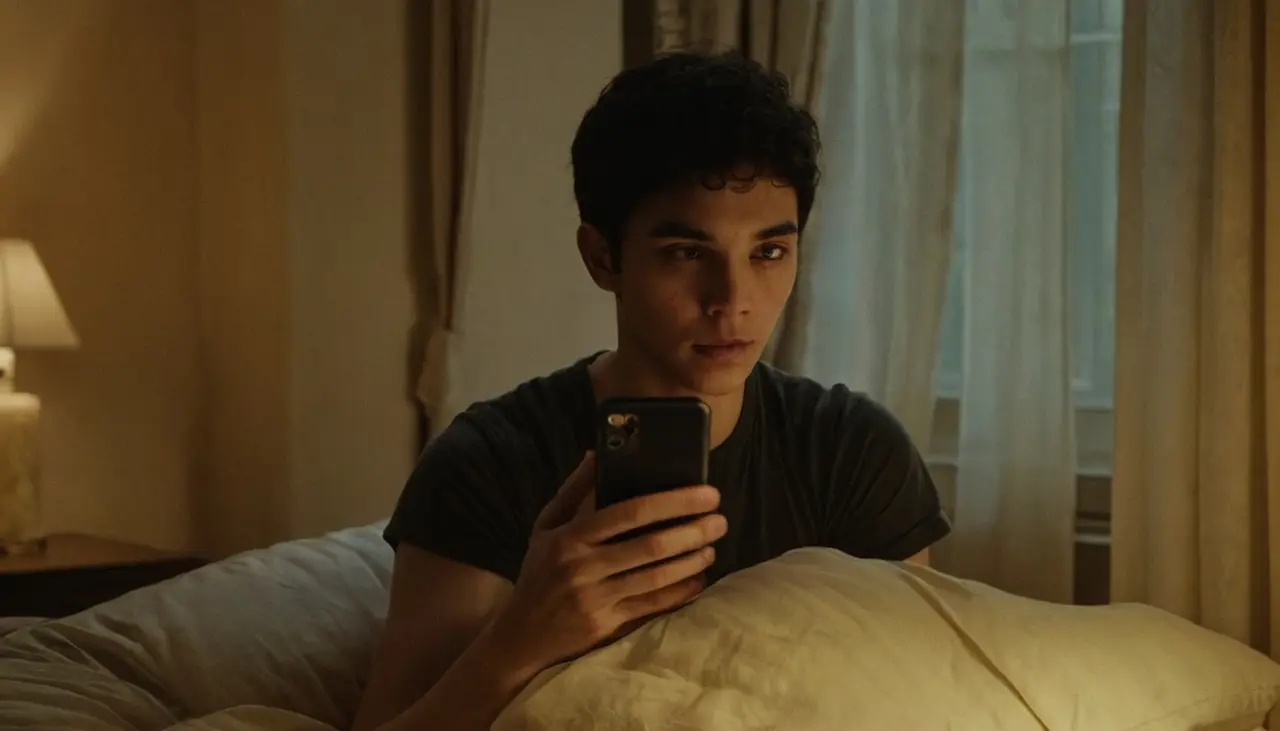
It's a little past midnight. You've had a few, the room has gone soft at the edges, and your thumb is already hovering over a name you swore you'd leave alone. The message half-writes itself. It feels obvious, even urgent — like something that has to be said right now, tonight, before the feeling passes.
Then it's morning, and the feeling has very much passed, and the thread is still there.
If that loop keeps repeating, here's the reframe worth carrying: the problem isn't that you're careless or need more self-control. It's that alcohol quietly removes the pause you normally keep between "I want to say this" and "sent" — and you can put that pause back with distance, before the night speeds up. That's the whole idea here. Call it the Distance Kit: three kinds of space you set up while sober, so the drunk version of you has to travel a little further to reach the send button.
Why the send button gets so easy
When you're sober, there's usually a beat between a thought and a message. Something checks it — timing, tone, the fact that it's your boss, the fact that you'll have to look at this person on Monday. That beat isn't willpower exactly. It's more like a bouncer at the door, quietly turning away the messages that won't age well.
Alcohol dials that bouncer down. A drink or two lowers the guard on impulses generally — which is part of why the same late-night window that produces the text to your ex also produces the three-paragraph email, the public comment, the voice note, the cart full of things you didn't need. It's one loosened gate, not a dozen separate failures of character.
Two things worth knowing about the "how much." A U.S. standard drink is 0.6 fluid ounces — about 14 grams — of pure alcohol, which is one 12-ounce regular beer, a 5-ounce glass of wine, or a 1.5-ounce shot. And NIAAA counts binge drinking as the pattern that pushes blood alcohol to about 0.08 percent — often 5 or more drinks for men, or 4 or more for women, in roughly two hours. Those aren't lines where the send button switches on; people vary, and the same person varies from night to night. They're just a way to notice a pattern. If the risky sends cluster after a particular drink count, that count is useful information about where your own gate loosens.
The Distance Kit
The kit has three parts, because there are three kinds of distance you can build, and different nights need different ones. Set them up sober. The late-night version of you should not be the one designing the safeguards — that's the whole point.
Put the phone out of reach
The simplest distance is physical, and it's the one people skip because it feels too obvious to work. It works anyway. When the second or third drink starts, the phone goes in another room. Charge it across the apartment overnight instead of on the nightstand. The friction of standing up, walking over, and unlocking it is often enough to let the urge crest and fall on its own.
Do it now: pick the spot the phone will live tonight, before you pour anything. A drawer, the kitchen counter, a jacket pocket by the door. Somewhere that is not your hand.
Slow the apps down
The second distance is a few seconds of drag, deliberately added. Log out of the one or two services that are the real trap on drinking nights — the messaging app, the dating app, wherever the ex or the boss lives — so that sending anything means logging back in first. Turn on do-not-disturb at a fixed clock time so the phone stops lighting up and inviting you back. Use whatever built-in screen limit your phone offers; you don't need a special tool, just something that makes the fast thing slightly slow.
Do it now: log out of the single worst offender right now, while it's easy. Future-you at midnight will not want to type the password, and that's exactly the friction you're buying.
Reroute the message
The third distance is a detour for the thing you're burning to say. The urge to say it is real; it's the audience that's the problem at midnight. So give the words somewhere to go that isn't the thread — a notes app, a scrap of paper, a draft to yourself. Write the whole thing. Get it out. Then read it in the morning, when the bouncer is back on duty, and decide.
A one-line rule makes this cleaner: if you wouldn't send it at 8 a.m., it doesn't go tonight. And if one specific person is the repeated target, distance can be a person too — ask a friend to be the one you text instead, the "talk me out of it" contact for drinking nights.
Do it now: pick the person or the notes app that catches the message tonight, so there's somewhere for it to land that isn't the send button.
When the kit doesn't hold
Some nights you'll send it anyway. The phone was in your hand, the drink hit harder than usual, one gap in the wall was enough. That's not proof the approach failed — it's data about which distance to reinforce. Maybe the phone-across-the-room step is the one that actually matters for you. Maybe it's a single person, and the real fix is asking a friend for backup. Maybe work messages need a stricter rule than social ones, because the stakes are different.
If you already hit send, the only general line worth offering is a short one: "Sorry for the late message." Anything past that — the apology to an ex, what to do about an email to your boss, whether to say more or leave it — depends entirely on the relationship and what was actually sent, and no article can script it for you. Keep the first move small and specific to your situation.
There's also a quieter payoff worth watching for. A lot of people find that when the drinking shrinks, the late-night sends shrink with it — sometimes dramatically. If a couple of lighter weeks empties out the outbox, that tells you something clarifying: the send problem was following the alcohol more than it was following your personality. That's not a small thing to learn about yourself.
For the moments the urge to pour is what kicks the whole loop off, how to handle alcohol cravings and urges is the fuller toolkit. If the morning brings more guilt than the text seems to warrant, why do I feel guilty the day after drinking sits with that. And if a specific fight is usually the spark, how to handle cravings after an argument is the closer read.
One thing to carry out
Before the next drinking night, pick one piece of the kit and set it up now, sober: phone in the other room, logged out of the worst app, or a friend on standby. One is enough to start. You don't have to shrink your whole social life or swear off the phone — you just have to add a little distance before the night gets fast, so the message has further to travel than your thumb wants it to.
One line worth keeping separate from all the friction tricks: if drinking and the messages that follow keep causing real harm, or if stopping feels genuinely hard, that's past the reach of any phone habit — talk with a licensed clinician who can look at the whole picture. Alcohol withdrawal can also turn genuinely dangerous: if going without a drink has ever brought on shaking, sweating, a racing heart, or confusion, treat that as a medical emergency and call 911 or get to an emergency room. And if a late night ever tips toward thoughts of hurting yourself, you don't have to wait it out alone: call or text 988, the Suicide and Crisis Lifeline, or 911 if you're in danger right now.
This is general education, not medical, legal, or relationship advice. If the late-night sends keep tracking the drinking no matter how much distance you add, that pattern is worth bringing to a clinician who knows your situation — and the free, confidential SAMHSA helpline at 1-800-662-HELP can point you toward local support if you don't know where to start.
- Social events & holidays
How to Handle FOMO When You're Cutting Back on Drinking
FOMO is rarely the whole night — it is the people, the place, the drink, or the feeling. Name which corner is hot, give it one small move, and set the phone down.
- Social events & holidays
How to Handle Thanksgiving When You're Cutting Back on Drinking
Thanksgiving is an all-day drinking cue: plan the timeline, family lines, and first sober holiday pressure before the table fills.
- Social events & holidays
How to Handle Summer BBQs and Cookouts When You're Cutting Back
A cookout has no clock, so bring your own: pick your first drink, your spot, your line, and your exit before you go. Decide once, not forty times.
- Social events & holidays
Drinking at a Wake or Funeral When You're Cutting Back
You can decline the drink and still be there for the goodbye. How to handle the glass at the door, the toast, and the late-night kitchen while cutting back.
- Family & relationships
When a Friend Quietly Stops Drinking Too While You're Cutting Back
You don't have to say anything when a friend quietly stops drinking too — their reason is theirs. What one neutral sentence offers, and how their example helps.
- Cutting back & moderation
Dry January When You Slip
One drink does not delete the days you already did. Salvage what they taught you, count the slip in plain drinks, and pick the next hour, not the next month.


Be the first to hear when Clero launches.
Join with email only. Clero is still in development, so this is educational content today — not treatment, a prescription request, or medical advice.
First to hear at launchLaunch news only — no spamUnsubscribe anytime