
Alcohol and Vivid Dreams When You Cut Back
Vivid dreams after cutting back are usually REM rebound, not withdrawal. Why the dreams get so loud, how long the phase tends to last, and the signs that need care.
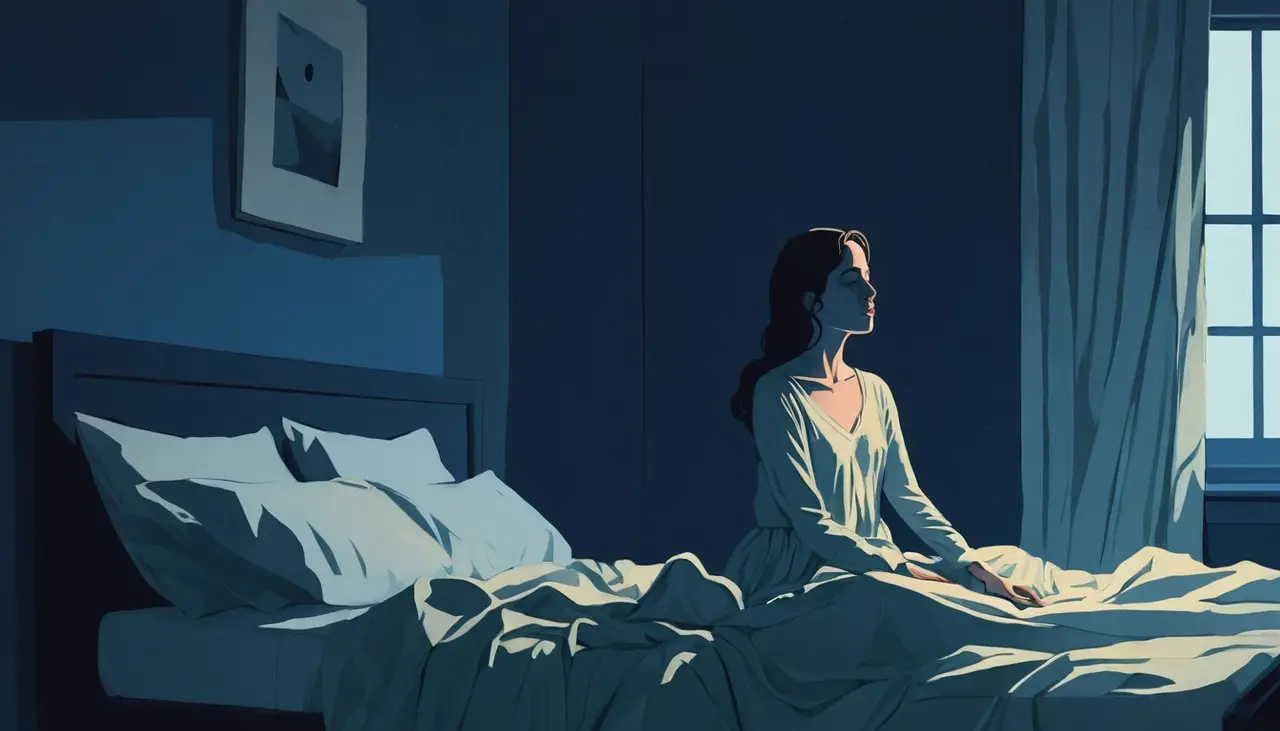
Cut back on alcohol and your dreams can go from barely-there to cinematic almost overnight — long, strange, emotional, sometimes about drinking itself. It feels like something has gone wrong. Usually it hasn't. The most likely explanation is a well-documented shift in how your sleep is built, and it has a name: REM rebound.
What alcohol does to the dreaming stage of sleep
Sleep isn't one flat state. You cycle through stages all night, and one of them — REM, the stage where most vivid dreaming happens — is the one alcohol interferes with most.
A drink or two before bed makes you drowsy fast, which is why alcohol has a reputation as a sleep aid. But that sedative pull only covers the first part of the night. In a peer-reviewed review of alcohol and sleep, researchers describe how that early drowsiness is paid back later: the second half of the night turns lighter and more broken up, so overall sleep quality drops even when the total hours look the same on paper.
REM takes a specific hit. Drinking near bedtime suppresses REM early in the night, and the brain doesn't just let that debt sit. A separate review of disturbed sleep in people who drink describes what happens next: REM comes back harder in the second half of the night — a rebound that the review links to intense dreaming, nightmares, and a more fragmented night. So on drinking nights, the dream-heavy stage gets pushed down. When you drink less, it springs back up. That spring-back is the vivid-dream phase people notice when they cut back.
The same review notes that the body adjusts to alcohol's sleep-making effect within roughly three to seven days of regular use — meaning the drowsy payoff fades quickly while the disruption to REM sticks around. That's part of why the dreams can feel loudest right when the drinking pattern changes, before sleep has resettled into a steadier shape.
Why the dreams feel so loud, and what that isn't
The dreams in this phase can be a lot: full storylines, people you haven't thought about in years, impossible places, conflict, an emotional aftertaste that follows you into the morning. Drinking dreams — dreams where you're back to pouring one — are common enough in this window that they surprise people. Odd does not mean meaningful. It mostly means the architecture of your night is rearranging itself, and REM is claiming back the space alcohol was taking.
One distinction is easy to blur and worth getting right: vivid dreams are not the same thing as alcohol withdrawal. They're a sleep-quality shift, not a medical emergency.
Withdrawal is a different event with a different body to it. MedlinePlus describes alcohol withdrawal as the symptoms that can appear when someone who has been drinking heavily on a regular basis suddenly stops — tremor or shakiness, sweating, a racing heart, hallucinations, seizures, and severe confusion. Those are not "loud dreams." If you stopped heavy daily drinking and you're shaking, drenched, seeing things, feverish, or badly confused, that is a reason to call 911 or go to an emergency room now — MedlinePlus flags seizures, fever, severe confusion, hallucinations, and irregular heartbeats as emergencies specifically. And if a stretch without alcohol has ever brought on a seizure before, don't plan the next cutback alone; talk with a licensed clinician about doing it safely first.
How much you were drinking still shapes the picture
There's no clean formula where a certain number of drinks produces a certain volume of dreams. But the size of the rebound tends to track with how much and how long the drinking suppressed REM in the first place — heavier, more nightly drinking gives REM more to push back against, so the swing can feel bigger. Amount and duration both matter, and neither lands the same way in two different people. Body size, sleep history, stress, other medications, and whether you already sleep poorly all bend the experience. There is no drink count that switches this on for everyone or spares everyone below it.
If you're trying to compare your drinking nights against your lighter ones honestly, it helps to count in real servings. NIAAA defines a U.S. standard drink as 0.6 fluid ounces, or 14 grams, of pure alcohol — a rough common yardstick, not a safe-versus-harmful line. A tall pour of wine can quietly be two.
One more thing worth naming, because it changes what "give it time" means: for people whose drinking has been heavy and long-standing, sleep trouble often doesn't clear in a week. A framework on alcohol use disorder and sleep describes how disturbances like taking longer to fall asleep, waking through the night, and reduced deep sleep can persist well into a stretch of not drinking rather than resolving right away. Vivid dreams on cutback are usually a passing phase; a sleep problem that drags on for weeks is worth taking to a clinician rather than waiting out.
What tends to help while it settles
None of this needs a product or a protocol. A few plain moves fit what's actually going on:
- Don't read every dream as a message. The rebound is a mechanical process, not your subconscious filing a complaint. Treating a wild night as data about your sleep, not a verdict on your choices, takes most of the sting out of it.
- Give the room the easy wins. Cool, dark, and quiet helps REM-heavy sleep feel less jarring, and a roughly consistent bedtime gives the whole system a rhythm to resettle into.
- When a dream jolts you awake at 3 a.m., don't try to solve it. Sit up for a moment, drink some water, and go back to bed without replaying it. Chasing the meaning of a dream at 3 a.m. mostly buys you a longer wakeful stretch.
- Watch the trend, not the night. The useful question isn't "was last night weird" — it's whether, over a couple of weeks, your sleep is getting steadier and more rested as it drifts away from being alcohol-shaped.
For the wider sleep picture, drinking less for better sleep and why am I so tired after drinking go deeper, and if the evenings themselves are the hard part, how to build an evening routine without alcohol is a practical place to start.
When to bring it to a clinician
Most cutback dreams are a phase that quiets as sleep resettles. Some things, though, are worth a conversation rather than patience: nightmares that keep recurring and bleed into your days, dreams that replay real trauma, sleep paralysis with hallucinations, or any dream content about harming yourself. If it's the last one — if you wake up and don't feel safe with yourself — you can reach the 988 Suicide and Crisis Lifeline any time by calling or texting 988.
There's also the version of this that isn't really about dreams at all: sleep that stays broken for weeks, or a heavy daily drinking pattern you're not sure how to change safely. Both belong in a conversation with someone who can look at your history. If you don't have a clinician and want confidential help finding substance-use support, SAMHSA's National Helpline (1-800-662-HELP) is a free, confidential referral line open 24/7.
A few common questions
Are vivid dreams after cutting back normal?
They're a common, well-described pattern. Alcohol suppresses REM sleep, and REM rebounds when the drinking eases off, which is when the vivid dreams tend to surface. Common doesn't mean every intense dream is nothing — use the safety signs above — but on its own, the return of loud dreams is usually the rebound doing exactly what it does.
Are drinking dreams a sign I'm about to relapse?
Not by themselves. A dream about drinking can just be part of the louder-dream window; the sleeping brain reruns familiar material, and alcohol was recently a big part of yours. What matters more than the dream is what happens when you're awake — whether daytime urges or distress are building, and whether you have support for those.
How long does the vivid-dream phase last?
For many people the dreams are loudest in the first week or two and settle as sleep restructures, but there's no guaranteed calendar — it varies with how much and how long you drank and with your own sleep. If the dreams stay severe, keep recurring, or wreck your days, that's the point to talk to a clinician instead of waiting.
This is general education, not a diagnosis of your sleep or your drinking — any decision about changing a heavy daily drinking pattern belongs in a conversation with a clinician who knows your history.
- Quitting & sobriety
Delirium Tremens: What It Is and How to Treat It
A 911-first explanation of delirium tremens, why DTs are a medical emergency, and why treatment belongs in clinical care.
- Quitting & sobriety
How do I stop drinking?
Stopping drinking starts with safety, not willpower. If you drink heavily every day or have had withdrawal symptoms, ask a clinician what level of care is safest before you stop suddenly. If you are medically stable, the next step is to choose support that matches your goal, privacy needs, and risk level: therapy, peer support, medication education, primary care, telehealth, outpatient treatment, or a higher level of care.
- Quitting & sobriety
The Dangers of Quitting Alcohol Cold Turkey
Quitting alcohol cold turkey can be dangerous for a heavy daily drinker. The withdrawal signs that need 911, and what to ask a clinician before you stop.
- Quitting & sobriety
Why Alcohol Withdrawal Can Get Worse Each Time
A safety-first explanation of alcohol withdrawal kindling, repeated quit-restart cycles, and when withdrawal symptoms need medical help.
- Quitting & sobriety
Why Can't I Sleep When I Stop Drinking?
Why sleep can feel worse after stopping or cutting back on alcohol, when it may point to withdrawal risk, and what to track next.
- Body & physical health
Alcohol and Weight Changes
No page can tell you whether alcohol changed your body, only what to watch. Count standard drinks, note the calories in the glass, and read what moves with them.


Be the first to hear when Clero launches.
Join with email only. Clero is still in development, so this is educational content today — not treatment, a prescription request, or medical advice.
First to hear at launchLaunch news only — no spamUnsubscribe anytime