
Alcohol and Brain Fog
Brain fog after drinking is mostly a wrecked night of sleep, not alcohol still in your blood. Why it lingers some mornings, and what else stacks into it.
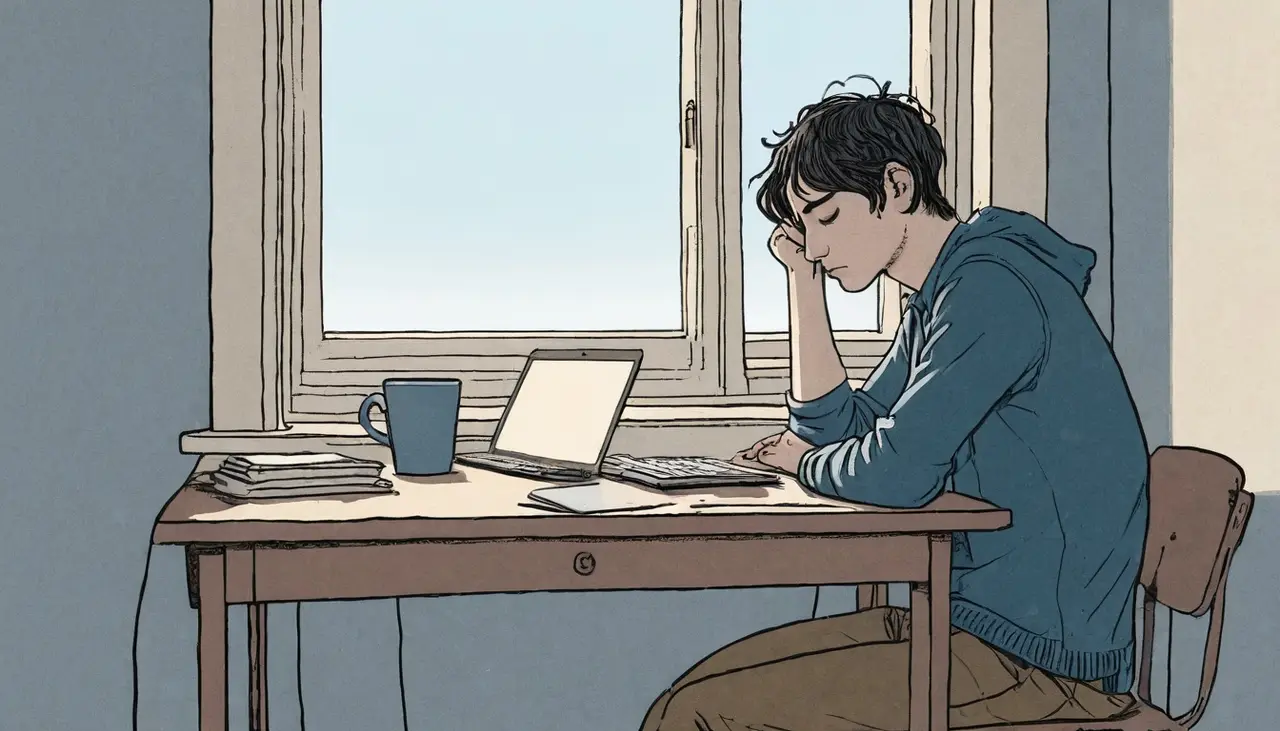
Brain fog after drinking is mostly the bill for a wrecked night of sleep, not the alcohol still in your blood the next morning. The dullness you feel at 10 a.m. is largely sleep debt and a dehydrated system wearing a disguise.
Brain fog is a plain description: a mind moving like it is wading through wet sand. You reread the same sentence. You reach for a word that should be right there. You are present but not sharp.
Alcohol can affect sleep quality and hydration overnight. Your brain does its repair work while you sleep, and it keeps water on hand to run that work. Alcohol shortens and roughens that overnight stretch even when you were in bed for eight hours. So you wake up having spent the night without banking the rest. That is the lag. Not the drink in your system. The recovery you did not get.
The trade is documented. A review in Current Opinion in Psychology describes alcohol's sedative effect speeding sleep onset and then being paid back later in the night with lighter, more broken sleep, so quality falls even when total hours look normal. Work published in Substance Abuse fills in the 3 a.m. part: drinking near bedtime suppresses REM sleep early, and REM rebounds in the second half with vivid dreams and a fragmented stretch of sleep you half-remember.
That is also why the fog tracks with some nights and not others. One heavier night overloads the repair window once. A run of moderate-looking nights does it again and again, so the dullness never fully lifts, and once drinking has slid into the evening routine the fog stops feeling like an event and starts feeling like baseline.
It helps to know what counts as heavier, and the answer is not a guess from the glass. The CDC describes a U.S. standard drink as 0.6 fl oz, or 14 grams, of pure alcohol. A large glass of wine, a strong cocktail, or a high-strength beer can quietly be more than one. NIAAA defines binge drinking as a pattern that typically brings blood alcohol concentration to 0.08% or higher, often 5 or more drinks for males or 4 or more for females in about 2 hours. Treat that as a marker for the kind of night that hits the recovery window hardest.
The public-health limits are a reference point, not a clear-morning guarantee. The 2020-2025 Dietary Guidelines for Americans suggest adults of legal drinking age who choose to drink hold to 2 drinks or less in a day for men and 1 or less for women. Those are population numbers. What the fog tracks is amount and how many nights in a row, filtered through your sleep, your hydration, and your body size.
The timing is the tell. NIAAA puts hangover symptoms at their worst around the point blood alcohol returns to about zero, lasting 24 hours or longer. The dull morning arrives after the alcohol has gone, not while it is still in you. NIAAA also notes attention, decision-making, and muscle coordination can be impaired during that stretch, which is the part that counts if you are driving or running machinery before lunch.
Alcohol is rarely the only thing in the fog
Most people want one clean cause. There isn't one.
The same fog follows poor sleep with no alcohol at all. Stress does it. So do anxiety, dehydration, a skipped meal, illness, a new medication, or the ordinary mental load of a hard week. They stack, and brain fog has no single fingerprint. You cannot reason backward from the symptom to one cause.
So the useful question is narrower than "what is wrong with me?" It is this: does the fog reliably follow drinking? If the same haze keeps showing up after the same kind of night, that is real signal. If the fog is just as bad on weeks you barely drink, alcohol is only one input, and something else deserves a look.
This is also why there is no "day 30" promise. The best available shape of it comes from a systematic review of longitudinal studies in adults diagnosed with alcohol use disorder: basic processing speed tended to improve within about a month without alcohol, most measured functions within 6 to 12 months, and some took considerably longer than that. Those are group averages from a clinical population, not a countdown for your mornings. Some people notice the fog ease quickly when drinking gets lighter. Some find the alcohol was only part of it, and sleep, stress, or a health issue still needs attention.
The deal, stated straight
What you gain from lighter nights: a better shot at the overnight repair your brain runs anyway. What you give up: nothing the fog was paying for. What is genuinely unknown: how fast it lifts for you, and whether alcohol was the whole story.
None of this needs a supplement, a nootropic (a pill sold as a brain booster), an electrolyte brand, or a hangover cure. NIAAA is flat about the shortcut: no remedy has been scientifically proven to work, and there is no way to speed up the brain's recovery. Time does that part. The lower-risk moves come straight out of the mechanism.
Count, do not guess. Track standard drinks instead of eyeballing glass size, so a "couple of drinks" does not quietly become four. You cannot see a pattern you are not measuring. If you would rather keep it off your phone, how to track your drinking without an app keeps the note simple.
Watch sleep on the same nights you watch drinks. Note how long and how well you slept right next to what you drank. The fog lives in that overlap.
Protect the recovery window. After a heavier night, drink plain water, push the most demanding work later in the day, and give the next night a real chance to be quiet and early.
Compare, do not chase a miracle morning. Run a test: for two weeks, compare the mornings after drinking with the mornings after not. That keeps the question attached to your actual life instead of an internet timeline. For a fuller version, how to tell if cutting back is working walks through it.
Where the line is
Most foggy mornings are a rough recovery window. Some are not, and two of those are not appointments — they are 911.
One is a head injury while drinking. Call 911 or go to an emergency room if someone loses consciousness, vomits repeatedly, has a seizure, or gets more confused rather than less after hitting their head. Alcohol hides those early signs by making grogginess look expected. Do not wait for morning.
The other is alcohol overdose, which gets mistaken for sleeping it off. NIAAA's critical signs: confusion or stupor, impossible to wake, vomiting, seizures, clammy skin, breathing gone slow — fewer than 8 breaths a minute, or 10 or more seconds between them. Call 911 without waiting for the rest of the list. NIAAA is blunt that someone who has passed out can die, and that cold showers, coffee, and walking them around do not reverse an overdose and can make it worse.
The rest is a conversation. Talk with a clinician if confusion does not clear, if memory loss worries you, if blackouts happen, if someone else notices changes in your thinking, or if you have neurological symptoms you cannot explain — numbness, tremors, trouble with balance or speech. Talk with a clinician before stopping suddenly if you drink heavily every day.
Stigma makes people quietly minimize a pattern they would otherwise raise. NIAAA names stigma as one of the most consistently reported barriers to seeking help for alcohol-related concerns. The gap shows up in the numbers: NIAAA estimates that in 2024 only about 7.6 percent of people ages 12 and older with a past-year alcohol use disorder received any treatment for it. Most of that gap is not treatment tried and rejected. It is a conversation that never starts. A licensed clinician is one confidential way to start it: someone who can hear what your mornings look like and, if the drinking itself needs treatment, talk through the options with you.
The fog is mostly the morning reading out what the night took from your sleep and your reserves. You do not need a perfect explanation to start watching whether it lifts when your nights get quieter.
For related physical patterns, see why am I so tired after drinking and feeling off balance the day after a heavy night. If the emotional side is louder than the cognitive one, alcohol and anxiety the next day may fit better. And if the focus question starts the night before — mid-session, controller in hand — does alcohol improve or hurt your focus while gaming takes that one head-on.
FAQ
Is brain fog after drinking normal?
It is common, and common does not mean harmless. Most of it traces to disrupted sleep and hydration overnight. Fog that lingers or worries you is worth raising with a clinician.
Will cutting back make my focus sharper?
It may, if alcohol is a real part of your pattern, because lighter nights give your overnight recovery a better chance to work. The size and speed of the change vary from person to person. Track your own before-and-after rather than expecting a fixed deadline.
Should I take something for alcohol brain fog?
Nothing you can buy replaces the overnight recovery you skipped. Ask a clinician or pharmacist before adding any medicine or supplement, especially with alcohol in the picture.
Education, not medical advice: nothing here diagnoses your fog. A licensed clinician who knows your history can.
- Quitting & sobriety
What Happens When I Stop Drinking? A Realistic Look at the First Weeks
A realistic first-weeks timeline for sleep, mornings, energy, focus, blood pressure, and withdrawal safety after stopping alcohol.
- Hangovers & the day after
Why Am I Clumsy and Off Balance the Day After Drinking?
Feeling clumsy or off balance the day after drinking is real — dehydration, low blood sugar, and broken sleep all dull coordination. What helps, and when to worry.
- Body & physical health
Why Do I Pee All Night After Drinking Alcohol?
Alcohol has you peeing all night two ways: stronger drinks raise urine output for a few hours, and lighter sleep wakes you when a full bladder usually wouldn't.
- Body & physical health
Why You Get Sugar Cravings After Drinking Alcohol
Sugar cravings after drinking are mostly mechanical: blood sugar dips, the liver puts alcohol first, and the brain reaches for a fast reward. What helps next day.
- Hangovers & the day after
Why Am I So Hungry the Day After Drinking?
Ravenous the day after drinking? Alcohol drops blood sugar, disturbs hunger hormones, and cuts deep sleep — a real biological push to eat, not weak willpower.
- Body & physical health
Alcohol and Cancer: What the 2025 Advisory Says
Alcohol is a causal cancer risk factor, per the 2025 Surgeon General's advisory: seven cancer types, no safe threshold. Which ones — and what cutting back changes.


Be the first to hear when Clero launches.
Join with email only. Clero is still in development, so this is educational content today — not treatment, a prescription request, or medical advice.
First to hear at launchLaunch news only — no spamUnsubscribe anytime