
Hobbies to Replace Drinking When You Cut Back
A category-level guide to finding low-pressure activities that can fill the time, hands, and attention alcohol used to occupy.
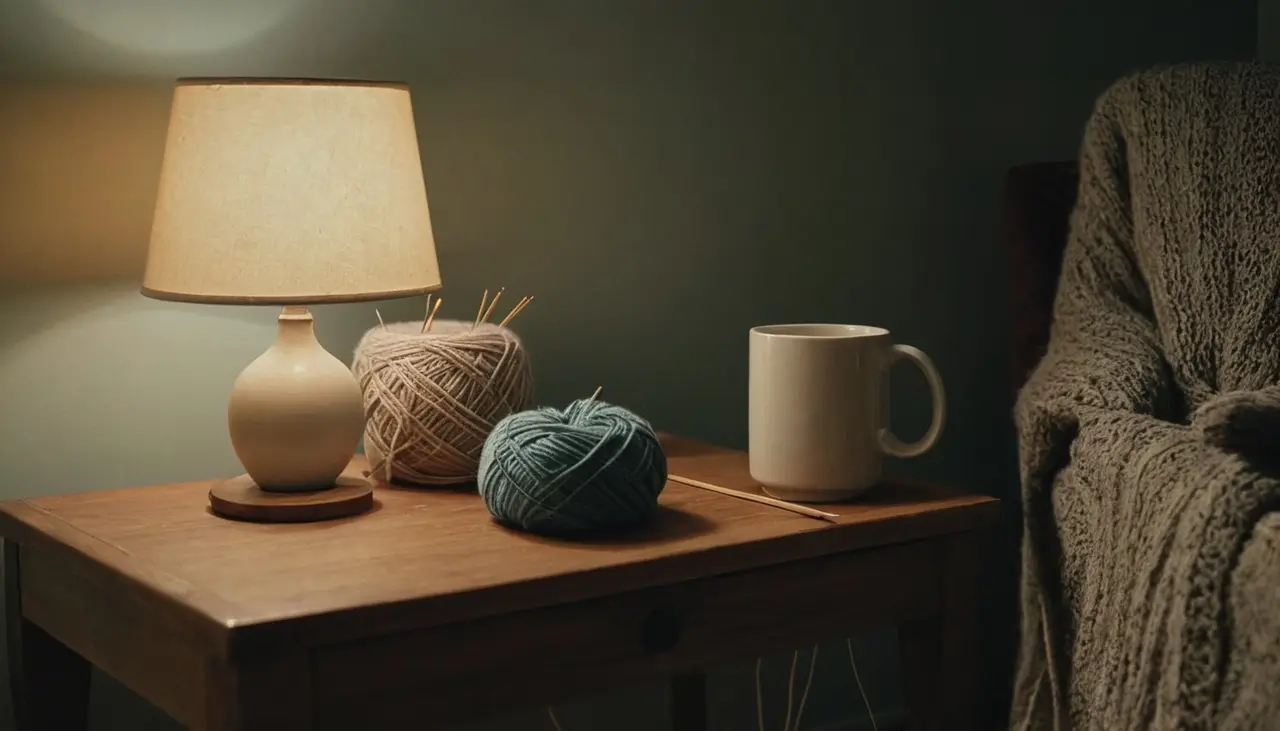
It's a little after seven. Dinner's done, the dishes are stacked, and there's a gap in the evening where the first pour usually goes. Your hands know the routine better than you do — the fridge, the glass, the couch, the phone. Tonight you're trying not to, and the strange part isn't the craving. It's the sheer amount of empty time and empty hands the drinking used to cover.
That gap is the real problem to solve, and it's a solvable one. You don't need a new identity or a five-year plan. You need something to put in your hands and your attention when the old routine comes knocking — and it can be almost embarrassingly small.
Call it the Empty-Hands Fix. The idea is plain: drinking wasn't just the alcohol. It was a thing to hold, a place to point your attention, and a way to close out the day. Take the drink away and all three of those jobs open up at once. Fill them on purpose, and the pour stops being the automatic answer to "what now?"
Why an empty evening pulls you toward the pour
A drinking habit runs on a loop that's older than any decision you make about it: a cue, a routine, a reward. The cue is usually a time or a feeling — seven o'clock, the after-work slump, the quiet that lands once the day's demands are done. The routine is the pour. The reward is relief, or just the sense that the evening finally started.
The catch is that the cue doesn't disappear when you decide to cut back. Seven o'clock still arrives. The slump still lands. What changes is only that the usual routine is off the table, so the loop sits there half-finished, humming, waiting for something to complete it. That restless, itchy feeling isn't weakness — it's an unfinished loop looking for its next move.
This is also why willpower alone tends to run thin by week two. Fighting a cue with gritted teeth leaves the loop open and lets it keep asking. Giving it a different routine closes it. That's the whole trick, and it's why brief, practical changes to what you do carry real weight — the U.S. Preventive Services Task Force gives brief behavioral counseling a grade B recommendation precisely because small, structured changes are associated with people drinking less over the following months.
So the Empty-Hands Fix isn't about finding a hobby you love. It's about handing that open loop something to close on before the pour does.
Why swapping actually works
There is a research-backed reason a replacement can work better than a private lecture to yourself.
A 2019 systematic review describes an inverse relation between substance-free reinforcement and substance use. Put plainly: when the alcohol-free parts of life are more rewarding, drinking tends to be lower. The same review reports that people asked to increase alcohol-free activities they enjoyed, such as exercise or creative activities, reduced drinking about as much as people asked directly to decrease drinking.
That does not mean a puzzle, class, walk, or instrument cures a drinking pattern. It means the open loop needs a real reward, not just a rule. If the evening has no satisfying second answer, the pour keeps acting like the only answer.
This is also why the emotional sentence matters: wanting to stop drinking while still enjoying it is not a contradiction. The enjoyment is part of the mechanism. The task is to make the rest of the evening worth something too.
Match the tool to the hole
Try one move per corner. Each one fills a different part of what the drink used to do.
Give your hands a job
The first thing a drink does is occupy your hands. So start there, with anything that keeps them busy and asks almost nothing of your brain: chopping vegetables for tomorrow, repotting a plant, a jigsaw puzzle left out on the table, folding the laundry that's been sitting there, a small repair, a sketchbook. Do it now: pick one hands-busy task you could start in under two minutes without buying anything, and leave the supplies out where you'll see them at seven.
The bar here is deliberately low. "Chop vegetables for tomorrow" beats "learn to cook" because you can actually start it while tired, and tired is the state you'll be in when the cue hits.
Give your attention a track
A drink also gives your attention somewhere to go — the slow scroll, the show you half-watch. Replace the track, not just the drink: a book within reach of the couch, a long-form audio story queued up, an instrument you're a rank beginner at, a film you actually chose. Do it now: cue up one thing tonight so that starting it takes a single tap, not a decision. The less friction between the cue and the new routine, the more often the new routine wins.
Change the room
Sometimes the fastest way out of the loop is to leave the room the loop lives in. Movement does double duty — it moves your body and it changes the scene the cue is attached to: a walk around the block after dinner, a stretch on the floor, a bike loop, yard work, a swim. Do it now: put your shoes by the door so the after-dinner walk is the path of least resistance. You're not trying to get in shape. You're trying to not be standing in front of the fridge at 7:05.
Borrow a little structure
The hardest evenings are the shapeless ones, so give a few of them a fixed shape you don't have to negotiate with: a weekly class, a standing walk with one person, a pickup game, a volunteer shift, a book group. Do it now: put one recurring thing on the calendar this week so at least one evening already has somewhere to be. A plan you made on Sunday is easier to follow than a decision you have to win at seven on Wednesday.
You don't need all four. One from whichever corner your evening feels emptiest is enough to start.
When you do drink, keep it in plain view
Some nights you'll still pour one, and that's not the framework failing. It helps to keep the picture honest on those nights, because a home pour tends to run bigger than a "drink" in your head. NIAAA counts one U.S. standard drink as 0.6 fluid ounces — 14 grams — of pure alcohol, roughly a 12-ounce regular beer or a 5-ounce glass of wine. A heavy hand at the counter can turn one glass into two before you've noticed.
The same NIAAA guidance describes binge drinking as the pattern that brings blood alcohol to about 0.08% — often 5 or more drinks for men, or 4 or more for women, in roughly two hours. Those aren't lines where harm politely switches on; how much any given amount affects a person shifts with body size, sex, tolerance, whether you've eaten, and other health factors. They're just a shared vocabulary for describing a pattern honestly, which is useful when you're trying to see where the old loop starts and how far it runs.
When a good tool has a rough night
Some evenings none of it will take. You'll cue up the audiobook and stare at the wall, take the walk and pour a drink the second you're back, or skip the whole thing because you're wrung out. That's normal, and it isn't proof the approach failed.
A tool that falls off after three tries just told you something specific. Too much setup. Too late in the evening. Too dependent on energy you didn't have. That's a tuning note, not a verdict — swap the tool, move it earlier, or shrink it until it survives a tired Tuesday.
There's also a quieter drag worth naming: small substitutions can feel silly, like they're beneath the size of the problem. NIAAA names stigma as one of the most consistently reported barriers to getting help with drinking, and it shows up here too — in the sense that a jigsaw puzzle can feel like a laughable answer to a real habit. It isn't. Closing the loop with something small is exactly the point.
What to keep
Back to a little after seven, with the gap in the evening and your hands not sure what to do. The whole Empty-Hands Fix is one idea worth carrying out the door: the pour was filling three jobs at once, and you can fill them another way, starting with something small enough to begin while tired. Pick one corner tonight — hands, attention, room, or structure — and try it once during your usual window. Keep whatever was easiest to start, not whatever sounded most impressive.
For the nights a hobby isn't enough and the urge shows up loud and unignorable anyway, how to handle alcohol cravings and urges is the fuller toolkit. And if the pull is tied to specific moments, boredom drinking when you have nothing else fun and instead of drinking after work go deeper on those.
This is general education, not medical advice. If you drink heavily or daily, stopping suddenly can be dangerous — talk with a licensed clinician before you cut back, or call the SAMHSA National Helpline at 1-800-662-HELP (4357), a free and confidential 24/7 referral line. If a stretch without alcohol has ever brought on shaking, confusion, or a seizure, treat it as an emergency and call 911.
- Alcohol Education
Does Alcohol Cause Memory Loss? Short-Term, Long-Term, and What Can Recover
Alcohol can cause blackouts, next-day fog, and long-term memory changes. The pattern tells you when to cut back, track it, or seek medical care.
- Alcohol Education
Can I Cut Back Without Quitting Forever?
Yes — many people cut back without quitting forever. Whether moderation is realistic depends on your pattern and what happens when you try. How to tell.
- Alcohol Education
Alcohol and Blood Pressure
Alcohol nudges blood pressure up, and the effect grows with how much and how often you drink — no low level looked protective. What lighter weeks can show.
- Alcohol Education
How to Cut Back When Your Partner Still Drinks
You can cut back when your partner still drinks — they don't have to change a thing. A rule set in advance, a stocked fridge, and one short line beat willpower.
- Alcohol Education
Cutting Back When You Have a Roommate Who Drinks
You can cut back with a roommate who drinks without making it a household fight. Claim one fridge shelf, protect one hour, and keep your line to a sentence.
- Alcohol Education
How Long Do Alcohol Cravings Last? The Single Urge, the First Weeks, and the Long Tail
A direct answer on the two clocks of alcohol cravings: how long a single urge lasts, why urges continue for weeks, and when to get help.


Be the first to hear when Clero launches.
Join with email only. Clero is still in development, so this is educational content today — not treatment, a prescription request, or medical advice.
First to hear at launchLaunch news only — no spamUnsubscribe anytime