
Drinking on Father's Day When You're Cutting Back
To drink less on Father's Day, pick your number before the cookout — then pour your own, keep a glass in hand, and plan your exit. Five small grips that hold.
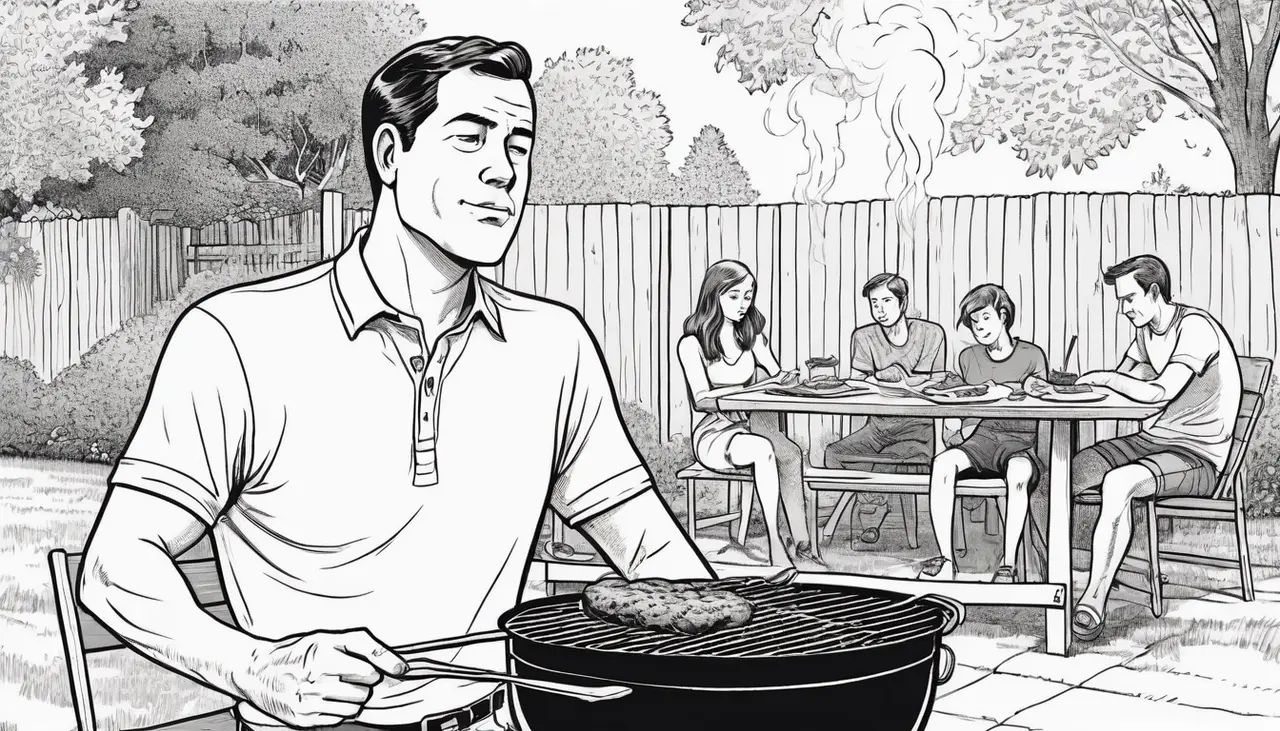
It's the middle of the afternoon and the cooler is already open. Someone hands you a cold one before you've said a word about whether you want it. The grill smoke is up, the game is on, and a relative is already reaching for the good bourbon "because it's a special day." You told yourself this morning you'd keep it light. Now you're standing in the yard with a full cup you don't remember accepting, and the day hasn't even hit its stride.
Here's the part nobody warns you about: Father's Day doesn't push back with one big moment. It leaks. A pour here, a top-off there, a toast you didn't plan on. So the plan can't be a single act of willpower at 4 p.m. It has to be a set of small choices you decided on before you walked in — a way to steer the day instead of getting carried by it.
Call it the Steering Wheel. Five small grips, each one keeping the day on the road you chose rather than the one the cooler chose for you. None of them requires a speech, a confession, or turning the cookout dry for everyone else. They just keep the wheel in your hands.
Why the day gets away from you
A backyard on Father's Day is built to run on autopilot. The setting is casual, the hours are long, and the cup rarely goes fully empty before someone refills it — which means you lose the natural stopping points a night out has. Your brain reads "everyone's holding a drink, it's a celebration, the guy of honor is pouring" as a green light, and green lights don't feel like decisions. They feel like the current.
That's the trap worth naming: on a day like this, doing nothing is a choice — the choice to drink at whatever pace the party sets. The Steering Wheel just puts a few of those decisions back in your hands before the current can make them for you.
None of this is about whether you can "handle it." Plenty of people who drink modestly most of the time end up well past their own line at a long, loose family event. It's an average afternoon, not a character test.
Decide the route before you arrive
Before you pull into the driveway, answer one question: does today include alcohol for you, and if so, up to what number? Pick an actual figure — two, or one, or none — not a vibe like "I'll take it easy." A vibe has no edge, so you can drift past it without ever noticing you crossed anything.
If it helps to have a yardstick, NIAAA counts a U.S. standard drink as 0.6 fluid ounces, or 14 grams, of pure alcohol — a 12-ounce regular beer, a 5-ounce glass of wine, a 1.5-ounce shot. Worth knowing, because a heavy backyard pour can be two of those in one cup, and nobody at a cookout is measuring. And for perspective, not as a rule to argue over, the CDC describes moderate drinking as two drinks or less in a day for men and one or less for women.
Do it now: name your number for the day, out loud in the car or in your head at the door. One sentence — "two, then water" — and you've drawn the line before anyone can blur it.
Pour your own, and hold something
The fastest way to lose count is to let other people manage your cup. A relative pouring "to be generous" doesn't know your number, and a drink you didn't pour is a drink you can't measure. So take that job back: fill your own, and when you don't want a drink at all, keep a non-alcoholic one in your hand — a seltzer, a soda, an iced tea.
A held cup does quiet work. It answers the "want one?" question before it's asked, so you skip the little negotiation every time. You're not turning anything down; you're just already holding something.
Do it now: the first time you're near the drinks, pour yourself the non-alcoholic option and keep it moving. A full hand doesn't get offered a refill.
Eat first, and space them with water
Walk in with food already in you, not on an empty stomach waiting for the first drink to land hard. Then between anything alcoholic, park a glass of water in the same hand. This isn't a health-class rule — it's a pacing trick. Water gives your hands and mouth something to do during the long, drifting stretches when you'd otherwise sip out of pure momentum.
The reason this matters at a cookout specifically: an afternoon that never feels like a night out can still stack up fast. NIAAA defines binge drinking as the pattern that brings blood alcohol to about 0.08% — often five or more drinks for men, or four or more for women, in roughly two hours. Spread across a slow backyard afternoon, that can sneak up without any single moment that reads as "too much." Water in the off-hand is how you keep the slow drift slow.
Do it now: eat before your first drink, then treat water as the default between rounds — full glass, same hand, no thinking required.
Buy yourself a lap around the yard
When the pull to just keep pouring shows up — and on a long day it will — you don't have to win a staring contest with it. You have to outlast it, which is a smaller job. An urge tends to rise, crest, and fade rather than climb forever, so the move is to put a few minutes between you and the cooler and let the wave pass under you.
So take a lap. Walk the dog, help carry plates, step out to take a call, find the kid who wants to show you something. Any of it buys you the few minutes the urge needs to lose its edge, and you come back to your cup instead of a fresh pour.
Do it now: next time the reach-for-another feeling hits, set the cup down and go do one small moving thing for five minutes. Decide about the next drink when you get back, not now.
Know your exit before you need it
The last hours of a party are usually the loosest — the pours get bigger, the "one more for the road" arrives, the pacing you kept all afternoon gets tested when you're most tired. So decide your out before you're standing in it. Tie leaving to something concrete: the kids' bedtime, an errand, a plan to head home before dark. A reason you named in advance is far easier to hold than one you're improvising while someone's topping off your cup.
And if you did drink, sort the ride home now, not later. Line up a designated driver, a rideshare, or a plan to stay put — settled while you're clear-headed, not debated at the end of the night.
Do it now: pick your exit cue before you arrive and, if you're drinking, lock in the safe ride at the same time. Two decisions, made once, while they're easy.
When a grip slips
Some of these will slip, and that's built into the day, not a sign you failed. You'll accept a pour on reflex, or blow past your number during a good story, or realize you stopped counting somewhere around the burgers. One loosened grip is not the whole day gone — it's one drink, and the wheel is still in your hands for the next hour.
So when it happens, don't torch the rest of the afternoon to match. Just take the next grip back: refill with water, take your lap, move your exit up. The point was never a flawless day. It was steering more of it than you would have on autopilot — and even a few grips held is a genuinely different Father's Day than the one that just happens to you.
One real caution, though, sits outside all of this. If you drink heavily every single day, quitting cold on a holiday is not the light lift the rest of this page describes — for some people it can bring on shaking, sweating, confusion, or a seizure, which is a medical emergency: call 911 or get to an emergency room. That's a plan to make with a clinician ahead of time, not a thing to white-knuckle at a cookout. If you're not sure where you fall, the free, confidential SAMHSA National Helpline (1-800-662-HELP) can point you toward the right kind of help, any hour.
Back in the yard
So: same cooler, same afternoon, same relative reaching for the good bottle. Only now you walked in with a number, you're holding your own cup, there's water in your off-hand, and you know when you're leaving and how you're getting home. The day still belongs to everyone. This corner of it belongs to you.
If you want the general version of that reach-for-another feeling — the one that shows up long after the cookout — how to handle alcohol cravings and urges is the full toolkit. For other loaded days on the calendar, see drinking at a summer wedding when you're cutting back and how to handle a day-drinking event when you want to cut back.
This is general education for one day on the calendar, not medical advice or a plan for anyone's specific situation. If your drinking is heavy or daily, work out any change with a clinician who knows your history — stopping suddenly can be dangerous.
- Alcohol Education
How to Handle Summer BBQs and Cookouts When You're Cutting Back
A cookout has no clock, so bring your own: pick your first drink, your spot, your line, and your exit before you go. Decide once, not forty times.
- Alcohol Education
How to Drink Less Without AA: A Practical Cutback Framework for People Who Aren't Doing a Program
Drinking less without AA works best as four weekly jobs: measure honestly, plan a number, prepare for the hard moment, and check in.
- Alcohol Education
Cutting Back When You Only Drink With Other People
Never drinking alone settles nothing — the table still picks your number. The Table Read closes the gap: read the room's script, then rewrite your line.
- Alcohol Education
How to Handle a Family Vacation When Everyone Drinks
The Morning-First Plan: decide the morning you want, protect the first group meal, and keep one non-negotiable exit from the nightly drift. No family vote needed.
- Alcohol Education
Drinking at a Wake or Funeral When You're Cutting Back
You can decline the drink and still be there for the goodbye. How to handle the glass at the door, the toast, and the late-night kitchen while cutting back.
- Alcohol Education
Drinking on Juneteenth When You're Cutting Back
Cutting back at a Juneteenth cookout comes down to four moments: the handed first cup, the long middle, the watched moment, and the exit. Plan those, not the day.


Be the first to hear when Clero launches.
Join with email only. Clero is still in development, so this is educational content today — not treatment, a prescription request, or medical advice.
First to hear at launchLaunch news only — no spamUnsubscribe anytime