
Drinking and Feeling Puffy or Bloated
Puffiness after drinking is mostly a fluid rebound; the bloated stomach is a separate gut effect. Why salt and short sleep make it worse, and what actually helps.
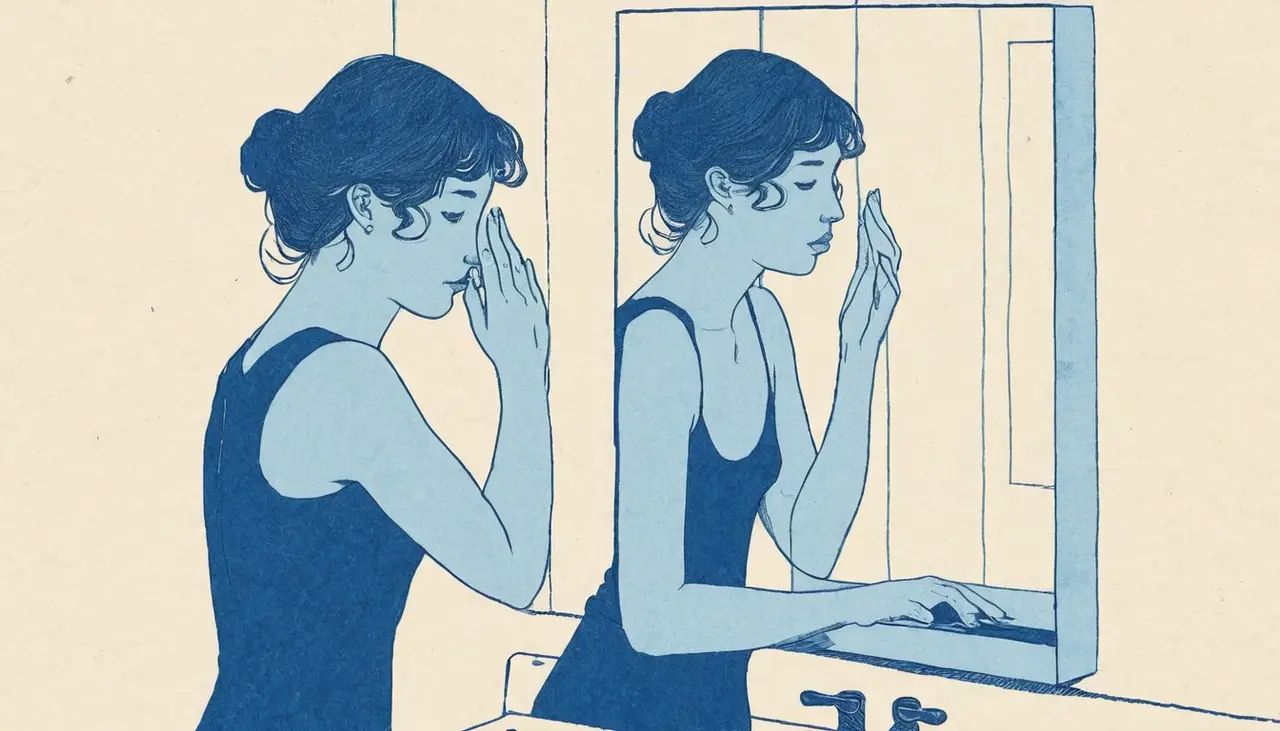
The puffy face and heavy, swollen feeling that shows up the morning after drinking is easy to read as "water weight," but that phrase hides at least three different things happening at once: a fluid shift, an irritated gut, and low-grade inflammation. Which one is driving your particular puffiness matters, because they don't all respond to the same next-day fix. Here is what is actually going on under the skin, and what you can do with it.
Why a drink shifts your fluid around
Start with the part most people already half-know: alcohol changes how your body holds water. The common shorthand is "alcohol dehydrates you," but a controlled experiment makes the picture more specific. In a diet-controlled crossover trial published in Nutrients, stronger drinks — wine and spirits at roughly 13.5% alcohol or higher — made men produce more urine than the non-alcoholic versions from about two hours in, but the difference had evened out by 24 hours. Beer at about 5% didn't move urine output at all compared with non-alcoholic beer.
So alcohol acts as a mild diuretic — it nudges your kidneys to release more water — but mostly in the first few hours, and mostly with stronger drinks. That short flush is part of why you can feel wrung-out and then, confusingly, puffy. Your body notices the fluid loss and swings the other way, holding on to water and salt to recover. The rebound is often what you are seeing in the mirror: not "too much water" so much as your body over-correcting for the water it lost.
Two everyday things amplify that rebound. Salt is the big one — the late-night food that tends to travel with drinking pulls extra water into your tissues, and a puffy face the next morning is frequently as much about the salt as the alcohol. Sleep is the other. A short, broken night leaves fluid pooling in the soft tissue of the face, which is why the same amount of drinking can look worse on a five-hour night than a full one.
The bloated, not just puffy, part
Puffiness in the face and a bloated, distended stomach can feel like one problem, but they usually come from different places. Bloating in the gut has more to do with what alcohol does to the digestive tract directly.
Alcohol relaxes the ring of muscle at the bottom of the esophagus — the valve that normally keeps stomach contents down — and, per the Cleveland Clinic, also makes the stomach more acidic and slows digestion. A stomach that empties more slowly and sits more acidic is a stomach that feels full, gassy, and swollen. Carbonation in beer and mixers adds literal gas on top of that. This is the version of "bloated" that comes with a bit of reflux or a heavy, over-full feeling rather than a fuller face. When the same gut irritation shows up lower down instead, it tends to look like morning-after bowel urgency.
There is also a slower, quieter contributor: inflammation. Alcohol and the substance your body breaks it down into can loosen the tight seals between the cells lining your gut — researchers call it "leaky gut" — which lets bits of gut bacteria slip through and switch on the body's inflammatory response. That is a real mechanism, described in the alcohol-research literature, and it can leave the whole body feeling faintly swollen and off. It tends to build with repeated heavy nights rather than showing up sharply after one drink.
How much it takes is not a fixed line
If your next question is "so how much do I have to drink for this," the honest answer is that there isn't a single amount that makes everyone puffy and a safe amount that makes no one puffy. The effect climbs with how much you drink and how often — a bigger night, and nights stacked back to back, tend to show more — but where your own line sits depends on things you don't fully control: your size, whether you drank on an empty stomach, how salty the food was, how much you slept, and individual differences in how your body handles fluid and alcohol.
It helps here to count the night honestly rather than by glasses. A U.S. standard drink is 0.6 fluid ounces, or 14 grams, of pure alcohol — and a generous pour of wine or a strong cocktail is often closer to two of those than one. That number isn't a threshold where puffiness switches on; it's just a way to describe your night accurately enough to spot your own pattern. If the swollen mornings cluster after the nights you'd honestly call heavy, that's more useful information than any general rule.
What actually helps
None of these is a cure, and none promises your face will look a particular way on a schedule. They're low-stakes habits that work with the mechanisms above rather than against them.
- Space water through the night, not after it. Since the fluid swing happens during and just after drinking, alternating water with your drinks does more than trying to catch up the next morning. Coffee, a mild diuretic itself, doesn't solve a fluid problem.
- Eat before, and watch the salt after. A real meal before you pour steadies the whole night, and skipping the saltiest late-night food takes away the ingredient most likely to leave your face puffy by morning.
- Protect the sleep. A steadier, longer night lets fluid drain out of the face instead of pooling. An unhurried wind-down and a consistent wake time give the recovery night a fair chance.
- Give it spacing. If the puffy mornings pile up after consecutive nights, a couple of fully alcohol-free days lets the gut and the inflammation settle instead of stacking.
- Move a little the next day. A short walk nudges pooled fluid to move; staying still tends to keep a heavy, sluggish body heavy.
If you want to know whether drinking is really the driver, run a narrow test: pick one or two weeks, change one thing — no drinks before dinner, two alcohol-free nights, or one drink fewer — and compare similar days. Your ordinary Tuesday against another ordinary Tuesday, not your worst night against your best morning.
If the puffiness travels with feeling unusually tired after drinking, track both together; if sleep is the clearer thread, drinking less for better sleep may be the better next read. And for the moments the urge to pour returns, how to handle alcohol cravings and urges is the fuller toolkit.
When it is worth a clinician's eye
Most next-day puffiness is the ordinary fluid-and-food story above and settles on its own. Some of it isn't. Talk with a licensed clinician if the bloating is severe, persistent, new, worsening, or painful, or if it comes with symptoms that worry you — swelling doesn't always trace back to a drink, and a clinician can examine you in a way a search result can't.
It's also worth raising if the drinking itself is the part that's slipping: if you keep drinking more than you planned, or changing your drinking feels genuinely hard to do. A self-check like signs you are drinking more than you meant to can help you bring clearer notes into that conversation. You can keep the opening line plain: "I notice puffiness or bloating after I drink, and I want help understanding whether it matters."
This page is general education, not a diagnosis — puffiness and bloating have many causes, and if yours is severe, persistent, or worrying, a clinician who can examine you is the right person to sort it out. If drinking feels out of your control or unsafe to change on your own, the SAMHSA National Helpline (1-800-662-HELP) is free, confidential, and open 24/7.
- Body & physical health
Why Do I Crave Salt After Drinking Alcohol or When Hungover?
Salt cravings after drinking are real: alcohol flushes sodium and fluid, and your brain rewards salt. What helps when you're hungover — and what doesn't.
- Cutting back & moderation
How Long Does It Take to Feel Better After Cutting Back on Drinking?
There is no single clock: mental speed tends to pick up within a month, most cognitive function over 6 to 12. Why sleep and anxiety often get worse first.
- Hangovers & the day after
What Actually Causes a Hangover?
A hangover is a pile-up, not just dehydration: fluid loss, fragmented sleep, stomach irritation, inflammation, acetaldehyde, and the rebound after the buzz.
- Body & physical health
Does Cutting Back on Alcohol Make You Tired?
Yes, feeling more tired after cutting back on alcohol is common, because your sleep is still rebuilding. How long it lasts, and when fatigue is a warning sign.
- Body & physical health
Why Do I Crave Carbs After Drinking Alcohol?
Carb cravings after drinking are your body chasing quick fuel: alcohol drops blood sugar and dopamine just as hunger hormones spike. What actually helps.
- Understanding your drinking
Drinking and Gaming: Does Alcohol Improve or Hurt Your Focus?
A few drinks can make gaming feel looser, but alcohol dulls attention, memory, and reaction time. Why it feels like better play — and how to spot the slide.


Be the first to hear when Clero launches.
Join with email only. Clero is still in development, so this is educational content today — not treatment, a prescription request, or medical advice.
First to hear at launchLaunch news only — no spamUnsubscribe anytime