
What to Eat When You Cut Back on Drinking: Steady-Energy Basics, Not a Diet
Eat before your old drinking window and build plates around protein — cravings hit hardest on an empty stomach. Plus why the sugar pull is normal.
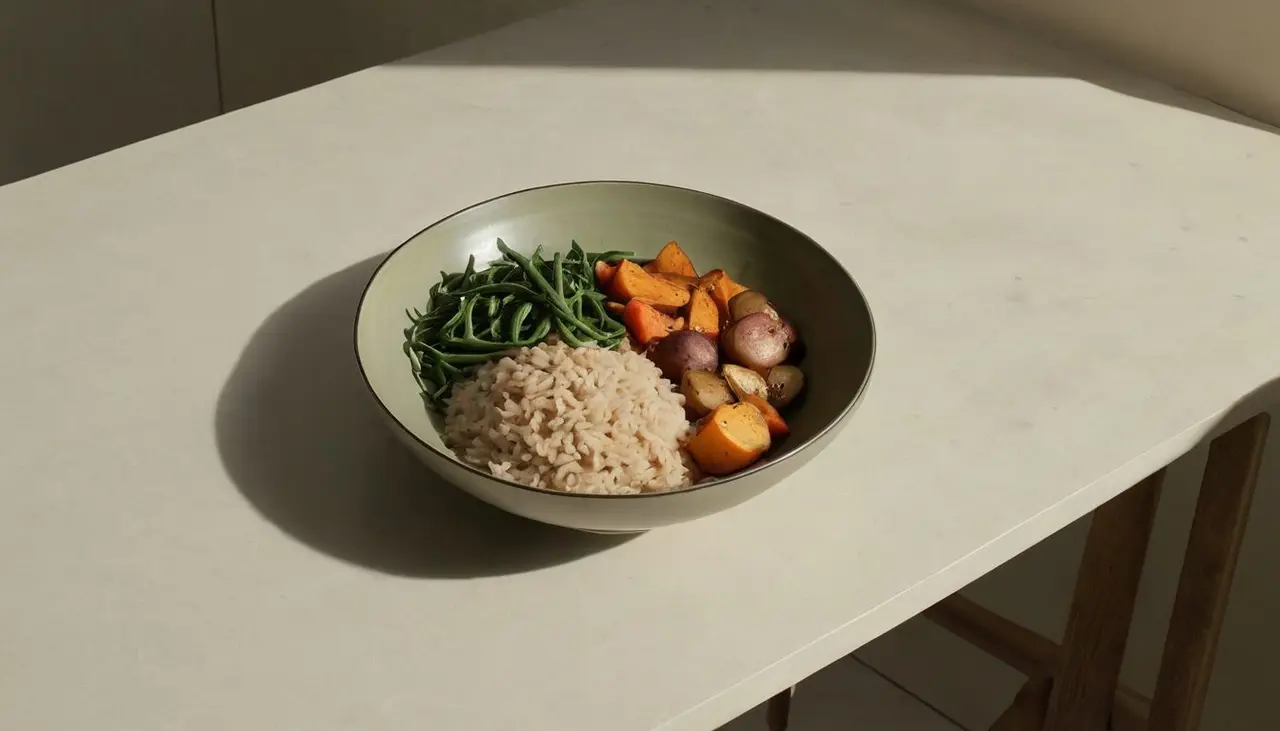
The first week of drinking less can make food feel strangely urgent. Not gourmet food. Not a cleanse. Just food.
Alcohol may have been doing several jobs badly: quick calories, evening ritual, hand occupied, appetite blunted, stress paused for a while. When the drinks drop out, those jobs do not disappear. They need better replacements.
The Steady-Energy Plate
Use a simple framework: meal, protein, timing, backup.
That is the Steady-Energy Plate. It is not a diet. It is a way to keep the old drinking window from arriving while you are hungry, depleted, and improvising.
The biggest nutrition move may be reducing the alcohol pattern itself. CDC's Alcohol Use and Your Health resource describes excessive drinking as affecting health in both the short and long term, so food is the support act here. It helps the change hold. It does not cancel out the alcohol.
Eat before the old drinking window
The 6 p.m. drink often starts at 5 p.m. with not enough lunch.
If your drinking window begins after work, put food before the decision point. A snack is allowed to be practical: yogurt, cheese and crackers, leftovers, soup, eggs, peanut butter toast, hummus and pita, rice and beans. The point is not elegance. The point is not arriving at the craving empty.
Tonight's version: pick one default pre-window food and keep it visible. Decision fatigue is not a meal plan.
If you still drink on some cutback nights, food changes how the same drink lands. NIAAA's alcohol-metabolism overview notes that food in the stomach slows how quickly alcohol is absorbed. That does not make alcohol harmless, and it does not make the body clear alcohol faster. It means eating before or with drinks can keep one drink from hitting as sharply.
Build the plate around staying full
Protein matters because the old drinking window is long. A sweet snack may help for twenty minutes and then leave you pacing the kitchen again.
Try a plate with three parts:
Protein: eggs, fish, chicken, tofu, beans, lentils, yogurt, cottage cheese, nuts, or whatever version you actually eat.
Slow carbohydrate: rice, potatoes, oats, pasta, bread, tortillas, fruit, or beans.
Something with volume: vegetables, soup, salad, fruit, or a bigger serving of the main meal.
This is not a macro prescription. It is a fullness plan. You are trying to make the next drink less likely to be the fastest available calorie.
Breakfast belongs here too. Skipping breakfast to "make up for" drinking calories often backfires. It leaves the day underfed, then asks evening willpower to solve biology.
Plan for the sweet tooth without making it a morality play
Many people notice sugar cravings when drinking drops. That does not mean you are doing the change wrong. Alcohol can act like fast fuel, and the ritual of an evening drink can leave both a calorie gap and a reward gap.
NIAAA's hangover resource explains that alcohol can cause blood sugar to fall, one reason the day after drinking can feel shaky, weak, and off. Steadier meals will not solve every craving, but they can reduce the background wobble that makes cravings louder.
A planned sweet can be a useful bridge. Ice cream after dinner. Chocolate with tea. Fruit and yogurt. A cookie you eat sitting down, not standing in the pantry while arguing with yourself.
The goal is not to become strict about sugar at the exact moment you are changing alcohol. The goal is to avoid letting hunger and shame team up.
Replace the hand-to-mouth ritual
Food is not only fuel. It is also ritual.
If your old evening pattern began with opening something cold, make a replacement obvious. Sparkling water in a glass. Tea while dinner cooks. A bowl of olives, nuts, fruit, or popcorn on the counter. Something you reach for before the alcohol decision starts.
The old drink had choreography. Walk in, open, pour, sit, exhale. Build a new sequence, small enough to repeat:
- Put food on the counter.
- Pour a nonalcoholic drink.
- Sit somewhere other than the drinking chair for ten minutes.
That may sound too small. Small is the point. A giant lifestyle overhaul usually loses to the first tired evening.
Stock the first-week shelf
The first-week shelf is not a diet shelf. It is an anti-improvisation shelf.
Put a few low-friction foods where you can see them: soup, eggs, yogurt, rice packets, frozen meals, tuna, beans, tortillas, fruit, cheese, nuts, peanut butter, hummus, crackers, or whatever version of real food you will eat when you are tired.
The standard is usefulness. If a food requires a future version of you with energy, it may not help at the old drinking hour. If it can become dinner in ten minutes, it belongs.
Add one planned sweet thing. Not as a reward chart. As a pressure valve. A predictable dessert can keep sugar cravings from turning into a second private argument after you already got through the drink decision.
Eat around the trigger, not around an ideal day
A perfect meal plan that ignores the trigger hour is mostly decoration.
If the old drink started while cooking, eat a small plate before cooking. If it started after the kids went down, have tea and a snack ready before the house gets quiet. If it started on the walk from work to the train, carry food that interrupts the automatic stop.
You are not trying to win nutrition. You are trying to remove avoidable friction from the hour when the old pattern is strongest.
What about vitamins, detox menus, and supplements?
Skip the detox framing. The body does not need a branded reset menu to benefit from regular food and less alcohol.
Vitamin questions are real, especially for people who have been drinking heavily or eating poorly. They are also specific. Testing and supplementation are clinician questions, not article instructions.
For the mechanism side, see does alcohol deplete vitamins. For sugar-specific cravings, see why do I crave sugar after quitting alcohol. For late-night eating after drinking, see late-night eating after drinking.
The cleanest food advice is not glamorous: eat before the old drinking window, include something that keeps you full, expect some sweet cravings, and keep the plan repeatable.
This article is general education, not medical nutrition advice, a detox menu, or a supplement plan; talk with a licensed clinician about diabetes, pregnancy, medications, heavy daily drinking, or persistent symptoms.
- Social events & holidays
How to Handle Summer BBQs and Cookouts When You're Cutting Back
A cookout has no clock, so bring your own: pick your first drink, your spot, your line, and your exit before you go. Decide once, not forty times.
- Social events & holidays
Drinking on Vacation When You Are Trying to Cut Back
Vacation drinking spreads because the trip removes your routines — so build your own banks: a shape set before you pack, one alcohol-free hour a day, a reset plan.
- Cravings & triggers
Boredom Drinking When Nothing Else Feels Fun
Boredom drinking is a learned route, not a willpower problem. How to reroute the empty hour and why sober fun can feel flat at first.
- Mind & mood
Alcohol and Vivid Dreams When You Cut Back
Vivid dreams after cutting back are usually REM rebound, not withdrawal. Why the dreams get so loud, how long the phase tends to last, and the signs that need care.
- Mind & mood
Dreams About Drinking When You've Been Cutting Back
Drinking dreams after cutting back come from REM rebound, not a hidden wish to relapse. Why they arrive now, the shapes they take, and how to shake one off.
- Quitting & sobriety
What To Expect During The First Three Months Of Sobriety
A conservative expectation-setting guide to common early sobriety obstacles, without timeline promises, detox instructions, or relapse prediction.


Be the first to hear when Clero launches.
Join with email only. Clero is still in development, so this is educational content today — not treatment, a prescription request, or medical advice.
First to hear at launchLaunch news only — no spamUnsubscribe anytime