
Is It Bad To Have a Drink After Work?
A drink after work isn't automatically bad — the pattern is what matters. How to tell when one drink is carrying too much weight, and the self-check to run.
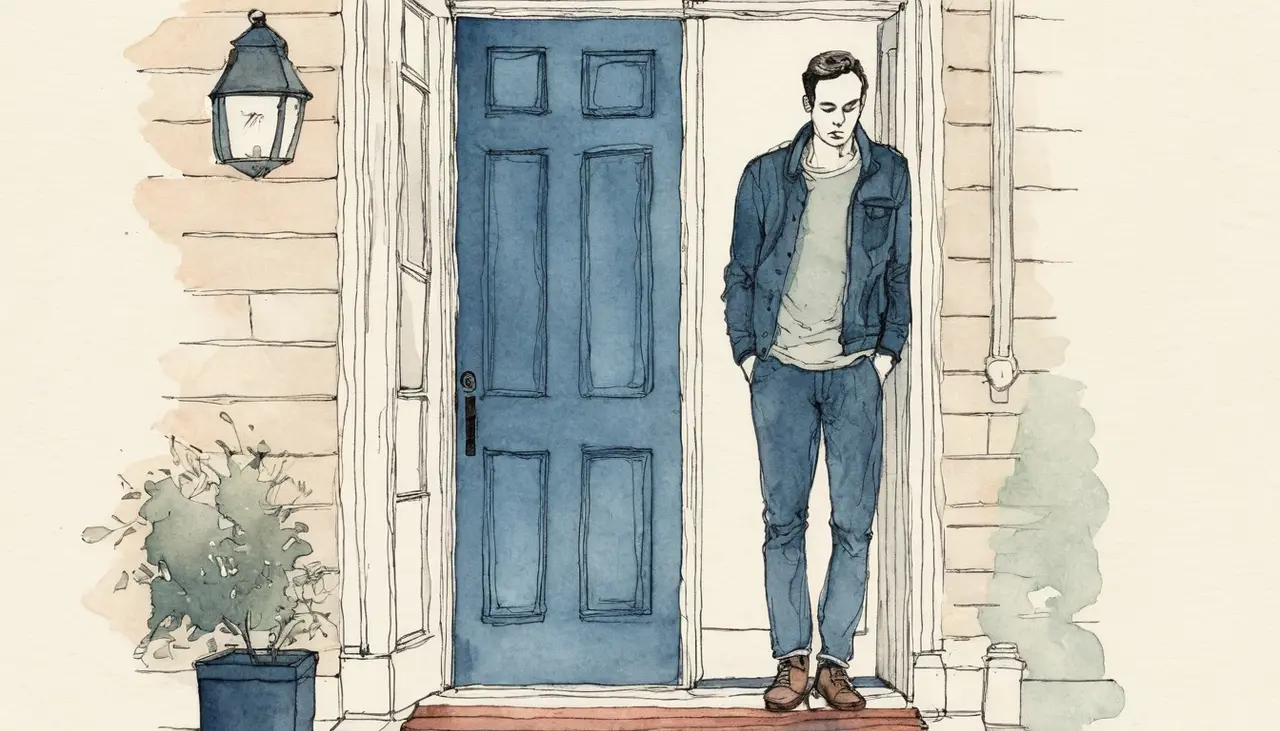
A drink after work is not automatically a problem. The pattern is the question: how often it happens, whether one becomes several, whether it is the only reliable transition out of work mode, and whether skipping it feels harder than you expected.
That is the useful middle ground. No panic. No automatic pass.
What is the after-work drink doing?
Often, it is not just a drink. It is a boundary.
Work ends, but your body has not caught up. The drink marks the shift: laptop closed, commute over, kids not yet in bed, dinner starting, inbox still buzzing, shoulders still tight. Alcohol becomes the switch that says, "The day is finally over."
That role matters because the habit may be less about taste and more about transition. If the drink is the only way you reliably leave work mode, the drink is carrying more weight than it appears to. Without a commute to mark the edge, the five p.m. trigger when you work from home arrives with nothing in between.
When is one drink really a pattern?
One drink becomes a pattern when it has a job and keeps that job.
Look at frequency first. Is it most workdays? Only after hard days? Only when you are alone? Only when the workday felt unfair? Then look at flexibility. Can you skip it without arguing with yourself? Can you stop at one? Does the first drink make a second feel obvious?
The phrase "just one" can be true and still incomplete. One drink every so often is different from one drink that has become the daily off switch. When the answer to the frequency question is most workdays, tracking two weeks of drinks against your own work output will tell you more than one rough morning does.
How do public-health thresholds fit?
Thresholds give context. They do not diagnose you.
NIAAA defines a U.S. standard drink as 0.6 fluid ounces, or 14 grams, of pure alcohol. That matters because the drink in your glass may not match the drink in a public-health definition.
The CDC defines binge drinking and heavy drinking using drink counts: 4 or more drinks for women or 5 or more for men on one occasion for binge drinking, and 8 or more drinks per week for women or 15 or more for men for heavy drinking.
Those numbers should not be used as a personal permission line. Risk does not turn on only after a threshold. But the thresholds can help you see when "one after work" has become "several most nights" or "more weekly drinking than I was admitting."
How common are these patterns?
They are common enough to be easy to minimize. CDC reports that 17% of U.S. adults binge drink. NIAAA reports that about 14.4 million U.S. adults, or 5.5%, had heavy alcohol use in the past month in 2024.
Those figures are not there to scare you. They are there to make the pattern visible. A routine can look normal from the outside and still be worth changing from the inside.
The better self-check
Ask questions that fit the actual habit:
- Do I think about the drink before the workday ends?
- Does it feel like the first calm moment of the day?
- Do I pour faster when the day was stressful?
- Does one drink stay one drink?
- Do I feel annoyed if something interrupts it?
- Have I tried to skip it and found myself bargaining?
- Is alcohol doing a job that sleep, food, movement, quiet, or another person used to do?
You do not need seven yes answers. One clear yes may be enough to experiment with a different transition.
What to try instead of a verdict
Do not start with "Is this bad?" Start with "What happens if I change the first 20 minutes after work?"
Make the first move specific: change clothes before entering the kitchen, walk around the block, sit in the car for two minutes with no phone, make dinner before pouring anything, call someone, or set a non-alcohol drink in the usual glass. The exact move matters less than whether it breaks the automatic sequence.
Then watch the reaction. If skipping the drink is mildly annoying, that is useful. If it feels impossible, scary, or physically uncomfortable, that is different information. A couple of honest weeks in a drink-tracking app can make the pattern visible without a debate.
When to talk to a clinician
Talk to a licensed clinician if the after-work drink is becoming several, if you cannot cut back when you try, if you feel physically unwell when alcohol wears off, or if work stress and alcohol are becoming linked in a way that scares you.
For confidential alcohol-related referral information, SAMHSA's National Helpline (1-800-662-HELP) is available 24/7.
FAQ
Is one drink after work every day bad?
Not automatically. The better question is whether it stays one, whether you can skip it, and whether it has become the only transition out of work stress.
What if I do not drink at lunch or in the morning?
That is useful context, but it does not make the after-work pattern irrelevant. A routine can deserve attention even if it only happens in one part of the day.
Should I set a personal drink limit?
This article does not give personal limits. Public-health thresholds can help you describe a pattern, but individual decisions belong with your goals, health history, and a clinician if you are worried.
This article is general education, not a diagnosis, personal drink limit, workplace advice, or medical advice; if cutting back causes physical symptoms, talk with a licensed clinician before stopping abruptly.
- Understanding your drinking
How Much Is Too Much Alcohol per Week?
There is no single safe weekly alcohol total. CDC's daily moderation definition and a standard-drink log show what a weekly sum can miss.
- Mind & mood
Can Alcohol Cause Panic Attacks? Why They Hit After Drinking
An answer-first explanation of alcohol rebound anxiety, 3 a.m. panic, medical red flags, and how to read the pattern without self-diagnosing.
- Medication & treatment
Do I Have to Tell My Doctor I'm Cutting Back on Drinking?
No, you don't have to tell your doctor you're cutting back — but one honest sentence usually helps more than it costs. When it matters, and how to start small.
- Family & relationships
How to Apologize After Drinking Too Much
A practical repair framework for apologizing after overdrinking, with safety exclusions, no coercive scripts, and no promise that an apology fixes harm.
- Understanding your drinking
Why Is It So Hard to Control How Much I Drink?
A non-diagnostic FAQ on why one drink can change the decision environment, what loss of control can feel like, and when to bring the pattern to a clinician.
- Cutting back & moderation
Is My Cutback Working When I Can't Feel the Difference Yet?
Why weeks three to eight of cutting back can feel like a plateau, and how to assess the change without chasing a guaranteed timeline.


Be the first to hear when Clero launches.
Join with email only. Clero is still in development, so this is educational content today — not treatment, a prescription request, or medical advice.
First to hear at launchLaunch news only — no spamUnsubscribe anytime