
Scared to Stop Drinking? What to Ask a Doctor
If you are scared to stop drinking, ask a licensed clinician about your current drinking pattern, any symptoms you notice when you drink less, your medical history, and what level of support is appropriate. This page is questionprep only. It does not give detox instructions, taper schedules, or personal risk assessment.
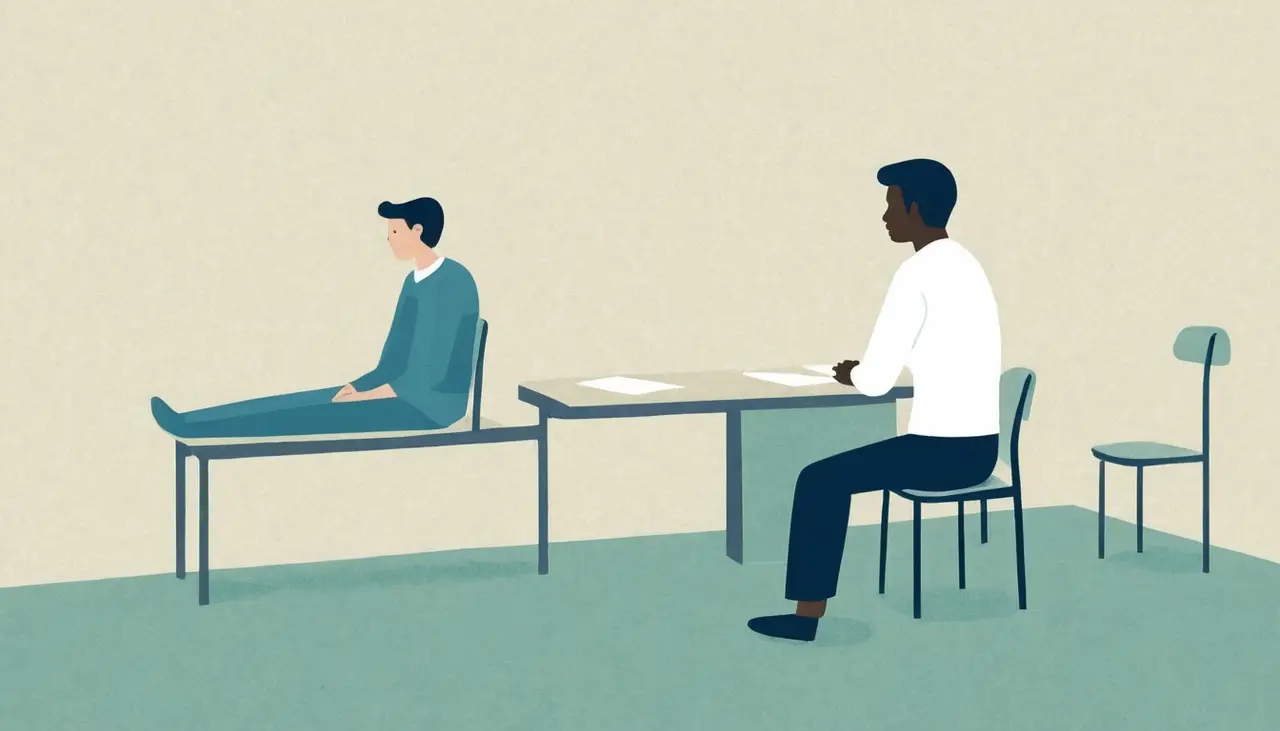
Being scared to stop drinking usually means you have noticed something real — and that fear is one of the most useful things you can carry into a doctor's office.
If you have been circling this question for a while, you probably know the double bind: you're worried about what the drinking is doing, and just as worried about what stopping might do — to your body, your sleep, your ability to get through a Tuesday. Here is the short answer. You don't need a speech, a diagnosis, or proof that you're "bad enough." You need your real numbers and four questions: Is it safe for me to stop suddenly? What are my warning signs? Is medication worth discussing? And what happens after this visit?
The rest of this page unpacks each one.
Why does stopping feel dangerous?
Sometimes because, for some people, it genuinely can be. A brain that has had alcohol on board most days for months or years adjusts to it, and when the alcohol disappears abruptly, that adjustment doesn't. MedlinePlus describes alcohol withdrawal as the symptoms that can follow when someone who has been drinking heavily on a regular basis suddenly stops: shakiness, sweating, a racing heart — and, at the severe end, hallucinations, seizures, or serious confusion. That severe end, which includes delirium tremens (DTs), is a life-threatening medical emergency. If those symptoms are happening now, call 911 or go to an emergency room; don't wait for an appointment.
Most people who cut back never see the dangerous end of that list. Whether you might depends on your specific pattern — how much, how often, for how long, and whether stopping has made you sick before. A clinician can sort that out quickly with honest information. What no one can do is protect you from an experiment you run alone at home first. So treat the fear as information, not weakness: it's the signal that your question has a medical piece, and medical questions get better answers from a clinician than from a search box. For a fuller picture of what withdrawal involves and how it's treated, see understanding alcohol withdrawal symptoms and treatment options.
What the doctor actually needs to hear
The unpolished version. Not the story you'd tell a coworker — the numbers you'd normally round down:
- Pattern: how many days you drink in a typical week, and the realistic range on a heavier day.
- Timing: any morning drinking, or drinking to steady shakes or nerves.
- What happens when you stop: sweating, tremor, racing heart, broken sleep, panic — anything you've noticed on days you drank less or not at all.
- History: past attempts to cut back, past withdrawal symptoms, any seizure ever.
- The rest of your health: other medications, opioid painkillers specifically (they matter for one of the alcohol medications), liver concerns, pregnancy, and mental health, including anxiety or depression.
Numbers beat adjectives. "A few glasses of wine" hides a lot: NIAAA counts a U.S. standard drink as 0.6 fluid ounces — 14 grams — of pure alcohol, and a generous home pour of wine can be close to two of those. You don't have to convert anything at the kitchen counter. Just describe what you actually pour and how often, and let the clinician do the math.
If saying it out loud feels impossible, write it down and hand it over. One sentence is enough to start: "I drink more than I want to, I'm scared to stop on my own, and I need to know what's safe."
Will the doctor judge you?
A fair worry, and mostly an outdated one. Clinicians are explicitly trained away from it: NIAAA's guidance for health professionals treats stigma as a barrier that keeps people out of care and coaches clinicians toward neutral, medical language instead of moral framing. You're describing a health condition with well-mapped treatment options, the same way you'd describe blood pressure. If a particular doctor does respond with judgment, that's a reason to find a different doctor — not to stop asking.
Should you ask about medication?
Yes — directly, even if the answer turns out to be "not yet" or "not this one." NIAAA's clinician guide to evidence-based treatment lists three FDA-approved medications for alcohol use disorder, and they do genuinely different jobs:
- Naltrexone blocks the brain receptors that give drinking its pleasant lift, so a drink delivers less reward. Its FDA label indicates it for treating alcohol dependence — and flags the caution worth raising up front: it can't be combined with opioid painkillers.
- Acamprosate works elsewhere. After long heavy drinking stops, the brain's excitatory "go" signaling stays over-revved for a while — part of why early sobriety can feel restless and raw. Acamprosate helps that system settle back toward normal, and it's approved for staying stopped once you've already quit, not for cutting down while still drinking.
- Disulfiram is a deterrent. It blocks the enzyme that clears acetaldehyde, a harsh byproduct of alcohol, so drinking while taking it makes you flushed and ill. It only makes sense for someone committed to not drinking at all.
They aren't interchangeable on the evidence, either: the Agency for Healthcare Research and Quality's systematic review found moderate-strength evidence that oral naltrexone and acamprosate each help reduce a return to drinking, while judging the evidence for disulfiram against placebo inadequate. And none of the three treats withdrawal itself — that's a separate safety conversation, and it comes first.
Here's why it's worth raising the question yourself rather than waiting to be asked. NIAAA estimates that 27.9 million people ages 12 and older in the United States had alcohol use disorder in the past year in 2024 — about 9.7% of that age group — yet only about 2.1 million of them, 7.6%, received any alcohol treatment that year. That gap is mostly conversations that never happen, not proof the treatments fail. Asking puts you in the small group that gets an actual answer.
Bring these questions on paper
Appointments are short and nerves eat time. A written list keeps the visit pointed at what matters:
- Given my pattern and history, would stopping suddenly be unsafe for me?
- Which symptoms would mean I need emergency care rather than a follow-up call?
- Is one of the medication options worth discussing for my situation?
- Does my goal — cutting down versus stopping entirely — change the plan?
- What should I track between now and our next conversation?
That last one earns its place. A week of honest notes — drinking days, amounts, how the lighter days feel — gives the next appointment something concrete to work with, and handling the cravings in between is a skill you can start building the same day.
When this can't wait for an appointment
Two situations skip the waiting room entirely. If stopping or cutting back brings on a seizure, hallucinations, severe confusion, a fever, or an irregular heartbeat, call 911 or go to an emergency room — MedlinePlus flags all of those as withdrawal signs that need emergency care. And if any of this has you thinking about harming yourself, call or text 988; the Suicide & Crisis Lifeline answers around the clock.
If it's neither of those — you're stable, but you don't have a doctor to bring this to, or can't picture raising it across a desk — Clero connects you with a licensed clinician by telehealth who can review your actual pattern and whether a medication like naltrexone belongs in your plan.
However the conversation happens, the fear you've been carrying isn't a verdict. Mostly it means you understand the stakes better than you've been giving yourself credit for. One honest appointment turns that fear into a plan — and a plan is a much lighter thing to carry.
This page is question prep, not medical advice, a risk assessment, or a taper plan. If withdrawal symptoms such as seizures, confusion, or hallucinations appear, call 911 or go to an emergency room; if you're having thoughts of harming yourself, call or text 988; and for confidential treatment referrals, SAMHSA's National Helpline is 1-800-662-HELP (4357).
- Cutting back & moderation
Dry January When You Slip
One drink does not delete the days you already did. Salvage what they taught you, count the slip in plain drinks, and pick the next hour, not the next month.
- Cutting back & moderation
When Your Doctor Told You to Cut Back but Didn't Tell You How to Start
What to ask after a clinician says to cut back on drinking but does not give a clear target, timeline, or first step.
- Medication & treatment
What medications can you take to stop drinking?
Naltrexone, acamprosate, and disulfiram are FDA-approved for alcohol use disorder; a healthcare provider can weigh other options for your health history and goals.
- Understanding your drinking
Is Alcoholism Genetic? What Family History Does and Doesn't Decide
A risk-not-destiny explainer on genes, family history, environment, and how to use that information without treating it as fate.
- Medication & treatment
Do You Need a Prescription for Naltrexone?
A narrow, plain-language answer to whether naltrexone is prescription-only, what that status does and does not tell you, and what to ask a licensed clinician.
- Family & relationships
Should You Serve Alcohol When a Family Member Is in Recovery?
Ask your relative privately, then explain the alcohol plan before they accept. Weigh hosting options, protect their privacy, and make opting out easy.


Be the first to hear when Clero launches.
Join with email only. Clero is still in development, so this is educational content today — not treatment, a prescription request, or medical advice.
First to hear at launchLaunch news only — no spamUnsubscribe anytime