
Why Do I Drink When I Don't Want To?
A non-diagnostic self-check for the gap between intending not to drink and drinking anyway, without labels, quiz scoring, or shame.
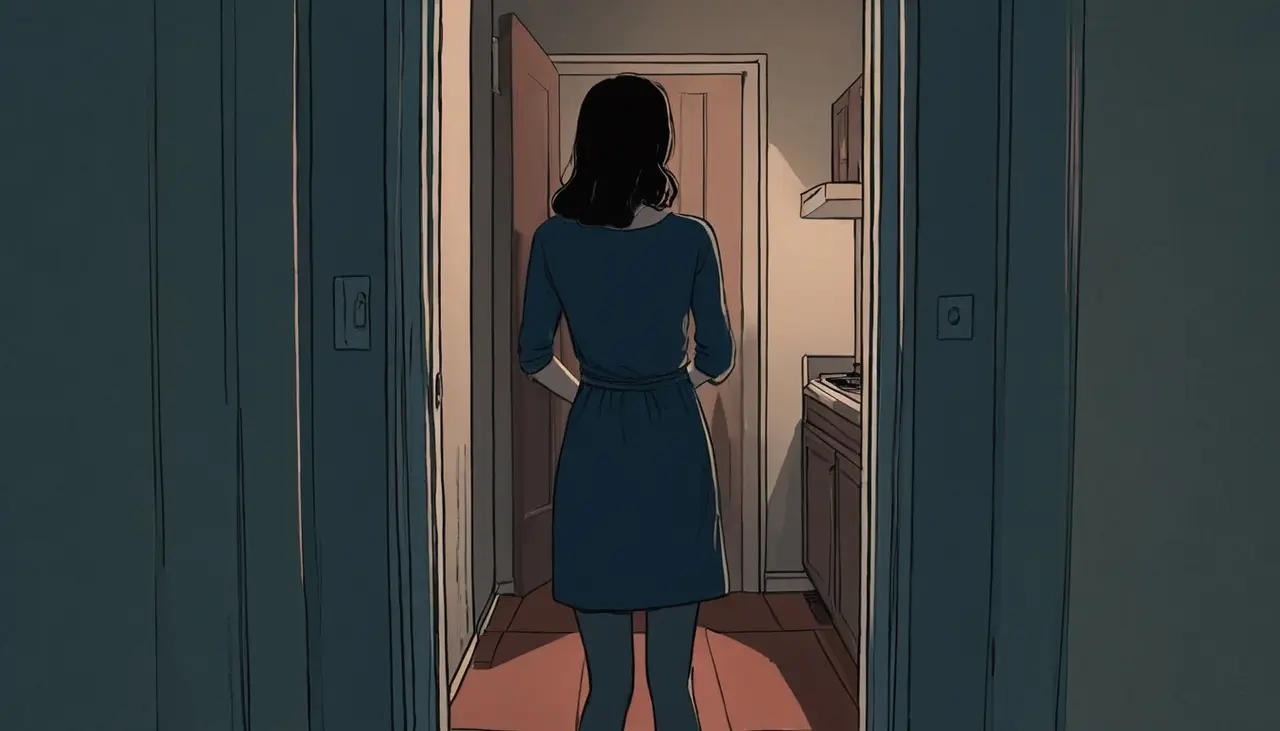
This letter is for you if you have ever poured a drink not long after telling yourself, clearly and recently, that you were not going to — and then stood there afterward wondering what is wrong with you.
I want to be straight with you about that gap between what you decided and what you did, because most of what gets said about it is either a lecture about willpower or a rush to hand you a label. Neither one is much use at eleven at night. So here is what I would actually tell you.
The first thing I want you to know is that the gap itself is not proof of a broken character. Drinking more, or for longer, than you meant to is one of the plainest and most common things people bring to a clinician — so ordinary that the U.S. Preventive Services Task Force recommends that primary-care clinicians ask every adult about it as a matter of routine, using a couple of short questions rather than a courtroom. The thing you are ashamed to admit is, to the people who study this, a normal screening question.
You are also not rare. In 2024, an estimated 27.9 million people ages 12 and older in the United States met the criteria for alcohol use disorder — about 9.7% of that age group, according to NIAAA. That number only tells you the room you are standing in is a crowded one.
The next thing is harder to hear: willpower is usually the wrong tool for the job, because the job was never really about willpower. Alcohol works on the brain's reward system — the machinery that decides a thing is worth doing again. The American Academy of Family Physicians describes how the receptors that carry alcohol's pleasant lift get pulled into that loop, which is part of why, once drinking has attached itself to a time of day, a particular chair, a certain stress, or the drive home, the pull can fire before you have consciously decided anything at all.
That is also why it helps to notice where your gap actually opens, because there are two different places and it matters which one is yours. If the plan comes apart before the first drink, the cue is doing the work — the empty evening, the argument, the sadness that wants a faster exit, the front door closing behind you. If it comes apart after the first drink, the first drink is doing the work — it quiets the part of you that was holding the line. Same gap, two different moments, two very different things to catch.
So here is something to try instead of resolving harder. For one week, do not grade yourself; just jot down four small things each time: what you had planned, what happened in the hour before, whether the first drink changed the night, and what feeling you were trying not to have. You are not building a case against yourself — you are looking for the earliest point where the plan bends. Programs like SMART Recovery, built around coping with urges rather than white-knuckling past them, work on that same idea: the urge is a moment you can learn to see coming, not a referendum on who you are.
You are probably already asking the question underneath all of this — does this mean I have a real drinking problem, the kind with a name? Honestly, a page cannot answer that, and anyone who tells you it can is selling something. What I can tell you is that it is a fair question to take to someone qualified, not a verdict to issue yourself at midnight. The pattern matters most when it keeps repeating, when it grows, when it costs you things you care about, or when it is hard to stop once you start. Those are the same signals a clinician weighs — which is exactly why the honest move is to let the screening happen in daylight, with a person, instead of running it in your own head after a bad night.
You are not weak for needing more than a promise to yourself.
I am not going to tell you there is one trick that closes the gap, because there isn't. And I am not going to tell you it is only a matter of trying harder, because for a lot of people that is the least true and most punishing story on offer. The honest version is smaller and far more workable: there is a repeatable moment where your intention gets overridden, and that moment can be found, named, and brought to someone who knows what to do with it.
If you decide to bring it to someone and do not already have a clinician to start with, that is the narrow gap Clero is built to close — it connects you with a licensed clinician by telehealth to talk through what is actually happening and whether an option like naltrexone, a medication that can turn down cravings, is worth considering. An article should not decide that for you; a person should help you decide it.
That step is worth naming because most people never take it. In that same year, only about 2.1 million people with alcohol use disorder — roughly 7.6% — received any alcohol treatment at all, per NIAAA. The distance between that number and the first one is not evidence that help fails — mostly, the conversation just never gets started.
Two things, though, do not wait for a letter. If cutting back has ever brought on shaking, sweating, confusion, or a seizure, that is not a willpower failure — it is a medical emergency, because stopping heavy daily drinking suddenly can be genuinely dangerous, and the move is to call 911 or go to an emergency room. And if the thoughts ever turn against yourself, if any part of the night starts to feel unsafe, call or text 988 and talk to a real person tonight.
Here is the part I would underline. You do not have to decide tonight what the rest of your life with alcohol looks like. You only have to notice the next time the plan bends, and stay curious about it for one more day instead of ashamed of it for one more year. That is a small thing to ask of yourself, and it is enough to start.
— the Clero editorial team
This letter is general education, not medical advice or a diagnosis; if cutting back has ever brought on severe withdrawal symptoms call 911, and if you feel unsafe with yourself call or text 988.
- Understanding your drinking
Why Do I Black Out When I Drink?
An answer-first Q&A on why alcohol blackouts happen, why they can happen after different amounts for different people, and when a memory gap is a safety warning.
- Understanding your drinking
What Is a Blackout From Drinking?
A blackout is a memory gap for events during intoxication — not passing out. Why someone can talk, text, and get home with none of the night recorded.
- Mind & mood
Can Alcohol Cause Panic Attacks? Why They Hit After Drinking
An answer-first explanation of alcohol rebound anxiety, 3 a.m. panic, medical red flags, and how to read the pattern without self-diagnosing.
- Cutting back & moderation
Does Non-Alcoholic Beer Actually Have Alcohol in It?
What non-alcoholic beer labels mean in the U.S., how 0.5% ABV compares with a standard drink, and why the recovery question is personal.
- Understanding your drinking
Why Is It So Hard to Control How Much I Drink?
A non-diagnostic FAQ on why one drink can change the decision environment, what loss of control can feel like, and when to bring the pattern to a clinician.
- Mind & mood
Why Do I Drink When I'm Sad?
Drinking when you're sad is usually a learned loop: sadness cues the drink, relief reinforces it, a rough morning restarts it. How to spot and interrupt it.


Be the first to hear when Clero launches.
Join with email only. Clero is still in development, so this is educational content today — not treatment, a prescription request, or medical advice.
First to hear at launchLaunch news only — no spamUnsubscribe anytime