
Do Mocktails Actually Help You Drink Less? An Honest Look
Mocktails really can help you drink less — the glass and ritual do most of the work. For some, the flavor wakes cravings instead; a two-week swap test shows which.
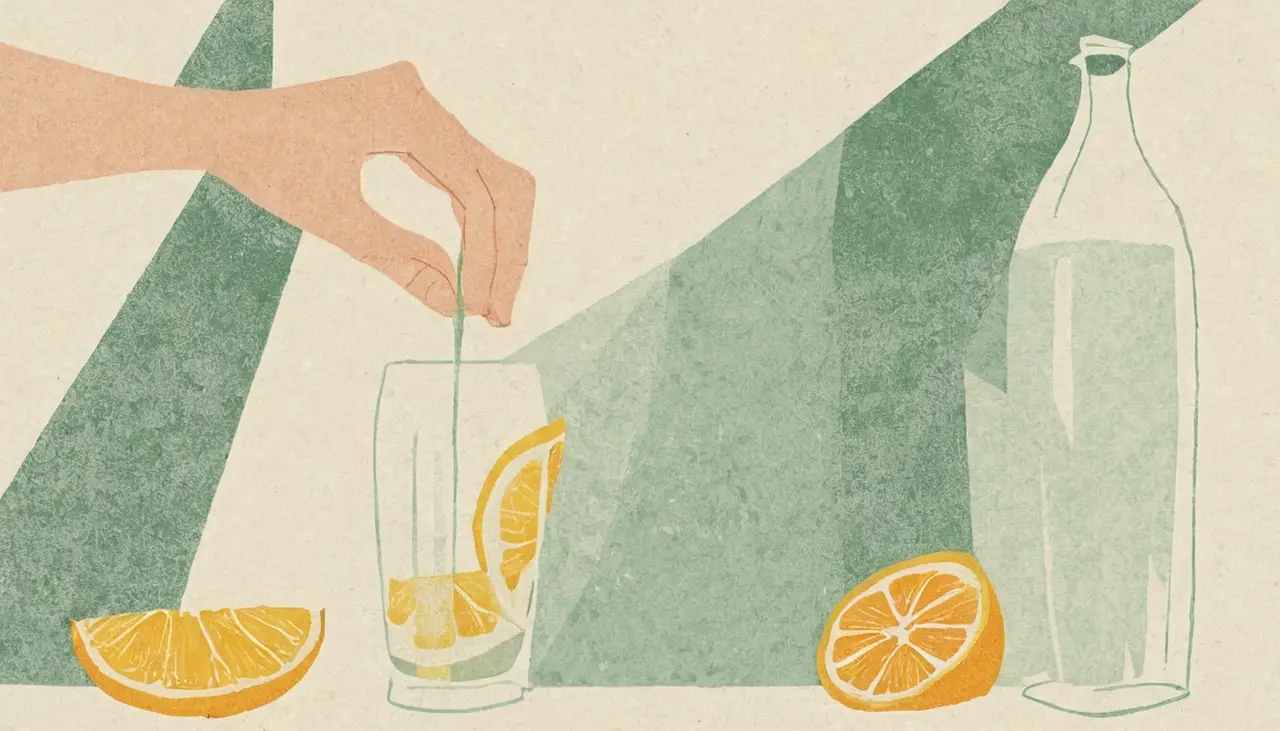
For many people, yes. A mocktail can help you drink less because it keeps the ritual: the glass, the pour, the hand-held drink, the pause at 6 p.m., the social cover of having something to sip.
But it is a tool, not a spell. For some people, alcohol-like flavor is a cue that wakes the craving up instead of quieting it.
Use the Glass Swap Test: keep the ritual, remove the alcohol, measure what actually changes for two weeks.
Name the job the drink was doing
Before you pick a mocktail, name what the alcoholic drink was handling. Was it a signal that work is done? A way to make cooking feel less tedious? Something to hold at a party? A sweet or bitter taste you look forward to? A way to delay the decision about whether you are drinking tonight?
That answer tells you what the substitute has to replace. If the job is "something cold in a nice glass," soda with citrus may be enough. If the job is "I want the burn," a sweet drink may not touch it. If the job is "I do not want questions at dinner," the glass and garnish matter more than the recipe.
NIAAA names finding alternatives as one of its strategies for handling cravings, because removing alcohol without replacing the time, cue, or ritual can leave a hole the old habit fills quickly.
Keep the ritual, change the math
The point of the swap is not to become a mocktail person. The point is to change the drink count.
CDC's public-health guidance is simple at this level: drinking less is better for health than drinking more. If a substitute turns a three-drink evening into one drink, that is a real reduction. It does not need to be a perfect alcohol-free night to count.
Start with the drink that behaves most like a hinge. For many people, that is the first drink after work or the refill after dinner. Put the mocktail there first, not randomly at the easiest point in the night. If the pull is strongest later instead, put it at the late glass rather than the first one — cravings that arrive at night run on a different clock than the after-work ones.
Run the Glass Swap Test
For two weeks, test one substitution pattern. Do not change five things at once.
Pick the exact slot
Choose one slot: first drink, second drink, cooking drink, TV drink, party arrival drink, or nightcap. Write it down before the craving shows up. If cooking is your slot and wine still goes in the pan, does the alcohol cook out of food covers what actually stays in the dish.
Build the substitute before the cue hits
Have the drink ready before the usual pour time. It can be simple: sparkling water with citrus and bitters-style flavoring, ginger beer with lime, tonic and grapefruit, iced tea in the usual glass, or a zero-proof spritz. No brands needed.
Count what changed
Track the alcoholic drinks you actually skipped. For a yardstick on whether the experiment is moving the pattern, NIAAA's drinking-level definitions put the concern lines at more than 4 drinks in a day or 14 per week for men, and more than 3 in a day or 7 per week for women.
Those numbers are a measuring stick. If the mocktail changes your weekly count, it is doing something useful.
Watch the trigger effect
After the substitute, rate craving from 1 to 5. If the drink calms the ritual and the craving fades, keep it. If it makes you want the real thing more, change the substitute. Try a flavor that does not imitate alcohol, or swap the ritual entirely: tea, a walk, shower, dessert, or a phone call.
When mocktails fall flat
Mocktails struggle when alcohol was doing more than ritual work. If the drink was managing anxiety, loneliness, anger, sleep, or withdrawal symptoms, a better glass may not be enough.
There is also a taste caveat. Non-alcoholic beer, wine, or cocktail flavors help some people because they preserve the familiar cue without the alcohol. For others, they are too close. The test is not whether the product is virtuous. The test is what it does to your next decision. Worth knowing too: what you can taste at all can shift around drinking, which is why a substitute can land differently in week three than on night one — see does alcohol affect your taste buds and sense of smell.
Cost and sugar can matter too. A nightly elaborate mocktail can become its own friction. The best substitute is the one you can repeat without turning the whole evening into a project.
What to do after two weeks
Look at the numbers, not the mood of one night.
- If drinks went down and cravings stayed manageable, keep the swap.
- If drinks went down but cravings rose, change the flavor or the time slot.
- If nothing changed, the ritual may not be the main driver.
- If trying not to drink makes you shaky, sick, panicky, or unable to sleep, stop treating this like a mocktail problem and talk with a clinician.
For nearby reading, see evening alcohol cravings, when your cravings come at the same time every day, and how to do a no-drink month at home.
FAQ
Are mocktails just a crutch?
They can be a crutch in the useful sense: support while you change a pattern. The question is whether they reduce alcoholic drinks or keep the craving loop alive.
Is non-alcoholic beer a good idea?
For some people, yes. For others, the beer taste is too strong a cue. Test your actual craving response instead of deciding from the label alone. The label still deserves one read: most bottles marked non-alcoholic contain a trace, and does non-alcoholic beer have alcohol explains what the 0.5% line means.
What is the easiest mocktail for cutting back?
The easiest one is the one that replaces your usual drink slot with the least effort. Start with something cold, fast, and already in the house.
This article is general education, not medical advice. If you drink heavily every day or feel withdrawal symptoms when you cut back, talk with a licensed clinician before making sudden changes.
- Helping someone who drinks
When Your Partner Promises to Get Help but Keeps Drinking
A promise lives in someday; a plan lives on a Thursday. What to ask for instead of sincerity, and the boundaries you can keep on your own authority.
- Body & physical health
Alcohol and Weight Changes
No page can tell you whether alcohol changed your body, only what to watch. Count standard drinks, note the calories in the glass, and read what moves with them.
- Understanding your drinking
How Much Is Too Much Alcohol per Week?
There is no single safe weekly alcohol total. CDC's daily moderation definition and a standard-drink log show what a weekly sum can miss.
- Hangovers & the day after
Drinking and Constipation the Day After
Alcohol can slow the next-day bathroom pattern for some people; compare the whole night around it, and know when bowel changes need care.
- Medication & treatment
Scared to Stop Drinking? What to Ask a Doctor
If you are scared to stop drinking, ask a licensed clinician about your current drinking pattern, any symptoms you notice when you drink less, your medical history, and what level of support is appropriate. This page is questionprep only. It does not give detox instructions, taper schedules, or personal risk assessment.
- Understanding your drinking
Do Ultimatums Work With an Alcoholic?
Ultimatums rarely control another person's drinking. A clear boundary names the fact, your request, and the action you will take and can keep.


Be the first to hear when Clero launches.
Join with email only. Clero is still in development, so this is educational content today — not treatment, a prescription request, or medical advice.
First to hear at launchLaunch news only — no spamUnsubscribe anytime